DTH
“Our subscriber acquisitions are returning to normalcy” – Airtel DTH’s Sunil Taldar

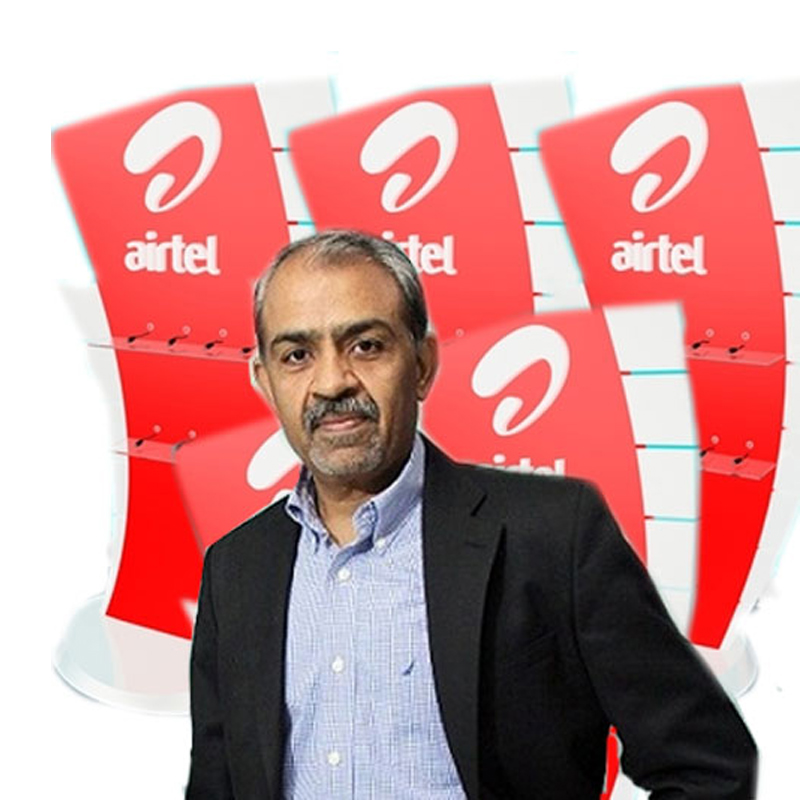
MUMBAI: Having their heads buried in a transformative ecosystem, major DTH players have constantly been expanding their offerings and Airtel’s DTH arm is not an exception. The world is busy discussing traditional TV versus OTT but DTH players like Airtel Digital TV are embracing the opportunities coming from streaming services, according to Bharti Airtel DTH CEO Sunil Taldar.
In an interview with Media Partners Asia executive director and co-founder Vivek Couto during APOS 2020, Taldar spoke in the session "Innovation and growth in India's Video Market" alongside Tata Sky CEO Harit Nagpal. He addressed queries about existing opportunities, changing consumer preferences during pandemic as well as the future of his own platform. He also sounded highly optimistic about creating a universe of hybrid set-top boxes along with the growth opportunity to expand the existing DTH consumer base.
Edited excerpts:

You run very large consumer business. How has the pandemic affected consumer behaviour, generally and specifically and what are the growth trends across your business? And what does the future look like now for the DTH industry?
First and foremost, we are an essential service and we became a little more essential during the crisis period. And we did see a change in behaviour which led to a significant increase in the consumption of news. In the absence of fresh programming and live sports, we have seen a large number of customers turning to OTT, and we have seen demand increasing for the hybrid set-top box. So that's one shift that we've seen in the industry.
Another thing that I would like to highlight here is true for the entire industry. We have done a lot of work to digitally service or fulfil the needs of our customers with zero or minimal physical contact. And I'm making sure that there are no safety or security concerns both for our customers as well as for our field staff. Within the business, there has been a massive focus on serving those who serve our customers and how do we enable our field staff on the ground. This entire work that has happened in the last three months will offer a significant competitive advantage to the DTH industry.
Our acquisitions are coming back to normal. I think we are acquiring more customers today as we speak. And DTH being present in only 70 million out of 300 million homes in the country, there is a massive land grab opportunity and massive headroom for growth. And I see the long-term future of this industry to be vast.
You have been innovative for many years. So what else are you introducing to address competition? And to appeal to wider consumer needs and requirements?
If you look at it from a consumer route, we live in a connected world and one of the challenges of the connected world is actually proliferation of services, which forces our customers to maintain multiple relationships, which is tedious. So, there is some work that we have done, which is a first of its kind in India, such as offering a converged proposition to our consumers and allowing them to buy services like mobile, broadband, landline and DTH together. Moreover, when we say DTH it also includes aggregated content. So, it actually takes care of one of the biggest pain points for the consumer i.e., one bill, one payment, one app and one call centre to get services or address your complaints. It's a process improvement of offering a converge competition.
The other is there's an opportunity in the market for the entire DTH industry, which is the content creator industry to work closely with us. India is one of the most under-screened countries in the world. We have a 100 per cent control over content, distribution and security. We have the ability to deliver content to our customers on a pay-per-view right now and we have access to 70 million homes in the country, we have a trusted relationship here with 70 million customers. Now today, if we were to launch Hollywood or Indian movies on this platform, that's a massive business opportunity. In this crisis period that we're living in, I don't see theatres opening soon, anytime. Neither do I anticipate consumers walking into theatres in the near future. But even if that was to happen, given the screen density in the country, it's a very large opportunity that the industry will explore.
What is the opportunity of hybrid boxes?
The future belongs to hybrid boxes. If we increase or drive the penetration of the hybrid boxes and an ecosystem develops around that there are opportunities whether it is video conferencing, gaming, e-commerce, etc. So, these are all opportunities which are there.
What is the best way to monetise the connected box ecosystem? Is it through advertising or subscription? What is the revenue model?
The connected box gives us good access to viewership data because it's a two-way system. Today, the entire industry operates on extrapolated data at a very small sample size of customers. Now, here we have a great quantity of data. In my view, there could be two streams for monetisation that can be watched. One is we can use this data to improve the quality of content and increase stickiness for linear programming and building large subscription business. And this is an interest for broadcasters and operators, provided both of us work together to improve the quality of content and therefore stickiness and therefore subscription. Or the other area is, advertising might be an opportunity but how do we improve the efficacy of spends for advertisers.
DTH platforms have around 70 million subscribers and that's going to continue to grow. But first of all, do you ever see within the next five years any of the OTT platforms, the top three or four, having that kind of reach directly through a huge universe? And is that a friend or a foe?
Live TV is here to stay because nothing can replace live programming like news, live sports, etc. And we have embraced OTT rather than fighting OTT. If the OTT universe grows, whether one player or all, to be even 50 million tomorrow, it's actually good for us because one great consumer insight is everybody wants to enjoy that content on the large screen. It will offer help to our efforts to drive the hybrid universe. So we tend to benefit both ways, to benefit from the OTT business and also from live content. I don't think we are here to fight that.
What are you seeing as changes in the Indian consumer ecosystem and mindset through these last few months? And some of them I'm sure are good changes and are they lasting changes? Will they have any impact on your business and products in the long-term?
It's very difficult to say the changes that we have seen whether they are going to last forever. For example, work from home is a significant change that we have seen. Will this behaviour last forever or people will go back to working from offices once things ease out? But some of the opportunities are not related to this. It's a function of what has happened and a function of what platform do we create. As we said, pay-per-view, even if it is the launch of movies through a platform, it is a real opportunity for both today and tomorrow. If you ask me about the education segment, is that an opportunity today? Would that be an opportunity tomorrow in the connected world? That’s yes. We're actually managing connected devices, video conferencing, etc., and all these are real opportunities. And these can have a significant contribution to our top line as well as for our bottom line. What is required is for us to try penetration with an ecosystem, have the imagination and conviction right and the ability to convert.
Some of the changes that we have seen, whether it is OTT adoption, a customer seeking education online, an opportunity for video conferencing or minimising physical contact, there are efficiencies right where we build models to where people upgrade from their existing box to a new box through absolutely zero contact.
These opportunities are going to remain for a long period of time and fundamentally alter the way we conduct this. What we need to do is work towards the rest of the constituents of this entire ecosystem, be it broadcasters or technology providers or partners. And I think if that happens, it will fundamentally change the trajectory of the DTH industry.





DTH
DD Free Dish e-auction revenue dips to Rs 642 crore as slot sales fall
Revenue dips as revised norms reshape bidding in 94th round
NEW DELHI: Prasar Bharati’s DD Free Dish has closed its 8th annual, and 94th overall, e-auction for MPEG-2 slots with total collections of Rs 642 crore for the period April 1, 2026 to March 31, 2027.
That is lower than last year’s Rs 780 crore haul, with 55 slots sold compared with 61 in FY25–26. The softer topline reflects both a slimmer inventory and a recalibrated auction framework.
This was the first auction conducted after amendments to the e-auction methodology, including tighter eligibility norms and a revised reserve price structure for MPEG-2 slots. The stated aim was greater transparency and more serious participation. The immediate outcome appears to be more measured bidding in certain categories.
Day one set the tone. Eight slots were sold, six in the premium Bucket A+ and two in Bucket A. The strong early action in A+, which typically houses Hindi GECs and movie channels, reaffirmed the enduring appeal of mass Hindi programming on the platform.
Among the broadcasters securing slots in the initial rounds were Zee Entertainment Enterprises, Sony Pictures Networks India, Viacom18’s Colors network, Sun Network and Shemaroo Entertainment. Their continued presence signals that, despite the pull of digital platforms, Free Dish remains a strategic must have for legacy networks chasing scale in price sensitive markets.
The final bouquet of 55 channels leans heavily towards Hindi news, movies, devotional fare, Bhojpuri and regional programming.
In Hindi news, familiar heavyweights such as Aaj Tak, ABP News, India TV, News18 India, Republic Bharat and Zee News made the cut. Entertainment and movie offerings include Colors Rishtey, Star Utsav, Dangal TV, Sony Pal, Shemaroo TV, Goldmines, B4U Movies and Zee Biskope. Devotional viewers will find Aastha, Sanskar and Sadhna Gold among the selected channels.
Regional representation includes Sun Marathi, Fakt Marathi, PTC Punjabi and GTC Punjabi.
Equally telling were the absences. Broadcasters such as Big Magic, Filamchi Bhojpuri, India News, Bharat Express, Movieplex Maithili, TV9 Marathi, Shemaroo Marathibana, Zee Chitra Mandir and Satsang did not participate. The pullback is particularly visible across Marathi, Bhojpuri, Maithili and spiritual programming. Industry observers point to the revised reserve prices, tighter eligibility norms and a reassessment of commercial viability as possible factors.
DD Free Dish continues to beam into over 40 million homes, largely in rural and semi urban India. For advertisers and broadcasters alike, it offers efficient access to Bharat markets where pay TV penetration remains uneven and OTT subscriptions are limited.
The moderation in revenue this year may be read as a pause rather than a retreat. Fewer slots, a reworked auction playbook and evolving broadcaster strategies have clearly shaped outcomes. Yet premium Hindi entertainment retains its pull, and the platform’s mass reach remains hard to ignore.
As the FY26–27 line-up settles in, the mix of winners and walkaways will define the private satellite channel landscape on DD Free Dish for the year ahead.









