Executive Dossier
“Finding a production house which believes in you, is ready to take your script, without completely distorting the story is the number one challenge”: scriptwriter Sameer Jain


Chucking up a lucrative job with IBM in the US must not be an easy task. But that’s exactly what 28 year old business consultant Sameer Jain is contemplating, once he gets a firm foothold in the quirky world of scripting and eventually, filmmaking.
Jain started on the journey of weaving stories into scripts two years ago, when a friend asked him to help out on a film he was working on. Jain says he got hooked onto the craft once he started developing his own scripts. The passion for the art of scriptwriting has even made him take a brief sabbatical from work and come down to India to tap productions houses and studios, armed with 12 ready scripts. While he is close to tying in deals with some, he has already commenced pre-production on another project, back in the US. In a chat with indiantelevision.com, Jain recounts his experiences in the US and back home:
|
After working with IBM for three years, how did the writing bug bite you?  After that I developed a script of my own, tried to market it in the US, while holding on to my job, Trishna, it’s actually something that’s made for the US audiences… we were scouting for someone who would make it into a small budget movie of around 200,000 dollars. Being a newcomer in the industry, it was tough to get a breakthrough. I did manage to get the interest of an Indian actor and a director Raj Basu, who has worked with the likes of Naseeruddin Shah and Deepti Naval. But then, he had some other commitments and Trishna did not see the light of day. By then, I had, along with a friend, developed another script called Windows, and I am right now in Mumbai for the pre-production work on this. We have a financier from the US for this project and are also looking for a co-producer. While all this was happening, I also started penning scripts, approaching nearly every genre – comedy, thriller, drama, romance – and I have bundled the 12 synopses of the scripts together. |
|
|
Have you had any formal training in scriptwriting? |
|
|
How do these stories come to you? |
|
|
What about life experiences? Do these also inspire your writing? |
|
|
Is it easy to jump from genre to genre, as a writer? Or does a writer tend to specialise in a particular genre? |
|
|
Do you also have any television scripts ? |
|
|
|
|
What kind of a response do fresh writers face when dealing with Indian production houses? |
|
|
The refrain here is that there is a dearth of scripting talent… |
|
|
But your scripts must be registered… |
|
|
How good are your stories for the Indian context, considering you are based in the US? |
|
|
You left India in 1998, when the television sector was just opening up. From a writer’s perspective, what difference do you observe in Indian television, then and now? |
|
|
How has your US experience helped in realising your potential as a writer? |
|
|
Do you think a career shift as drastic as you contemplate would have been as easily accomplished if you had been in India? |
|
|
How ready are production houses in India to accept your scripts in toto? |
|
|
How well would you gel into a system, wherein production houses employ several writers to work on a script for a series and then amalgamate it into a single story? How does it work in the US? In the US, it’s mostly a single scriptwriter who approaches a production house, which then takes it up and gets a director to take the project further. |
|
|
Are the copyright laws much stricter in the US? |





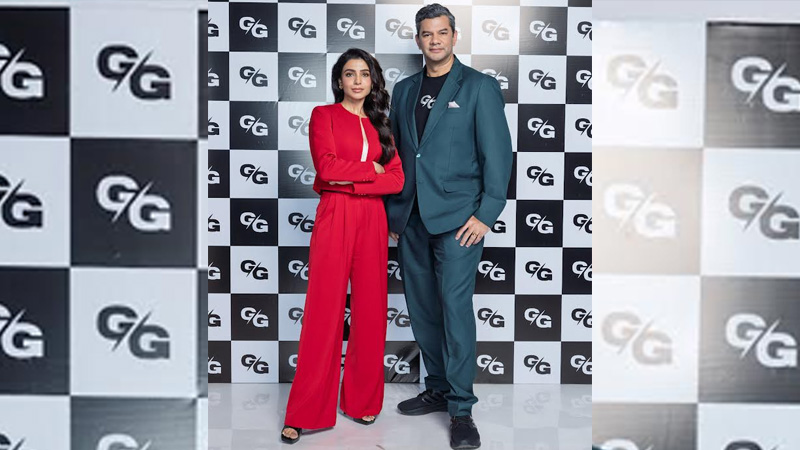
MUMBAI: Game faces on, pressure high India’s gaming ambitions are levelling up. Good Game, billed as the world’s first as-live global gaming reality show, has officially launched in India with a bold mission: to crown the country’s first Global Gaming Superstar.
Blending esports with mainstream entertainment, the show brings together competitive gaming, creativity and on-camera performance in a format that tests more than just joystick skills. Contestants will be judged on gameplay, screen presence and their ability to perform under pressure, reflecting how gaming has evolved from pastime to profession and pop culture currency.
Fronting the show are three high-profile ambassadors: actor and entrepreneur Samantha Ruth Prabhu, Indian cricket star Rishabh Pant, and gaming creator Ujjwal Chaurasia. The winner will take home Rs 1 crore ($100,000) among the largest prize pools for any Indian reality show along with the chance to represent India on a global stage.
Backed by a planned annual investment of up to Rs 100 crore, Good Game is also courting brand partners, promising a minimum reach of 500 million among India’s core youth audience. The creators position the show as a bridge between entertainment and interactive culture, offering long-format content, community engagement and commercial scale.
Auditions are now open to Indian citizens aged 18 and above, inviting amateur and professional gamers, creators and performers alike. Shortlisted candidates will be called for in-person auditions in Mumbai on 14 and 15 February, and in Delhi on 28 February and 1 March 2026.
With big money, big names and even bigger ambition, Good Game signals a shift in how India views gaming not just as play, but as performance, profession and prime-time spectacle.






