Comment
Consolidation & cooperation, the way forward


India’s cable TV industry is about to enter into a pivotal year, probably the most important in its 20-year old year history. As it does so, it needs to take a leaf out of the US cable industry playbook, a 60-year old franchise that’s been through rate regulation, digitalization, broadband and now, as it stares down the barrel at Netflix and Google, comes together to embrace consolidation and co-operation.
At a recent investor day, industry godfather and arch value creator, John Malone, chairman of Liberty Media, urged cable MSOs to unite and create a national internet streaming platform as well as cooperate to drive technical moves, new content plays and more homogeneity in product innovation.
“The history of the cable business is replete with the industry solving its balkanization and scale problem through joint efforts,” said Malone. “That can be done again. I see no reason why a vehicle, whether it’s Xfinity [from Comcast] or the equivalent, can’t be syndicated. Whether Hulu could be bought and syndicated. Or whether you’ve got some entrepreneur who’s going to come in and start something that the industry at large could get behind and give it the ability to purchase content on a ubiquitous basis.”

 |
It’s a critical movement for cable operators in particular. High levels of receivables and low levels of liquidity amongst MSOs is not encouraging for investors and promoters and sends out poor signals for Phase III and IV of digitalization |
Taking a leaf out of Dr Malone’s book and in the spirit of consolidation and co-operation, here are the key moves India’s cable TV operators must drive across the value chain in 2014 and beyond:
Billing and monetization
MSOs are coming together and slowly working with LCOs to implement gross billing but it needs to be accelerated in Q1 2014. While close to 21 million households in Phase I and Phase II have been seeded with cable STBs, monetization and ROI has been painfully slow, making the Rs 50 billion plus invested in capital expenditure appear to be an extremely expensive cost of capital. Without the comfort of carriage and placement fees, MSOs need at least Rs 100 per sub per month to breakeven on the digital cable business line – in general, the industry is well short of that at present.
Den, Hathway and SitiCable appear to be making the right moves but each of the national MSOs need to join together with LCOs to drive billing to consumers and ensure pass through of revenues across the value chain. It’s a critical movement for cable operators in particular. High levels of receivables and low levels of liquidity amongst MSOs is not encouraging for investors and promoters and sends out poor signals for Phase III and IV of digitalization.
Product, technology and the B2C ecosystem
More MSOs must come together to ensure that there is homogeneity and innovation across product and technology. Scale through alliances ensures better economies to invest in STBs, CAS, middleware and more advanced functionality. Hathway and DEN appear to be the best positioned to do this with a combined base of 13 million gross digital subs. This is a good start but to seriously challenge DTH and lower capital costs and drive improved product functionality, more MSOs need to come to the table.
Negotiating capital costs and driving a product roadmap for the next 30 million households will start becoming easier with consolidation. Phase I and Phase II did not require much consolidation and as a result, 90 per cent of STBs seeded came from the top five MSOs. However, Phase III and IV require alliances, consolidation and cooperation as the markets are fragmented and sub scale.
It’s also important to note that the first big chunks of cable digitalization in the US, Taiwan and Korea occurred as cable operators banded together to drive down costs, improve functionality and better the consumer experience. To be sure, multiple vendors were used for STBs but across CAS, middleware, compression and billing, often technology solutions were sourced from single vendors.
Furthermore, the main cable TV players in India must band together to offer an innovative, simple, and functional product set with consistent, strong user interfaces. Digitalization means that all operators will reclaim analogue bandwidth and with superior capacity, this should just mean more channels but more HD channels and broadband.
Billing systems and the creation of a robust B2C cable TV ecosystem is also important but doing this together rather than apart is important for large and small cable TV MSOs across India. The situation that the US finds itself in today – “Snow white and the seven dwarfs” (Malone’s acerbic reference to the product evolution and functionality at Comcast and its fellow cable MSOs) – is where India is heading at present with only a few MSOs driving digitalization and B2C decision making.
Broadband and network evolution
Cable TV broadband remains in its infancy. In spite of the spectre / threat of 4G broadband after 2014-15, cable still has headroom to grow through DOCSIS 2.0 and 3.0 technologies. Hathway has recently deployed DOCSIS 3.0 across selected markets; a strong broadband product with or without a bundle is critical for cable operators’ value creation story as it helps generate margins. New license fees are a concern but broadband with scale still offers plenty of returns.
Longer-term, larger cable TV operators also need to start transitioning networks to (internet Protocol) IP and ensure cloud-based delivery of services and content to all devices. This will help drive TVE (TV everywhere)-type offerings in the future and ensure cable has a competitive advantage over DTH – the same issue is playing out in the US.
Content
Locality is always the cable operators’ last preserve and locality anchored to local content is a strong competitive advantage. While some regional MSOs have developed local content,the national ones have yet to get into the game though both Hathway and Den may have plans to do so in the future, in what may become an important differentiator over time.
Depth over width
The cable TV story has thus far been mostly about width and will remain so for some time as operators focus on digitalizing their entire footprint before acquiring more of the last mile. However, the long-term game has to be about acquiring and consolidating the last mile where feasible and at the right valuation as well as potential consolidation and M&A amongst other national MSOs.
This provides a level playing field and competitive advantage to programming and technological discussions and allows cable operators to start inheriting some telecom-type muscle and work on ramping up real talent into its ecosystem.
Note that there is limited value creation across aggregators over the long–term in the history of global media; most of are usually displaced and made obsolete over time due to changes in consumption, delivery and technology. Ownership of assets, especially in the cable TV business, is crucial and in cable TV, the last mile and network remains everything along with consolidation and scale.
Just ask Dr Malone.
(Vivek Couto is Media PartnersAsia executive director and co-founder. The views expressed in the above article are the author’s personal views)



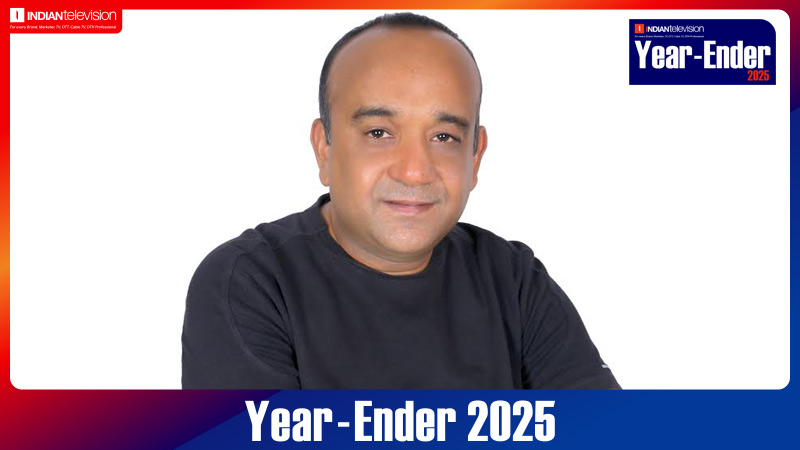
MUMBAI: 2025 will be remembered as the year India’s OTT industry stopped chasing scale for its own sake and began reckoning with how audiences actually consume content. Completion rates fell, patience wore thin and the limits of long-form excess became impossible to ignore. In this guest column, Pratap Jain, founder and CEO of ChanaJor, traces how micro-drama moved from the fringes to the centre of viewing behaviour, why short-form fiction emerged as a retention engine rather than a trend, and how platforms that respected time, habit and emotional payoff were the ones that truly grew up in 2025.
If there is one thing 2025 will be remembered for in the Indian OTT industry, it’s this: the industry finally stopped pretending.
Stopped pretending that bigger automatically meant better.
Stopped pretending that viewers had endless time.
Stopped pretending that scale without retention was success.
What began as a quiet reset in 2023 and a cautious correction in 2024 turned into a very visible shift in 2025. Business models matured. Content strategies tightened. And most importantly, platforms started aligning themselves with how Indians actually watch content, not how the industry wished they would.
At the centre of this shift was micro-drama—not as a trend, but as a behavioural inevitability.
When OTT finally understood the time problem
For years, long episodes were treated as a marker of seriousness. A 45–60 minute runtime was almost a badge of credibility. Shorter formats were pushed to the margins, labelled as “snack content” or “mobile-only.”
That belief quietly collapsed in 2025.
What platform data showed very clearly was not a drop in interest—but a drop in patience. Viewers weren’t rejecting stories. They were rejecting commitment.
Across platforms, the same patterns appeared:
* First-episode drop-offs on long-form shows kept increasing
* Completion rates continued to slide
* Viewers were sampling more titles but finishing fewer
At the same time, shows with episodes in the six to 10 minute range started showing the opposite behaviour: higher completion, higher repeat viewing, and stronger daily habit formation.
Micro-drama didn’t win because it was short. It won because it respected time.
Micro-Drama didn’t arrive loudly. It took over quietly.
There was no single moment when micro-drama “launched” in India. It crept in through dashboards and retention charts.
By mid-2025, it was clear that viewers were happy watching four, five, sometimes six short episodes in one sitting—even when they wouldn’t finish a single long episode. Romance, relationship drama, slice-of-life conflict, and grounded comedy worked especially well.
This wasn’t disposable content. It was compressed storytelling.
In shorter formats, there was no room for indulgence. Every episode had to move the story forward. Weak writing was punished faster. Strong writing was rewarded immediately.
Micro-drama raised the bar instead of lowering it.
Where ChanaJor naturally fit into this shift
ChanaJor didn’t pivot to micro-drama in 2025 because the market demanded it. In many ways, the platform was already built around the same viewing behaviour.
From the beginning, ChanaJor focused on short-to-mid-length fictional stories that felt close to everyday Indian life—hostels, rented flats, office romances, small-town relationships, young people figuring things out. Stories that didn’t need heavy context or cinematic scale to connect.
What worked in ChanaJor’s favour in 2025 was clarity:
* A clearly defined audience
* Tight episode lengths
* Storytelling that prioritised emotion and pace over spectacle
While several platforms rushed to copy global micro-drama formats, ChanaJor stayed rooted in familiar Indian settings and conflicts. That familiarity mattered. Viewers didn’t have to “enter” the world of the show—it already felt like theirs.
Why audiences started responding differently
One of the biggest misconceptions going into 2025 was that audiences wanted shorter content because their attention spans had reduced. That wasn’t entirely true.
What viewers actually wanted was meaningful payoff per minute.
On platforms like ChanaJor, episodes didn’t waste time setting the mood for ten minutes. Conflicts arrived early. Characters were recognisable within moments. Emotional hooks landed fast.
A typical consumption pattern looked like real life:
* One episode during a break
* Two more before sleeping
* A few the next day
This is how viewing habits are built—not through marketing spends, but through comfort and consistency.
Viewers came back not because every show was a blockbuster, but because they knew what kind of experience to expect.
2025 was also the year OTT faced business reality
The other big change in 2025 was on the business side. Subscriber growth slowed. Discounts stopped hiding churn. Customer acquisition costs rose.
Platforms were forced to ask harder questions:
* Are viewers finishing what they start?
* Are they returning without reminders?
* Is this content worth what we’re spending on it?
This is where micro-drama began outperforming expectations. A well-written short series could deliver sustained engagement without massive budgets. It didn’t peak for one weekend and disappear—it stayed alive through repeat viewing.
Platforms like ChanaJor benefited because they weren’t chasing inflated launch numbers. The focus was on consistency and retention, not noise.
Failures Became Visible Faster
2025 also exposed weaknesses brutally.
Several platforms assumed micro-drama was a shortcut—short episodes, quick shoots, instant traction. What they discovered was that bad writing fails faster in short formats than in long ones.
Viewers dropped off within minutes. Episodes were abandoned mid-way. Weak stories had nowhere to hide.
Micro-drama didn’t forgive laziness. It amplified it.
The platforms that survived were the ones that treated short storytelling with the same seriousness as long-form—sometimes more.
OTT Stopped Chasing Prestige and Started Chasing Habit
Perhaps the most important shift in 2025 wasn’t technical or creative—it was psychological.
OTT stopped trying to look like cinema. It stopped chasing validation through scale and awards alone. It began behaving like what it actually is in people’s lives: a daily companion.
Platforms like ChanaJor found their space here because that mindset was already baked in. The goal wasn’t to dominate a weekend launch. It was to quietly become part of someone’s everyday viewing routine.
That shift changed everything—from release strategies to how success was measured.
What 2025 Ultimately Taught the Industry
By the end of the year, three truths were impossible to ignore:
* Time is the most valuable thing a viewer gives you
* Retention matters more than reach
* Format must follow behaviour, not ego
Micro-drama didn’t take over because it was fashionable. It took over because it fit real life.
Looking Ahead
Micro-drama is not replacing long-form storytelling. It is redefining the baseline of engagement.
Longer shows will survive—but only when they earn their length. Short-form fiction will continue to evolve, becoming sharper, more emotionally confident, and better written.
Platforms like ChanaJor have shown that it’s possible to grow without shouting—by understanding the audience, respecting their time, and telling stories that feel real.
2025 wasn’t the year OTT became smaller. It was the year it became smarter.
Note: The views expressed in this article are solely the author’s and do not necessarily reflect our own.








