Cable TV
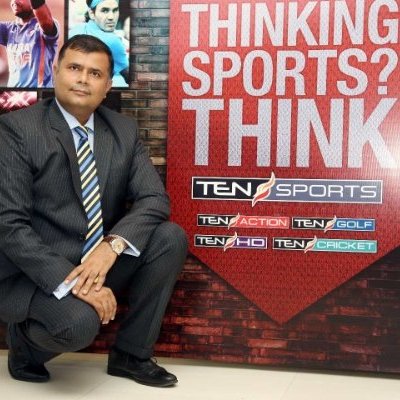
Impact of DAS on Sports Ecosystem: Rajesh Sethi

DAS (digital addressable system) is here to stay. Despite the shortcomings, the hiccups in the implementation of the first two phases, the government has announced that it will not extend the deadlines of December 31, 2015 for phase III areas and December 31, 2016 for phase IV, when the entire country is expected to be digitised. After complete switchover, cable TV services will be available only through set top boxes in India.
We, at the Indiantelevision.com are starting a new section – ‘The Impact of DAS’ through which thought leaders, experts from the television ecosystem will share their thoughts, ideas, and say their piece on the subject. We are beginning with the impact of DAS on the sports broadcasting ecosystem.
Our expert for the section is Ten Sports Network CEO Rajesh Sethi.
Excerpts:

How big an impact has phase I and II digitization made when it comes to subscription revenue?
Phase I and phase II digitization has made a positive impact as far as the subscription revenue is concerned for the industry and given the trend we expect increase in the revenue once phase III and IV is completed. Ten Sports has also experienced the upside of subscription revenue which can be seen from our increased ARPU. The addressability has improved but a lot still needs to be done. We believe that as the digitalization matures & packaging is implemented on ground by the operators, we will be able to achieve complete benefits of digitalization.
From sports broadcaster’s point of view are you happy with the two phases of digitization?
Although the implementation of two phases of digitization had been slow as compared to expectations, the completion of the two phases has facilitated increased subscription revenues and more accountability in the industry. From a sports broadcaster’s perspective, it will provide Ten Sports an opportunity to introduce new products based on the type and preference of consumers and provide enhancements like multi camera action, on demand services etc. We as asports broadcaster are keen to enhance the consumer experience and are interested in working with operators to fully reap the benefits of digitalization.
Is the sports broadcasting industry in a subscription positive scenario? Or we are still ad dependent?
The sports broadcasting industry in India is still evolving and ad revenue contributes significant part of revenues and will continue to remain the same in foreseeable future for main streamsports content. However, as digitization is still not complete, there is a high potential of increased subscription revenue and lesser dependency on ad revenues. We expect the niche sports offering to move towards subscription driven revenue model. As a sports broadcaster, we believe that the industry is moving in the right direction and once phase III and IV is complete there will be a possibility for this industry to be in a subscription positive scenario.
Are sports like Football, Badminton which are hugely popular but has very little room for advertisement profitable assets for broadcaster?
There has been increased interest from consumers for non-cricket sports in India in the last few years. Football and Badminton have gained traction in an industry which is preliminary dominated by cricket. It’s a step forward in right direction and we have seen advertisement revenue picking up for non-cricket content, the most recent example being Kabaddi. With regards to football and badminton being a profitable asset for a broadcaster, profitability is a function of revenue potential and content cost. Though the revenue potential and content cost presently is limited, it is expected to rapidly grow for these products. This makes it a good opportunity for a broadcaster to obtain future profitability on these content.
With phase III and IV scheduled do you see a substantial inclination in subscription revenue?
Phase III and IV is all about getting to remote areas of India. It provides an opportunity for thesports broadcasters to bring local content which connects & relates to the audiences residing in these towns. We see positive growth in subscription revenue as the number of HH’s in these towns provide a growth opportunity from the existing very low ARPU levels.
How can a non cricket sport or a sport with least ad room turn profitable for broadcasters?
The subscription revenue and ad revenue are the two key revenue source for a sports broadcaster. However, profitability for a content not only depends on revenue but also on the cost. The sportswhich has least room for ad revenues would depend on increased subscription revenue which we expect to increase once phase III and IV digitization is completed. At Ten Sports, as part of innovation drive, our team analyzes the potential of content across various genres which might not be currently popular in India and then builds it up for the consumers. We see increased traction for non-cricket content in recent years which translates into higher revenue potential and eventually a profitable content.







MUMBAI: When margins wobble, liquidity talks and in Q3 FY25-26, cash did most of the talking. Den Networks Limited closed the December quarter with consolidated revenue of Rs.251 crore, marginally higher than the previous quarter but down 4 per cent year-on-year, even as profitability stayed resilient on the back of strong cash reserves and disciplined cost control.
Subscription income softened to Rs.98 crore, slipping 3 per cent sequentially and 14 per cent from last year, while placement and marketing income offered some cheer, rising 15 per cent quarter-on-quarter to Rs.148 crore. Total costs climbed faster than revenue, up 7 per cent QoQ to Rs.238 crore, driven largely by higher content costs and operating expenses. As a result, EBITDA dropped sharply to Rs.13 crore from Rs.19 crore in Q2 and Rs.28 crore a year ago, pulling margins down to 5 per cent.
Yet, the bottom line refused to blink. Profit after tax stood at Rs.40 crore, up 15 per cent sequentially and only marginally lower than last year’s Rs.42 crore. A healthy Rs.57 crore in other income helped cushion operating pressure, keeping profit before tax at Rs.48 crore, broadly stable quarter-on-quarter despite the tougher cost environment.
The real headline-grabber, however, sits on the balance sheet. The company remains debt-free, with cash and cash equivalents swelling to Rs.3,279 crore as of December 31, 2025. Net worth rose to Rs.3,748 crore, while online collections accounted for 97 per cent of total receipts, underscoring strong cash discipline across operations, including subsidiaries.
In short, while Q3 showed signs of operating strain, the financial backbone remains solid. With zero gross debt, steady profits and a formidable cash war chest, the company enters the next quarter with flexibility firmly on its side proving that in uncertain markets, balance sheet strength can be the best growth strategy.






