Cable TV
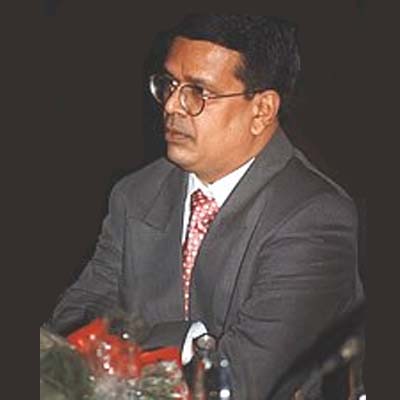
‘Digitisation will not spur irrational price war as the Santa Clauses are broke’ : Hathway Cable & Datacom MD and CEO K Jayaraman

|
Hathway Cable & Datacom has an ambitious investment plan of Rs 10 billion as India opens up to digitisation across the country.
In the first phase, India’s leading multi-system operator (MSO) plans to invest Rs 1.75 billion even as it expects DTH to take away 10-15 per cent of its cable TV subscribers in the two lucrative markets of Delhi and Mumbai. 
Sitting on a cash pile of Rs 2 billion, Hathway will not source equity finance at this stage. Though net losses will drag on for a long period in a digital environment, the MSO hopes to regain its old valuations if it manages to successfully implement the early phase of digitisation.
Even as carriage revenue will shrink, Hathway’s endeavour will be to have an Ebitda of 20-25 per cent right from the start of mandated digitisation.
In an interview with Indiantelevision.com’s Sibabrata Das, Hathway Cable & Datacom MD & CEO K Jayaraman talks about how no cable or direct-to-home company is in financial health to launch an irrational price war. He also elaborates on the MSO’s digitisation gameplan.
Excerpts:
|
|
|
DTH companies have made rapid progress in recent years. How is Hathway Cable & Datacom prepared to exploit the first phase of digitisation? |
|
|
Are you comfortably placed on the funding part or you plan to raise fresh capital? |
|
|
Will you need funding in the second stage? |
|
|
Hathway was selling at Rs 500 a STB to its customers in voluntary digitisation. Will you further subsidise the boxes in a mandated digitisation environment? |
|
|
|
|
But DTH could go aggressive and there could be a price war situation?
We, however, feel that no player is in a position to indulge in an irrational price war. Nobody in cable can do so. DTH will fight for market share on the basis of perception and brand. All the Santa Clauses are broke. |
|
|
Are you expecting a migration to DTH? |
|
|
Will the supply of STBs be impacted due to a sudden rise in demand?
We also have a presence in Kolkata through our joint venture company, Gujarat Telelinks Pvt. Ltd (GTPL), which acquired a 51 per cent stake in Kolkata Cable and Broadband Pariseva. We expect to at least seed 400,000 boxes there.
We have already seeded 250,000 STBs on a voluntary basis in Delhi and Mumbai. |
|
|
Crucial to the whole implementation of digitisation is the appeasement of the local cable operator (LCO). Have you fixed the revenue share terms with them?
The distributors will get a five per cent revenue share. They will also get a 30 per cent share in carriage revenues. In Mumbai, we are comfortable with the distributors. There may be some issues in Delhi but we will manage to strike a smooth bond with them. |
|
|
Why haven’t the MSOs sat down together and decided on a common share for the LCOs who control the last mile to the consumer? |
|
|
Do you expect carriage revenue to shrink considerably? |
|
|
How?
Even sports channels should allow us to price reasonably; customers should take it round-the-year. Otherwise, we will offer it on a-la-carte basis to consumers. |
|
|
Analysts predict that net losses of MSOs will drag on till at least 2016 in a digital environment? |
|
|
Hathway had fixed it IPO price band at 240-265 and the scrip is now quoting at Rs 116 per share. When will the valuation be regained? |
|
|
Do you expect the second phase to be tougher for you?
And in Jaipur, Indore and Bhopal, we have a digital penetration of 40 per cent out of our current subscriber base. In Phase II, we are far ahead. |
|
|
Will you follow the acquisition route?
Post digitisation, we may be interested in acquisition in some of these cities. But it should come at the right price. |
|
|
Are you looking at launching value-added services? |
|
|
Are you bullish on your broadband growth? |




MUMBAI: When margins wobble, liquidity talks and in Q3 FY25-26, cash did most of the talking. Den Networks Limited closed the December quarter with consolidated revenue of Rs.251 crore, marginally higher than the previous quarter but down 4 per cent year-on-year, even as profitability stayed resilient on the back of strong cash reserves and disciplined cost control.
Subscription income softened to Rs.98 crore, slipping 3 per cent sequentially and 14 per cent from last year, while placement and marketing income offered some cheer, rising 15 per cent quarter-on-quarter to Rs.148 crore. Total costs climbed faster than revenue, up 7 per cent QoQ to Rs.238 crore, driven largely by higher content costs and operating expenses. As a result, EBITDA dropped sharply to Rs.13 crore from Rs.19 crore in Q2 and Rs.28 crore a year ago, pulling margins down to 5 per cent.
Yet, the bottom line refused to blink. Profit after tax stood at Rs.40 crore, up 15 per cent sequentially and only marginally lower than last year’s Rs.42 crore. A healthy Rs.57 crore in other income helped cushion operating pressure, keeping profit before tax at Rs.48 crore, broadly stable quarter-on-quarter despite the tougher cost environment.
The real headline-grabber, however, sits on the balance sheet. The company remains debt-free, with cash and cash equivalents swelling to Rs.3,279 crore as of December 31, 2025. Net worth rose to Rs.3,748 crore, while online collections accounted for 97 per cent of total receipts, underscoring strong cash discipline across operations, including subsidiaries.
In short, while Q3 showed signs of operating strain, the financial backbone remains solid. With zero gross debt, steady profits and a formidable cash war chest, the company enters the next quarter with flexibility firmly on its side proving that in uncertain markets, balance sheet strength can be the best growth strategy.