iWorld
Mark Zuckerberg gets ‘Reactive’ with Facebook

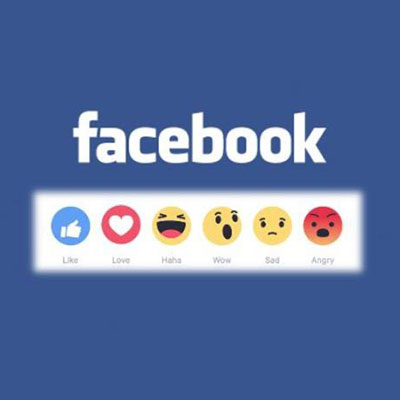
MUMBAI: It’s been seven years since Facebook introduced us to the “Like” button on the social media platform and ever since then it has become an integral part of our daily lives. In order to improve the experience, Facebook recently was on a testing spree to find alternatives to the existing button. After a demand for the “dislike” button and an intensive research, Facebook recently launched “Reactions,” an extension of the Like button, which gives users more ways to share their reaction to a Facebook post in a quick and easy way.
Talking about the release and the new update, Facebook founder and CEO Mark Zuckerberg said, “Not every moment you want to share is happy. Sometimes you want to share something sad or frustrating. Our community has been asking for a dislike button for years, but not because people want to tell friends they don’t like their posts. People wanted to express empathy and make it comfortable to share a wider range of emotions. I’ve spent a lot of time thinking about the right way to do this with our team. One of my goals was to make it as simple as pressing and holding the Like button. The result is Reactions, which allow you to express love, laughter, surprise, sadness or anger.”
The ever-so-famous “Like” button has not been replaced, but has now got exciting new additions, which include the expressions such as ‘love,’ ‘haha,’ ‘yay,’ ‘sad,’ ‘angry’ and ‘wow.’ Facebook has ensured that the recent additions do not clutter on the screen and confuse the users; hence the “like” button will look just as it always has. Users will have to hold the mouse over the “like” options for the ‘reactions’ to show up.

Speaking about the aim on improving the news feed for the users, Facebook product manager Sammi Krug said, “Our goal with News Feed is to show you the stories that matter most to you. Initially, just as we do when someone likes a post, if someone uses a Reaction, we will infer they want to see more of that type of post. In the beginning, it won’t matter if someone likes, “wows” or “sad” a post — we will initially use any Reaction similar to a Like to infer that you want to see more of that type of content. Over time we hope to learn how the different Reactions should be weighted differently by News Feed to do a better job of showing everyone the stories they most want to see.”
While this interesting update will bring in a new experience immediately for the users, advertisers on Facebook will have to wait for few more months to understand the user reactions on their respective ads. It is expected that the idea of using the Facebook’s new emoticons – anger, humour and others will be useful to improve the target audiences. But how much impact would that have? Only time will tell.
For now, it’s time to experience and observe how fans respond to the new feature, and Zuckerberg and team spend time learning from this addition and use “our reactions” to improve.








