eNews
New Content and Innovations showcased at Communicasia2016, EnterpriseIT2016 and Broadcast Asia2016

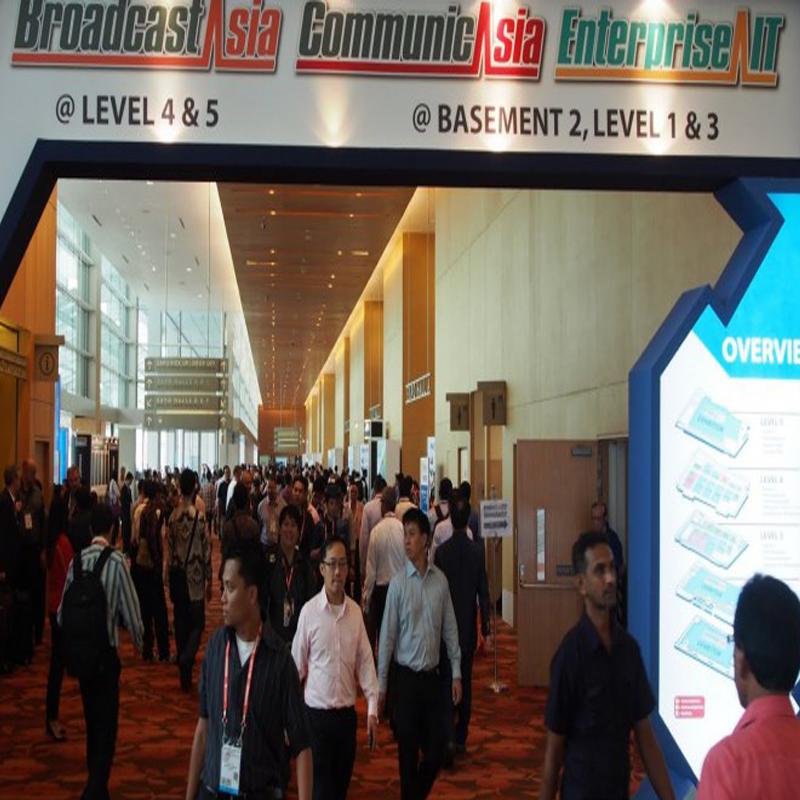
MUMBAI: To set the stage for CommunicAsia2016, EnterpriseIT2016 and BroadcastAsia2016, visionary address speaker, Gerd Leonhard, Futurist and Founder and CEO of The Futures Agency explained to attendees that the next 20 years are likely to bring more changes to humanity than the past 300 years. With impending, colossal change upon us, this year’s event provided about 48,000 attendees from 102 countries and regions with a platform to engage in meaningful dialogue around new and future solutions that governments and businesses can deploy for success in a digitally transformed world.
“In addition to the Singapore government’s recent announcement of new technology initiatives, we also saw numerous products and solutions launched at our event over the last four days. These innovative solutions ranged from data analytic tools and devices, smart systems, robotics, virtual reality and more. As our lives and businesses become more digitised, we as event organiser are more determined than ever to deliver high quality and relevant events, bringing new launches and the latest insights each year,” said Lindy Wee, Chief Executive of event organiser, Singapore Exhibition Services.
Latest insights and new launches at this year’s events
Business and consumer expectation and consumption of mobility and connectivity have risen, with greater demand in quality and speed. According to the Ericsson Mobility Report that was released at the events, 5G subscription uptake was revealed to be faster than 4G, with a forecast for global 5G subscriptions to hit 150 million by the end of 2021.
In addition to insights shared, exhibitors at both CommunicAsia and BroadcastAsia have showcased world’s firsts and latest solutions on the back of today’s hyper-connectivity. New launches included Panasonic Toughbook CF-20, the world’s first full-rugged detachable notebook, the first VR ready Dell precision workstations for enhanced experiences, MobiQuest’s air quality monitoring platform, iSense Air, Imagine Communications’ Ultra High Definition production tools and operational management platform, Ideal Systems’ new revenue-generating systems for broadcasting industry, and more.
“The world of VR is quickly growing beyond media and entertainment, supported by the advancement of technology that allows for optimal VR experience, whether consuming or creating VR content. Dell has been delivering immersive computing experience for many years and is committed in enabling VR partners across the entire ecosystem besides providing advanced hardware configuration. BroadcastAsia provided the perfect opportunity to showcase how we can support the democratisation of VR for the masses in areas such as Education, Architecture & Real Estate, Manufacturing, and Advertising. We have had overwhelming response at the booth, and look forward to developing new partnerships in furthering the growth of VR in the APJ region,” said Harveenpal Singh, Business Development Lead, Precision Workstation, Client Solutions, Dell APJ.
“We were very impressed with the level of real demand for the next generation IP-based broadcast systems. We had an overwhelming response to the new systems we launched in Asia for the first time at BroadcastAsia. From revenue-generating systems like Paywizard and Starfish right through to the revolutionary Electricfriends camera robotic system that we use to great effect with Vizrt in their augmented reality demos,” said Fintan Mc Kiernan, Chief Executive Officer, Ideal Systems SEA.
Michael Tan, Founder and CEO of Zap Delivery said, “Zap Delivery participated in this year’s CommunicAsia to showcase our new e-commerce delivery platform. The main objective is to increase awareness and solicit leads and partnership opportunities. Through the media attention and various tech tours, we were able to secure a few partnership opportunities in markets that we previously had no reach to. The exposure and returns were good, we will definitely be back next year!”
Repeat exhibitor, Rakesh Sabharwal, Founder, MobiQuest Solutions, also shared, “MobiQuest has been participating in CommunicAsia for past six years and exhibiting at CommunicAsia has been a complete pleasure. Every year we look forward to launch our new products and services at CommunicAsia as it provides us the best platform with right audience and superlative coverage. The event has opened doors for us to international business opportunities apart from increasing visibility of our products and services.”
New content invigorating line up at 2016 CommunicAsia and BroadcastAsia
At CommunicAsia and EnterpriseIT, the inaugural Asia ICT Innovation Forum organised in strategic partnership with Huawei, also served as a knowledge-exchange platform. Attendees interacted with regional ministerial representatives, internationally renowned economists and global ICT industry thought leaders in their discussion of the impact of digital technology on the Asia Pacific Economy, the value of Big Data analytics, and more.
Commenting on the event, Joe Deng (Zhou Jianjun), Carrier Business President, Huawei Southern Pacific Region said, “We were strongly encouraged by the enthusiasm, meaningful exchanges, and potential collaborations resulting from the inaugural Asia ICT Innovation Forum. We believe our message of accelerating digital transformation through ICT innovation and ecosystem synergies to deliver a better connected world have been well received. We will continue to provide platforms for the meetings of minds and facilitate dialogues to create an open, collaborative, win-win ecosystem to advance the vision of a Better Connected World, which leads to progressive economic development, vertical productivity and efficiency, as well as sustainable and safe living. As a key enabler of the ICT industry, Huawei is committed to helping the telecom and vertical industries digitise their infrastructure, operational systems and business models to realise their business aspirations.”
The Post Production Hub at BroadcastAsia also saw overwhelming interest from visitors, drawing huge crowds daily to the booths and presentations. Visitors had the opportunity to hear from Oscar and Grammy nominated producers, award-winning film makers and sound and visual effects experts, with content ranging from modern filmmaking techniques and technologies, how Hollywood drama uses LED lighting, to the art of refining sounds bring scenes to life.
“The crowd at BroadcastAsia have been most encouraging, with overwhelming interest and support of my presentations and demonstrations at the Avid booth. I’m grateful for the opportunity to travel to Singapore to share my experiences and techniques with fellow sound enthusiasts. I hope the experiences I have shared might help fellow filmmakers and producers enhance the cinema experience for their audience, “ said Dave Whitehead, Sound Designer, White Noise Ltd.
CommunicAsia, EnterpriseIT and BroadcastAsia 2017 will be a three-day event held from 23-25 May. BroadcastAsia will move to Suntec City Convention Centre, while CommunicAsia and EnterpriseIT will remain at Marina Bay Sands.







