Brands
Zomato and PayTM feature in Interbrands’ ‘Breakthrough Brands’ report


MUMBAI: A unique business model that is driven by innovation and technology is the trademark key to success among the emerging businesses in the world. Under tough competition, it is no longer enough to have hard working product or service. Smart brand building is the need of the hour. Keeping that in mind, Interbrand in partnership with Facebook, Ready Set Rocket and New York Stock Exchange (NYSE), has released its ‘Breakthrough Brands’ report that examines strong emerging brands.
Of the 200 brands nominated, 60 ended up being featured in the Interbrand Breakthrough Brands report, although the list does not rank the brands.
India- founded Zomato has been featured in the Food and Beverage category along with Deliveroo from UK, Blue Apron from US and do dem from Brazil. Zomato’s mission is to facilitate better dining experiences for food seekers all over the world. Founded in 2008, this brand’s food discovery platform is now a part of India’s biggest personal assistant app, HelpChat, which will be able to anticipate users’ food-related desires. Zomato also offers online ordering and table reservations, as well as tools that allow restaurants to manage demands, thus creating better food experiences for both its users and one million restaurants partners worldwide.

Also, PayTM has been featured in the prestigious ‘Growing global’ category. This category celebrates the brands that have created a unique, differentiated approach which is global from day one. Breaking ground fast and too big to ignore, these brands are poised, or already on the path, to creating a significant global footprint. PayTM’s growing mission to create a one-stop, mobile shop has caused it to flourish in the population-dense country of India, where online platforms serve a growing need to get things done, quicker and more conveniently. Launched in 2010, PayTM began as mobile charging and bill payment service and has since become a full mobile commerce platform, with 20 million registered users and growing. It’s poised to break through in other Asian markets, where the one-stop-shop proposition is becoming increasingly popular. The brand has featured in the category along with Xiaomi from China, WeChat from China and DJI Global from Hong Kong.
“In this ‘Age of You’ brands are being used by people to design better experiences in their day to day lives. That is what necessitates the conventional brands themselves to move at the Speed of Life. The Breakthrough Brands are born into the new cognitive era and are unencumbered. They can therefore create bespoke experiences per people’s needs and desire with a clear purpose to provide solutions through a sustainable business model. The task thus is not so much technology-out as much as it is solution focused. Then on, all the regular tools of running a good business need to be put in place – a scalable resource plan with internal clarity, responsiveness and governance models; external differentiation to ward –off imitability and consistency while the scale up. The stronger the solution and its focus, the better would be the earned media and buzz that are the decisive promotional vehicles for today’s breakthrough brands,” said Interbrand India MD Ashish Mishra in parting.






Brands
Godrej clarifies ‘GI’ identifier after logo similarity debate
Says GI is not a logo, will not replace Godrej signature across products.
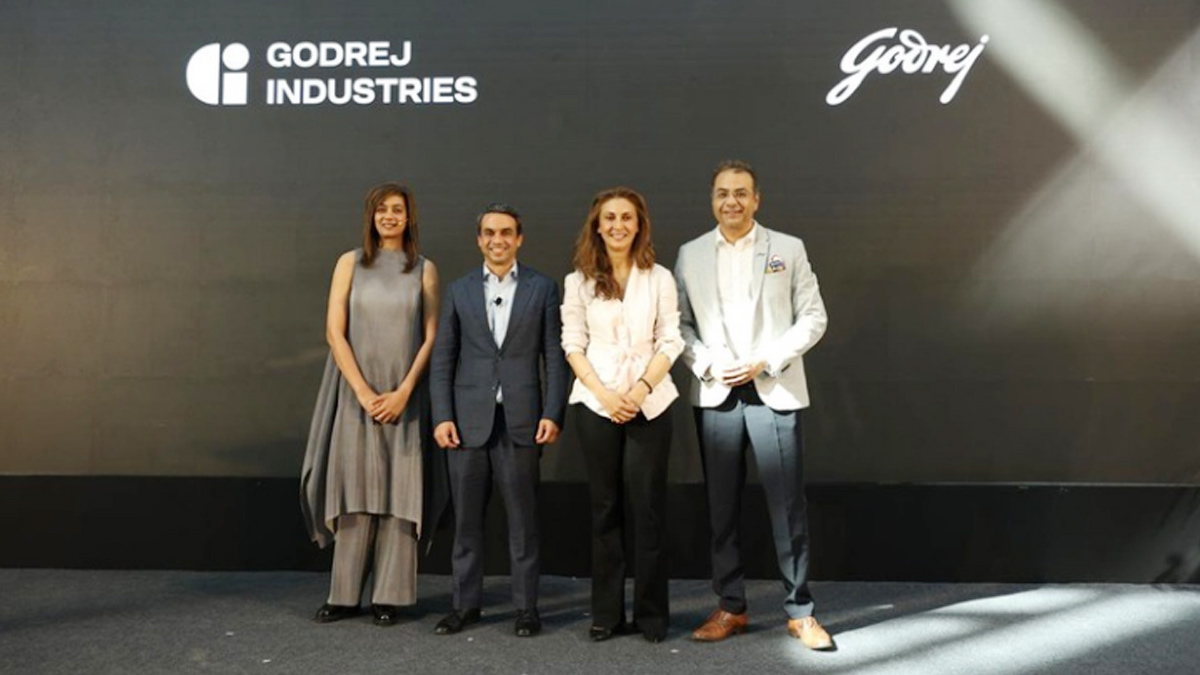
MUMBAI: In a branding storm where shapes did the talking, Godrej is now spelling things out. Godrej Industries Group (GIG) has issued a clarification on its newly introduced ‘GI’ identifier, addressing questions around its purpose and design following a wave of online criticism. At the centre of the debate were two concerns: whether the new mark replaces the long-standing Godrej logo, and whether its geometric design mirrors other corporate identities.
The company has drawn a clear line. The Godrej signature logo, it said, remains unchanged and continues to be the sole logo across all consumer-facing products and services. The ‘GI’ mark, by contrast, is not a logo but a corporate group identifier intended for use alongside the Godrej signature or company name, and aimed at stakeholders such as investors, media and talent rather than consumers.
The need for such a distinction stems from the 2024 restructuring of the broader Godrej Group into two separate business entities. With both continuing to operate under the same Godrej name and signature, the identifier is positioned as a way to differentiate the Godrej Industries Group at a corporate level.
The rollout, however, triggered a broader conversation on design originality. Critics pointed to similarities between the GI mark’s geometric composition and logos used by companies globally, raising questions about distinctiveness.
Responding to this, GIG said its intellectual property and legal review found that such overlaps are common in minimalist, geometry-led design systems. Basic forms such as circles and rectangles appear across dozens of brand identities worldwide, the company noted.
It added that the identifier emerged from an extensive design process and was chosen for its simplicity, allowing it to sit alongside the Godrej signature without competing visually. While acknowledging that elemental shapes may appear less distinctive in isolation, the group emphasised that the mark is part of a broader identity system that includes a custom typeface, sonic branding and other proprietary elements.
Following legal and ethical assessments, the company said it found no impediment to using the identifier, reiterating that the GI mark is a corporate tool not a consumer-facing symbol.
In short, the logo isn’t changing but the conversation around it certainly has.