I&B Ministry
Prasar Bharati lacks content & marketing; open to tie-ups: MIB Minister

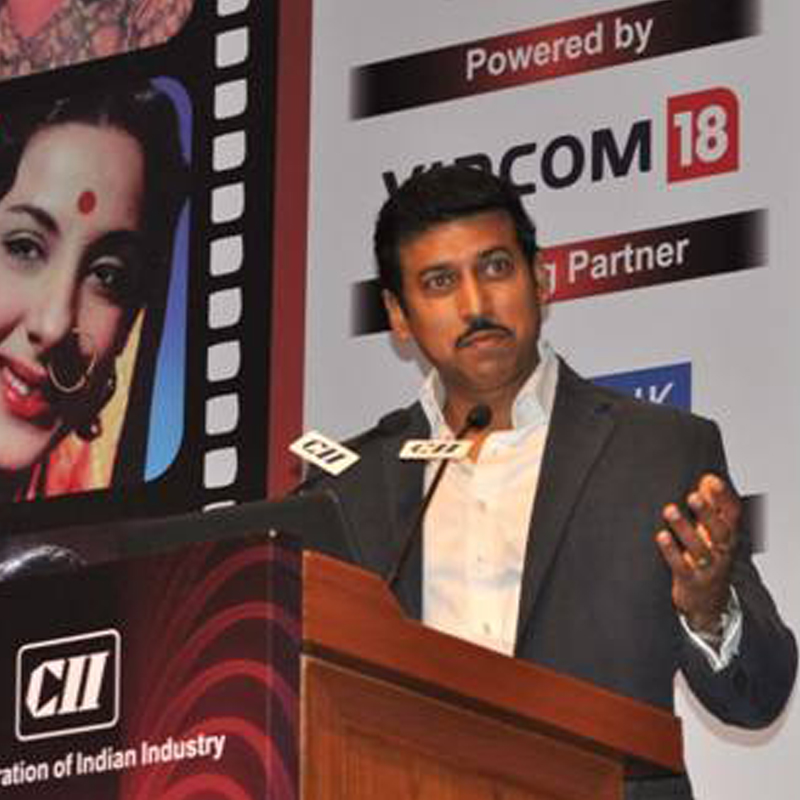
NEW DELHI: Conceding that Prasar Bharati is lagging in both content and marketing, Minister of State for Information & Broadcasting (MIB) Rajyavardhan Rathore on Wednesday said there was a need to bring in outside experts for improving these aspects.
At the same time, not willing to throw out the baby with the bath-water, the Minister clarified that for India’s pubcaster it wasn’t an easy task as it had to telecast in 23 languages. He said that Prasar Bharati was open to partnering with other broadcasters.
Speaking at the CII Big Picture Summit 2016 here, Rathore admitted that with technological changes and innovations, a content platform is undergoing constant change with respect to creation, access and distribution. As a consequence, revenue and business models were being fragmented along with changes in market distribution and talent pool identification, he added.
Pointing out that a series of measures have been undertaken to facilitate the growth and innovation within the media and entertainment (M&E) sector, the Minister said those initiatives included streamlining of processes and procedures for broadcasting sector in the context of licensing TV channels and measures to promote the branding of India’s soft power at international films festivals.
Referring to the animation sector, the Minister said the government would be fast tracking the setting up of the National Centre for Excellence in partnership with the industry in an effort to optimise the returns in the sector.
Later answering questions from participants, he regretted that news on online channels was going overseas unregulated and MIB would be taking up the issue with the Ministry of Information Technology. However, he said streaming of a film could not be done without a certification by the Central Board of Film Certification.
On a question about spectrum and its scarcity, Rathore said as the whole process involved different ministries the logistics got delayed, but also pointed out that the IT Ministry had recently obtained a large chunk of spectrum from the Ministry of Defence for use in the telecoms and broadcast sectors.
Asked about the cumbersome and time consuming process to get security clearances for television channels and multi-system operators, Rathore explained that delays were caused as several government organisations, apart from MIB, were involved in giving clearances. Still, a total of 881 TV channels had been licensed, including 349 news channels, he added, hinting that such procedural delays hadn’t slowed down the hunger for licences.