News Broadcasting
Right to be gay: new show on NDTV Prime from 25 Nov

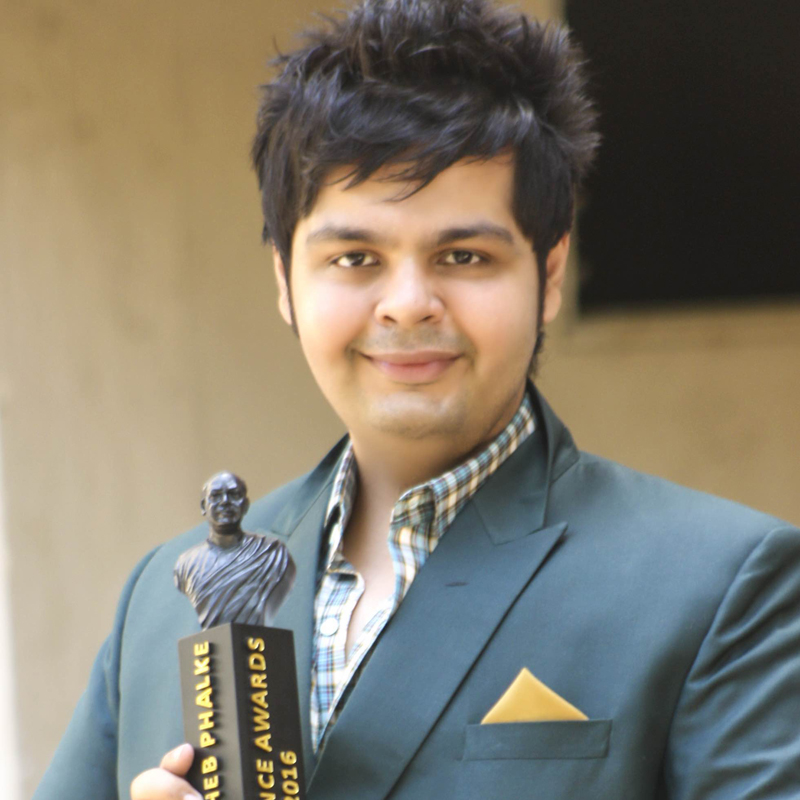
MUMBAI: Live and let live. The launch of this show on TV is one of those days when your happiness knows no bounds.
Director and writer Amit Khanna, who created the first ever LGBT web-series called All About Section 377, has added one more feather in his cap. The series which won hearts in the digital space, is all set to make its debut on the Indian television from 25 November. Not only is this the first LGBT serial on TV, but it is also the first web-series that has been picked up by a broadcaster.
With Hitachi on board as the title sponsor, the show will be aired on NDTV Prime every Friday at 9pm. The repeat telecast will be aired on every Saturday and Sunday though the channel has not yet decided a time slot, yet. Khanna said, “The response has been terrific. In fact, I am so happy with the way viewers have poured comments on the YouTube channel; it has been very motivating for the entire team. This encouragement has led to such a big move and this will be the very first time an LGBT web-series will be showcased on National Television.”

All about Section 377 is about freedom of love, love in its purest form. It connects to each and every individual irrespective of age from anywhere in the world. The web-series is a light and fun representation of the dilemmas faced by homosexuals.
It takes a light-hearted look at a gay couple’s life as seen through the eyes of straight homophobic man. It is about Suresh who comes to Mumbai from Delhi to pursue acting and modeling. Being a homophobic, his worst nightmare comes alive when he realizes that his cousin, who he is supposed to live with, is gay and also lives with his boyfriend in the same apartment. Hence begins the journey of a homophobic man who lives with a gay couple and how his perceptions change over a period of time. The response towards this web series has been overwhelming. Khanna has received some heart-throbbing letters and messages from those who belong or are staying with a person belonging to the community. He has also received tremendous appreciation for his acting skills in the web-series.
“I am touched by the effect of this web-series. A lot of youth have come out of the closet. Boys and girls have been living a life where they can’t express freely. A mother wrote a letter to me, thanking me for creating the web-series. It actually changed her perception towards her son who is gay,” added Khanna. Khanna and his team are currently working on the series’ second season which will be launched shortly.







News Broadcasting
Times Network to air JVC Exit Poll across 5 regions on April 29
Four-hour broadcast spans states and Puducherry with data-led analysis

MUMBAI: Times Network is set to roll out what it calls one of its most expansive election programming efforts yet, culminating in the JVC Exit Poll on 29 April, with a multi-hour broadcast spanning key poll-bound regions.
The exit poll will air across Times Now and Times Now Navbharat, beginning at 5pm and 4pm respectively. Co-powered by Vedanta and Jindal Stainless, the programming aims to combine on-ground reportage with data-driven projections across West Bengal, Tamil Nadu, Kerala, Assam and Puducherry.
The network has deployed over 50 journalists across these regions, gathering voter sentiment and local insights in the run-up to polling. The effort builds on its ongoing election formats such as Election Yatra and Election Premier League, which have tracked campaign narratives and community-level issues.
In parallel, Times Now Navbharat has focused on constituency-level reporting in West Bengal through its Jan Gan ka Mann series, capturing voter opinions across diverse segments.
The coverage has also featured interviews with prominent political leaders. Kerala chief minister Pinarayi Vijayan and Congress leaders Ramesh Chennithala and V D Satheesan have appeared on the network’s election specials. From Tamil Nadu, voices including deputy chief minister Udhayanidhi Stalin, DMK MP Dayanidhi Maran, BJP leader K Annamalai and NTK’s Seeman have also featured in discussions.
On the day of the exit poll, the network’s primetime anchors, including Navika Kumar, Zakka Jacob and Sumit Awasthi, will lead the coverage. They will be joined by a panel of political analysts, psephologists and senior journalists offering real-time insights and interpretation of trends.
The programming will integrate grassroots reportage with analytics from the JVC Exit Poll, aiming to give viewers an early sense of electoral outcomes ahead of the official results on 4 May.
With its combined English and Hindi broadcast reach, Times Network is positioning this effort as a comprehensive look at voter sentiment, blending field reporting, data and debate to decode what could lie ahead when the final mandate is revealed.