iWorld
Rs 30k cr to enhance Jio coverage; A-G clears DoT’s power to penalise telcos
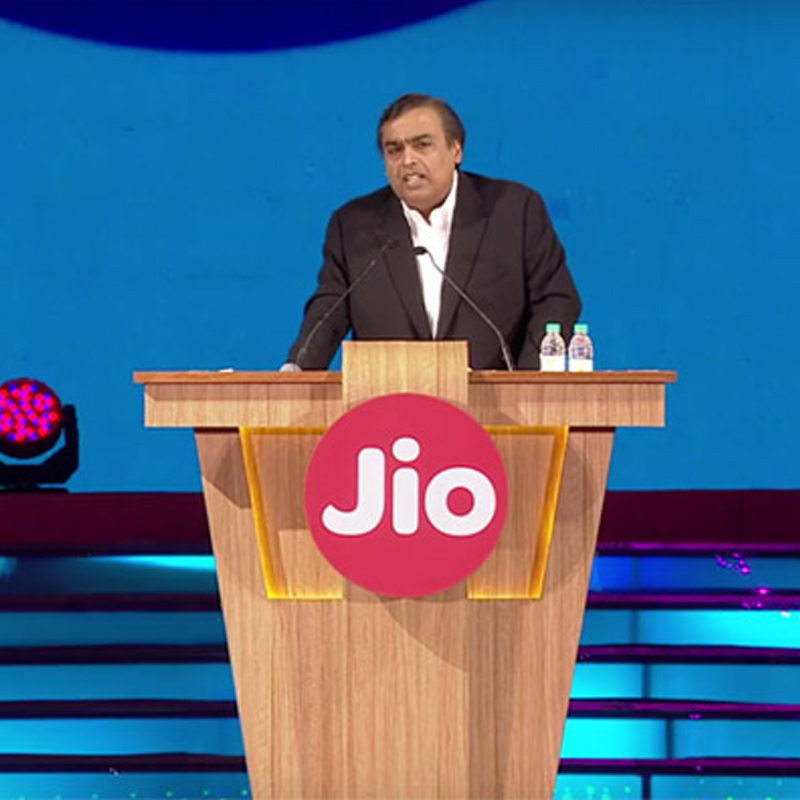
MUMBAI: Even as India’s attorney-general cleared a Rs 3,050 crore penal action against the leading telcos, Reliance CMD Mukesh Ambani is planning to infuse Rs 30,000 crore in Reliance Jio telecom venture which has caused a major disruption in India’s fiercely-competitive mobile market.
The attorney-general is understood to have opined that the Department of Telecom (DoT) has the power to impose penalty on grounds of poor quality of service of telecom operators Vodafone, Bharti Airtel and Idea Cellular, sources told PTI.
Reliance Jio, which reportedly had a subscriber base of 72.4 million at 2016-end, plans to collect funds via a rights issue that was approved at a recent board meeting, the Times of India reported.
In view of the unprecedented customer response and to address the anticipated growth in demand for digital services, Jio stated, additional investments were proposed to be made into the network to enhance its capacity and coverage. The new funds will come on top of the Rs 1.7 lakh crore that Reliance Jio has already invested.
The rights issue has been planned to be for six billion nine per cent non-cumulative optionally convertible preference shares (OCPS) of Rs 10 each for cash, at a premium of Rs 40 per OCPS. The amount subscribed/paid on each OCPS will be either redeemed at Rs 50 or converted into five equity shares of Rs 10 each at any time at the option of the company, but not later than 10 years from the date of allotment.
The new entrant Jio caused a considerable disruption in the space. In broadband services, with 35.94 million (3.594 crore), Jio had, in October 2016, joined the top five subscribers list. No matter it is working out to the benefit of the consumer and helping the industry expand albeit at a much lower cost to the end-user, well-entrenched rivals now are on a slippery wicket. Meanwhile, other telecom operators in the country are scrambling to catch up.
Telecom tribunal TDSAT has ordered the Telecom Regulatory Authority of India (TRAI) to take a stand on Reliance Jio’s free 4G offer in reasonable time. A tribunal bench heard arguments of both sides — TRAI and Airtel — and posted the matter for 1 February.
Reliance Jio earlier chose not to respond to queries regarding its reply to TRAI in connection with questions raised against alleged violations in extending its free offer till 31 March 2017 much beyond its introductory offer. Airtel had filed a petition before TDSAT accusing TRAI of being ‘sleeping trustee’ and a ‘mute spectator’ to the violations carried out by Jio.
Also Read:
Darwin effect: 3-4 telcos may Jio after potential M&As
Jio HNY: TDSAT raps TRAI as contest deepens
Respond to Vodafone’s TRAI challenge in two weeks, govt directed

iWorld
What SMS letters G, T, S and P mean and how they help spot scams
Small alphabet tags on messages reveal whether texts are government or ads.
MUMBAI: Sometimes the smallest letter in a message can be the biggest clue. In an age where smartphone users receive dozens of alerts every day, the tiny alphabet appearing at the end of many SMS messages can reveal whether a text is official, transactional, service related or simply promotional. Understanding these tags can help users quickly identify legitimate messages and stay alert to potential scams.
Under telecom regulations in India, SMS senders are required to categorise messages based on their purpose. As a result, many texts end with a single letter that indicates the type of communication being sent.
If an SMS ends with the letter G, it typically means the message has been sent by a government authority. These alerts may include information about public services, government schemes, safety advisories or emergency notifications such as natural disaster warnings.
A message ending with the letter T signals a transactional SMS. These are usually sent by banks, financial institutions or digital services to confirm activities such as payments, account updates or one time passwords (OTPs).
The letter S represents a service related message. These notifications commonly come from companies and online platforms providing updates about services or orders. For instance, e commerce platforms like Amazon or Flipkart often send delivery updates and order confirmations that end with the letter S.
Meanwhile, SMS messages ending with the letter P are promotional in nature. These texts are typically marketing communications sent by businesses advertising products, offers or services such as education programmes, fashion sales or loan schemes.
Understanding these simple tags can also help users stay cautious about fraudulent messages. Cybersecurity experts note that scam messages often do not follow these regulated formats and may arrive without any category letter at the end.
While the absence of a tag does not automatically mean a message is fraudulent, it can serve as an early warning sign encouraging users to verify the source before clicking links or sharing personal information.
For those who wish to reduce marketing texts altogether, telecom operators also provide Do Not Disturb (DND) options.
Users of Jio can activate DND through the MyJio app by navigating to the menu, selecting settings and enabling the DND option with preferred filters.
Similarly, subscribers of Airtel and Vi can enable the same feature through their respective mobile apps to block promotional messages.
In a digital world flooded with alerts and notifications, recognising what a single letter means could make the difference between a harmless update and a potential scam.