News Headline
BARC India in talks with DTH ops, MSOs for RPD to boost robustness

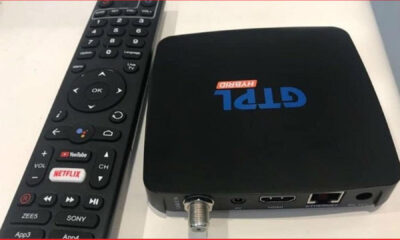
NEW DELHI: India’s incumbent audience measurement organization Broadcast Audience Research Council of India (BARC) is in talks with DTH operators and MSOs for return path data (RPD) via their respective digital set-top boxes at customer premises to augment the robustness of viewership vital stats it dishes out.
What does this mean? It entails capturing passive data collection of household viewership from digital cable and DTH homes via existing set-top-boxes (STBs). This would therefore enable measurement based on a larger sample.
Broadcast industry sources while confirming that talks are on between BARC India and various DTH operators for additional data that can be generated from non-BARC meters, added that the findings can help almost all stakeholders in the media to further fine-tune their strategies regarding consumer targeting. According to the buzz, talks are on with the likes of Airtel DTH, Sun DTH, Hathway, Tata Sky and DEN among others.
The proposal on RPD is in addition to moves that BARC India has been making over the last six months to give more credibility and robustness to its data as also insulate itself from allegations of hacking and other malpractices. The organization, in this regard, is also proposing to revamp its Ethics Committee into a Disciplinary Committee that will have semi-judicial powers under a retired court judge.
TV viewership in India is monitored and measured on the basis of 20,000 BARC India panel homes — that is, homes where it has its BAR-o-Meters installed. BARC is committed to raise that number every year by 10K to reach a total panel of 50,000 homes. However, Indian media industry sources also highlighted the issue whether Indian the eco-system can support an audience panel size larger than what has been planned for as any additional data generated via BARC India and non-BARC boxes would entail a financial cost, which would have to be borne, at the end of the day, by the industry players.
RPD would substantially increase the sampled base for BARC India, helping further improve accuracy of its data. A larger sample will also minimize effect of any skews in sampling and make tampering difficult. Additional data would also help in reporting viewership of niche channels, apart from helping the measurement organization in reporting VoD, OTT, time shifted viewing and HD channels. Stats regarding smaller geographic regions and split beams of TV channels too would become possible.
Such tie-ups will also help BARC India’s DTH/cable partners gain insights into TV viewing within their subscriber base in terms of linear TV, VoD and interactive services. Such data also likely to help them understand utilization of content packs and guide the pricing and packaging of services of platform operators.
Meanwhile, RPD has been employed by data collectors in more developed and matured TV markets like the US, the UK, Australia and also in some parts of Asia for quite some time now. “The ubiquity of digital set-top boxes means that many cable and satellite operators can collect subscriber behaviours as a by-product of their subscriber management processes. Specifically, return path data can provide an economical way for the cable and satellite businesses to enhance the currency TV audience measurement in a manner dedicated to the needs of the multi-channel television industry,” Hong Kong-headquartered Asian media industry organization CASBAA had stated in one of its recent reports on multi-channel advertising in APAC.
The FCC’s proposal to open cable set-top boxes to competition had thrust them into the spotlight. In 2016 when the Obama-government nominated FCC chief had proposed to throw open the STBs to competition and third-party manufacturers, Multichannel News had reported that “the role that STBs play not as content portals, but as providers of return-path data (RPD)” too is important.
ALSO READ:
Total TV universe up to 183 mn; rate of rural growth higher
BARC separates urban and rural viewership data