MAM
PM Modi praises EaseMyTrip co-founder’s optimism on digital India

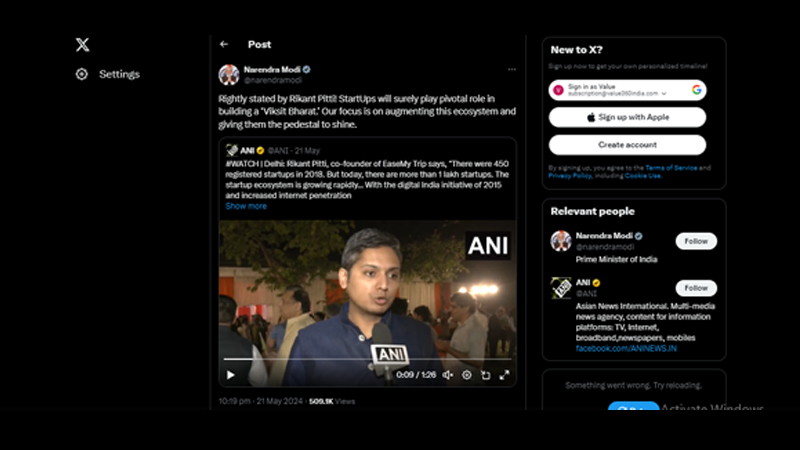
Mumbai: PM Narendra Modi has applauded EaseMyTrip co-founder Rikant Pittie for his insightful remarks on how digital India initiatives have fostered a thriving Indian startup ecosystem and are poised to accelerate the Viksit Bharat mission. Viksit Bharat 2047 represents the government’s vision to transform the county into a developed entity by its 100th independence in 2047.
Rightly stated by Rikant Pitti! StartUps will surely play pivotal role in building a ‘Viksit Bharat.’ Our focus is on augmenting this ecosystem and giving them the pedestal to shine. https://t.co/X9EsyrX81p
— Narendra Modi (@narendramodi) May 21, 2024
The PM emphasised that startups will play a pivotal role in building a ‘Developed India,’ and the government’s focus will remain on enhancing this ecosystem and providing startups with the platform to excel.

EaseMyTrip co-founder Rikant Pittie said, “There were 450 registered startups in 2018. But today, there are more than 1 lakh startups. The startup ecosystem is growing rapidly. With the Digital India initiative of 2015, internet penetration has increased tremendously. In fact, the Bharat Net Scheme launched by the government has provided 2,50,000 villages with internet. I feel the future of the country is in the hands of technology. Minister of Skill Development and Entrepreneurship, Rajeev Chandrasekhar, also mentioned that India’s digital economy is growing at a rate of 2.8 times. As the digital economy grows, there will be a lot of changes that will come through. I am confident that India will be a developed country even before 2047.”
EaseMyTrip’s positive outlook towards the initiatives of the Government of India aligns with the government’s efforts to bolster the Indian startup ecosystem at the grassroots level. This mutual support system not only fosters growth but also provides a platform for startups to thrive.
Additional Information:
On a recent development, EaseMyTrip was also amongst the few unicorns to have collaborated with Government-led Open Network for Digital Commerce (ONDC) to join its platform, by signing a Letter of Intent (LOI) in the ONDC Startup Mahotsav organised by the Department for Promotion of Industry and Internal Trade (DPIIT), ONDC and Startup India.




Brands
Ofis Square appoints Yami Gautam Dhar as brand ambassador
Actress to champion flexible workspaces as company expands in Delhi NCR.

MUMBAI: Ofis Square has found its perfect workspace muse and she comes with star power and a grounded, ambitious vibe. The premium coworking and managed workspaces brand has announced the appointment of popular actress Yami Gautam Dhar as its brand ambassador. This marks a significant milestone as Ofis Square continues to rapidly expand its presence across Delhi NCR.
Since its inception in 2022, Ofis Square has carved a niche in the Indian corporate landscape with its “Future Works Here” philosophy. The brand focuses on creating thoughtfully designed, technology-enabled environments that foster innovation, collaboration, and the evolving needs of modern businesses.
Yami Gautam Dhar, known for her credible image and strong connection with modern Indian audiences, perfectly aligns with the brand’s aspirational positioning.
Ofis Square founder Saroj Mittal said, “Yami brings with her a credibility and an energy that genuinely reflects our community people who are ambitious, grounded, and serious about what they do. We’re proud to have her with us as we step into this next phase of growth.”
Yami Gautam Dhar expressed her excitement, “Ofis Square isn’t just building workspaces; it’s trying to change the conversation around how India works. There’s a whole generation of founders, freelancers, and business leaders working differently in spaces that actually inspire them. I’m excited to be part of a brand that’s building for them.”
The collaboration reflects Ofis Square’s commitment to strengthening its role in shaping India’s evolving workplace culture through community building, networking, and industry engagement.
In the competitive world of flexible workspaces, Ofis Square has made a smart move by bringing in a relatable and aspirational face. With Yami Gautam Dhar on board, the brand is set to make workspaces not just functional, but truly inspiring.







