iWorld
Embed highlighted texts as hyperlink

Mumbai: In the hustle and bustle of modern life, the juggle between work commitments and personal well-being often feels like a precarious balancing act, especially for the dynamic working women. As we navigate through packed schedules and endless to-do lists, it’s easy to push our health to the back burner.
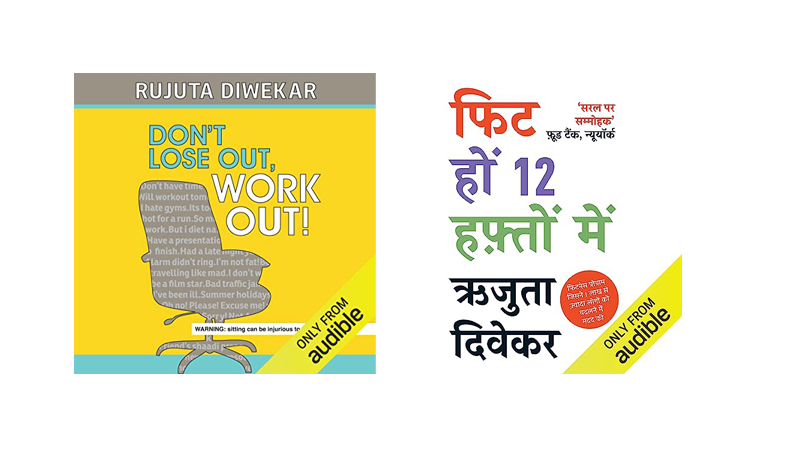
But what if we told you that achieving and maintaining fitness doesn’t have to be an uphill battle? There are myriad ways for you to weave wellness seamlessly into your everyday routine. Celebrity nutritionist Rujuta Diwekar in ‘The 12-Week Fitness Project’ and ‘Don’t Lose Out, Work Out!,’ on Audible, offers a treasure trove of tips for women to make the most of their workout routine. Pro tip: If you are seeking essential advice on incorporating the right exercises and workouts into your schedule, you can access these audio titles by Rujuta Diwekar with Audible’s special a la carte offer, at a nominal cost of just Rs 69 each.
In ‘The 12-Week Fitness Project,’ Rujuta said, “Most of us lose two–four kilos of muscles every 10 years. In women, especially after 30, we lose muscle from our thighs and gain intramuscular fat at a fast pace. This continuous and progressive loss of muscle and bone density can be reversed with exercise.”
If you have never weight trained before: Start now. Schedule a meeting with an expert trainer at a local gym and begin with a once-a-week routine. You must start especially if you already have insulin resistance, are very obese, have a heart condition, bone loss or diabetes.
If you are already training but are not regular: Get regular and dedicate at least two times a week to strength training. This is especially crucial for all those who have PCOD or breakouts, are menopausal or have thyroid issues. Focus on bringing in progressive overload into your workouts.
If you are training three or more days a week, drop your reps to five–eight and focus on the intensity or the actual weight you subject your muscles to. The biggest gains of strength training come from the load bearing that you train your muscles to do.
In ‘Don’t Lose Out, Work Out!’ Rujuta shared, “You can start with as little as an hour every week. The most important thing you need to remember is intensity. A gym workout needs to be planned properly and here is how to do that.”
The warm-up should be specific to the main workout. The right warmup allows the blood flow to move through the specific muscle groups and warms up the specific joints that will be trained that day.
1. Perform a set of 12-15 reps before starting your training
2. Use 50 per cent of the main workout weight
3. Rest for 30 seconds to three minutes before starting the main workout set. This leads muscles to be warmed up with the exact mechanics that will be performed on the workout set.
Perform higher intensity before lower intensity exercises. Workout in the following order – legs, back, chest, shoulders, and then arms.
1. Within legs, you should prioritise multiple joint exercises like squats before leg extension.
2. With the back, do a bend-over row, which is done using free weights like the barbell, before doing a seated row.
3. With the chest, you should chest press, higher intensity and more exhausting, before doing the flyes.
The duration of the workout should not exceed 60 minutes. We must remember that once the glycogen stores are over, the body will burn its proteins to keep up with the exercise.
1. With the glycogen stores most of us have, we will run out of fuel in as little as 30 minutes. This will lead to both a drop in exercise intensity and a higher risk of injury.
2. In one gym session, perform about eight to ten sets excluding warm-ups that train major muscle groups.
3. Perform eight to 15 reps per set with good form and to the point of fatigue. Fatigue is reached when you know you can’t do another repetition with the same weight without compromising on form. Use both multi and single-joint exercises.