iWorld
Now ‘Watch’ original videos & shows on Facebook

MUMBAI: FB is excited to see how creators and publishers use shows to connect with their fans and community. Watching video on Facebook has the incredible power to connect people, spark conversation, and foster community. On Facebook, videos are discovered through friends and bring communities together.
As more and more people enjoy this experience, FB has learned that people like the serendipity of discovering videos in News Feed, but they also want a dedicated place they can go to watch videos. That’s why last year FB launched the Video tab in the U.S., which offered a predictable place to find videos on Facebook. Now FB wants to make it even easier to catch up with shows you love.
FB will be introducing Watch to a limited group of people in the U.S. and plan to bring the experience to more people soon. Similarly, FB will be opening up Shows to a limited group of creators and plan to roll out to all soon.

Introducing Watch
FB is introducing Watch, a new platform for shows on Facebook. Watch will be available on mobile, on desktop and laptop, and in our TV apps. Shows are made up of episodes — live or recorded — and follow a theme or storyline. To help you keep up with the shows you follow, Watch has a Watchlist so you never miss out on the latest episodes.
Watch is personalized to help you discover new shows, organized around what your friends and communities are watching. For example, you’ll find sections like “Most Talked About,” which highlights shows that spark conversation, “What’s Making People Laugh,” which includes shows where many people have used the “Haha” reaction, and “What Friends Are Watching,” which helps you connect with friends about shows they too are following.
FB has learned from Facebook Live that people’s comments and reactions to a video are often as much a part of the experience as the video itself. So when you watch a show, you can see comments and connect with friends and other viewers while watching, or participate in a dedicated Facebook Group for the show.
A Platform for Shows
 Watch is a platform for all creators and publishers to find an audience, build a community of passionate fans, and earn money for their work. FB thinks a wide variety of Facebook shows can be successful, particularly:
Shows that engage fans and community. Nas Daily publishes a daily show where he makes videos together with his fans from around the world. The Watchlist makes it easy for fans to catch every day’s new episode.
Live shows that connect directly with fans. Gabby Bernstein, a New York Times bestselling author, motivational speaker, and life coach, uses a combination of recorded and live episodes to connect with her fans and answer questions in real time.
Shows that follow a narrative arc or have a consistent theme. Tastemade’s Kitchen Little is a funny show about kids who watch a how-to video of a recipe, then instruct professional chefs on how to make it. Each episode features a new child, a new chef, and a new recipe. Unsurprisingly, the food doesn’t always turn out as expected.
Live events that bring communities together. Major League Baseball is broadcasting a game a week on Facebook, enabling people to watch live baseball while connecting with friends and fellow fans on the platform.
FB thinks Watch will be home to a wide range of shows, from reality to comedy to live sports. To help inspire creators and seed the ecosystem, FB has also funded some shows that are examples of community-oriented and episodic video series. For example, Returning the Favor is a series hosted by Mike Rowe where he finds people doing something extraordinary for their community, tells the world about it, and in turn does something extraordinary for them. Candidates are nominated by Mike’s fans on Facebook.
Addressing Cloaking
 FB has always been working to combat the spread of misinformation and the financially-motivated bad actors who create misleading experiences for people. FB is now sharing additional steps FB ’ve taken to remove even more of them from Facebook, so that what people see after clicking an ad or post matches their expectations.
Some of the worst offenders use a technique known as “cloaking” to circumvent Facebook’s review processes and show content to people that violates Facebook’s Community Standards and Advertising Policies. Here, these bad actors disguise the true destination of an ad or post, or the real content of the destination page, in order to bypass Facebook’s review processes. For example, they will set up web pages so that when a Facebook reviewer clicks a link to check whether it’s consistent with our policies, they are taken to a different web page than when someone using the Facebook app clicks that same link. Cloaked destination pages, which frequently include diet pills, pornography and muscle building scams, create negative and disruptive experiences for people.
Since cloaking exists across many of today’s digital platforms, we will also be collaborating closely with other companies in the industry to find new ways to combat it and punish bad actors. Over the past few months FB have been ramping up our enforcement across ads, posts and Pages, and have strengthened our policies to explicitly call out this practice. FB will ban advertisers or Pages found to be cloaking from the platform.
How FB Identifies Cloaking
FB is utilizing artificial intelligence and have expanded our human review processes to help us identify, capture, and verify cloaking. FB can now better observe differences in the type of content served to people using our apps compared to our own internal systems.
In the past few months these new steps have resulted in us taking down thousands of these offenders and disrupting their economic incentives for misleading people.
How Will This Impact My Page?
FB sees cloaking as deliberate and deceptive, and will not tolerate it on Facebook. FB will remove Pages that engage in cloaking. Otherwise Pages should not see changes to their referral traffic.
ALSO READ :
Facebook to reduce unintentional ad clicks, announces new metrics
We are seeing consumption in languages & low-connectivity areas, says Facebook India’s Saurabh Doshi






iWorld
Spotify rolls out ‘Verified by Spotify’ badge for artists
New badge and profile details aim to boost transparency in AI-driven music era.
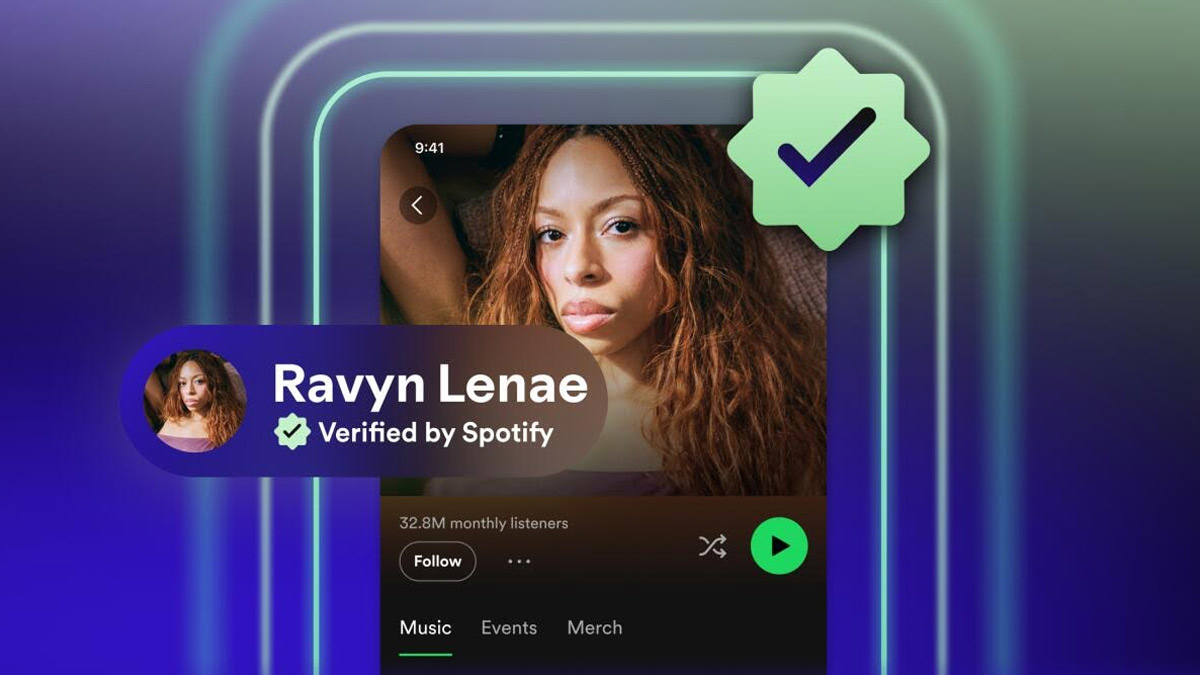
MUMBAI: In a world where even playlists can have imposters, Spotify is adding a badge of trust. The streaming platform has begun rolling out a new ‘Verified by Spotify’ badge, alongside expanded artist profile details, as it looks to bring greater clarity to listeners navigating an increasingly complex mix of human and AI-generated music. The badge, currently in beta, will appear on artist profiles that meet Spotify’s internal criteria for authenticity. These include consistent listener engagement, adherence to platform policies and signs of a real-world presence such as live performances, merchandise or active social media profiles. Notably, profiles representing primarily AI-generated artists will not be eligible for verification at launch.
Spotify says the verification process will combine automated systems with human review, prioritising artists with sustained audience interest over those driven by short-term spikes. The rollout will be gradual, with the badge appearing across profiles and search results over the coming weeks. The company noted that more than 99 per cent of artists users actively search for are already included in the initial phase.
Alongside the badge, Spotify is also introducing a new artist details section within profiles. Available even for non-verified artists, the feature will highlight career milestones, release activity and touring history, offering listeners a more comprehensive view of an artist’s journey and output.
The move builds on Spotify’s broader push towards transparency, complementing existing features such as SongDNA, expanded song credits and AI attribution tools. Together, these updates aim to give users more context about what they are listening to and who is behind it.
As generative AI continues to blur the lines between creator and creation, Spotify’s latest update signals a clear intent: in the streaming era, authenticity is becoming just as important as accessibility.