Connect with us

High Court

TV content: Madras HC seeks Centre’s clarification on regulatory mechanism

Published

on

NEW DELHI: Joining issues with a petition presently being heard by the Supreme Court on a similar matter, the Madras High Court yesterday directed the federal government to clarify on the existing regulatory setup governing contents aired by television channels in India.

The first bench comprising Chief Justice Indira Banerjee and Justice M Sunder gave this direction to assistant solicitor general Su Srinivasan, who appeared for the central government, during the hearing of a public interest litigation (PIL) to stop telecast of Tamil reality show ‘Bigg Boss’, hosted by actor Kamal Haasan on Vijay TV, part of Star India, according to a report filed by PTI from Chennai.

The matter has been posted for further hearing on August 18, 2017.

Advertisement

Earlier, senior counsel P S Raman, who appeared on behalf of the actor and anchor of the TV show, submitted that there were two bodies to regulate the channels. One was the Broadcasting Content Complaints Council (BCCC), a self-regulatory body headed by a retired Supreme Court judge and the other was ministry of information and broadcasting (MIB), the PTI report quoted Raman as telling the local high court.

BCCC is a self-regulatory body set up by the Indian Broadcasting Foundation, an industry organisation that has a large number of TV channels as its members. Though there’s no formal content regulatory body in India on the lines of American FCC or the UK’s Ofcom or Singapore’s MDA, IBF’s self regulatory body takes up complaints relating to TV content. Separately, the content code, part of India’s Cable TV Act (enforced by MIB) outlines broad guidelines for TV content.

The PTI report stated that petitioner Saravanan has alleged that in the reality show Haasan played with emotions and behaviour of female contestants, which he termed vulgar and obscene. He further submitted that to protect Tamil culture and tradition and in the interest and welfare of the general public, the telecast of the show must be stalled immediately.

Advertisement

“The dress code and behaviour of female contestants on the show are very vulgar and obscene making my family members and me uncomfortable in watching the programme. Also, the reference to ‘cheri’ (slum) behavior, made by a participant to describe the behaviour of another contestant, greatly hurt downtrodden people,” the petitioner said.

Meanwhile, the Supreme Court is hearing a similar case and has enquired from the central government whether it has a proper mechanism in place to regulate TV content.

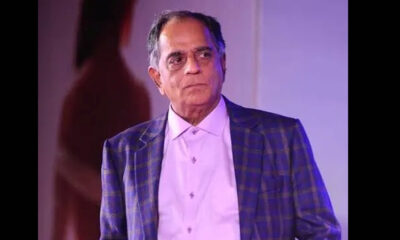
Outgoing film certification (CBFC) chief Pahlaj Nihalani, dubbed nationalist and ultra-conservative by a section of content producers and audience alike, in a media interview had urged the government to extend CBFC’s jurisdiction to oversee television shows too.

Advertisement

ALSO READ:

Govt formalising TV & radio complaints’ redressal mechanism

SC to MIB: Get mechanism to deal with complaints on TV, radio shows

Advertisement

Awarded adman Prasoon Joshi is new CBFC chief, Pahlaj Nihalani exits

Click to comment

Leave a Reply

Your email address will not be published. Required fields are marked *

High Court

Bombay High Court questions AI celebrity deepfakes in Shilpa Shetty case

Justice questions legality of unconsented AI personas, platforms directed to respond.

Published

on

MUMBAI: The Bombay High Court just put AI on the witness stand because when a chatbot starts chatting as Shilpa Shetty without asking, even the bench wants to know who gave permission. The Bombay High Court on Wednesday expressed serious concerns over the legality of artificial intelligence tools that simulate celebrity personalities without consent, during a personality rights suit filed by actor Shilpa Shetty.

Justice Sharmila Deshmukh, hearing the matter, questioned platforms that allow users to interact with AI-generated versions of actors without authorisation. The court noted that one accused AI chatbot website continued using Shetty’s personality without permission, prompting the judge to ask about the legal basis for such operations.

When the lawyer for the AI company argued that the system relied on algorithms and did not require celebrity consent, Justice Deshmukh challenged the platform’s right to recreate and make public a person’s identity in this manner. She observed that while users uploading photographs raised one set of issues, AI systems generating content based on recognised personalities posed distinct legal and ethical questions especially when the platform itself acknowledged the content was not real.

Advertisement

The court directed the platform to file a detailed response explaining its position.

The case involves Shetty seeking restrictions on more than 30 platforms including e-commerce websites and AI services accused of hosting or enabling misuse of her image and circulation of deepfake content.

The Bench also raised concerns about Youtube commentary videos discussing the ongoing proceedings involving Shetty and her husband, questioning whether unverified discussions could malign parties without journalistic checks.

Advertisement

Counsel for Google, Tenor and the AI entity informed the court that flagged infringing URLs had been removed. Shetty’s team disputed this, leading the court to allow her to file an application alleging non-compliance if links remained active.

Tenor objected to the broad injunction sought, arguing it functions as an intermediary GIF platform without capacity for proactive monitoring. The court directed Tenor to file an affidavit opposing the order.

E-commerce platforms including Amazon stated they had removed unauthorised listings using Shetty’s name and image, and would continue to act on specific notifications.

Advertisement

The court reiterated that directions for intermediaries would operate on a “take-down on notice” basis, requiring removal of infringing content once flagged.

As deepfakes blur the line between real and rendered, the Bombay High Court isn’t just hearing a case, it’s asking the bigger question: in the age of AI avatars, who really owns your face?

Advertisement
Continue Reading

Advertisement News18
Advertisement All three Media
Advertisement Whtasapp
Advertisement Year Enders

Copyright © 2026 Indian Television Dot Com PVT LTD

This will close in 10 seconds

×