I&B Ministry
MAELS 2017: Free traditional media from regulations, don’t impose these on OTT services


MUMBAI: Traditional linear television needs to be free from the chains of regulations, and OTT entertainment platforms need to be left clear from any fresh legislation. That was the conclusion of the second panel at the sixth annual Media, Advertising and Entertainment legal summit 2017 which focused on whether the fresh emerging digital communication and entertainment should be allowed to function unfettered.
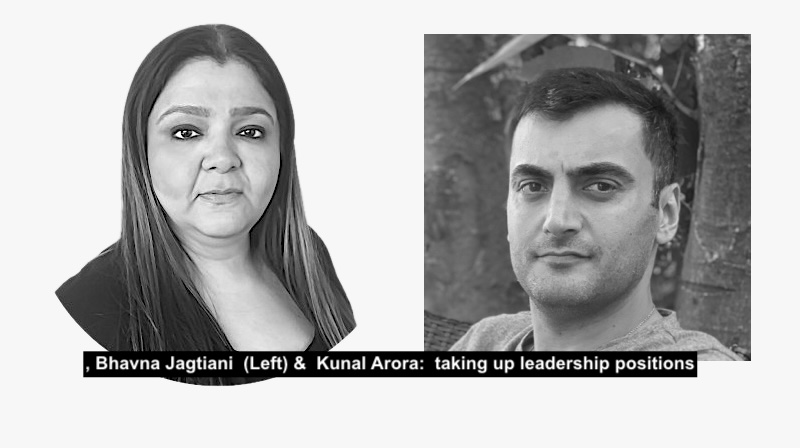
The panel discussion on “The New Digital India Wave – An Untamed Beast” moderated by Castle Media CEO Vynsley Fernandes featured Indiantelevision.com founder, CEO and editor-in-chief Anil Wanvari, Alpha Partners associate partner Kunal Arora, Viacom 18 senior vice-president head business and legal affairs Anil Lale, Dhir & Dhir Associates’ partner KPS Kohli and Sony Pictures Entertainment head legal Ayan Roy Chowdhury.
Wanvari began the discussion by giving a lay of the OTT landscape, emphasising that streaming services, social media platforms, and communication tools such as Snapchat, Skype, Whatsapp, Hike and Messenger, among other, are here to stay and they have seen very rapid uptake.
“The next six months to a year are really going to see their adoption accelerating even further, courtesy dropping bandwidth prices – which are going to be shaved even further because of competition amongst the telcos,” said Wanvari. “This is going to lead to video consumption becoming more affordable for the masses and the explosion in data consumption will be like we never even imagined.”
Wanvari pointed out that many of the OTT services have been promoted by broadcasters the services of which are already governed by the Programme Code, the Copyright Act, the Cable TV Regulations Act, and they adhere to strict standards and practices to ensure that they don’t go afoul of the law.
“Broadcasters rely on self-regulation, and if there is a violation, the Broadcast Complaints Council ensures that the violator is brought in line,” added Lale.
Arora stated that, as of now, there are no specific regulations governing OTT services – especially the communications services, though a consultation paper was floated by the Telecommunications Regulatory Authority of India (TRAI) in 2015.
“One concern that I hear from the industry for the non-communication space that content can’t be regulated absolutely, while, for the communication-based OTT, it becomes quite essential to govern the content. For non-communication space, regulation is important from the pricing perspective. Just to keep things moving in the same direction, regulation should be drafted to make sure that the growth of the OTT sector doesn’t hamper or restrict the growth of the traditional sector, ” he added. “Also, with the amount of content flowing over the internet and on OTT services, monitoring and policing each one’s content could be very challenging for any government.”
Fernandes interjected here saying that technology can intervene here, especially in cases of national security. “In the valley, the government could ask all traditional media to shut down during the time of crisis,” he said. “But, can digital media be controlled so as the servers are located outside India and don’t fall under the country’s jurisdiction?” he questioned.
To this, Wanvari stated that the controls lie with the authorities as an order from either the TRAI or the home ministry or telecom ministry to the telecom and internet service providers can result in the complete shutdown of the internet in a geographical area which is under threat and totally defuse it.
“There is this argument of a lack of a level-playing field between traditional media and digital media. There are two kinds of players,” said Arora. “Those which are international, and those which are promoted by indigenous players or groups. You see the more edgy content on the international OTT players, whereas the Indian ones are relatively adhering to the programming and content regulations as mandated for TV.”
Kohli said, “For digital media there is no regulation. Their content is far more attractive to at least the younger generation because there is a little more skin and possibly abusive language. The traditional media is bound by rules and regulations, and hence it is controlled.”
Lale mentioned that television has very few controls at the subscriber end, and the Indian families, as a whole, have to watch a little mature content, hence broadcasters have to be more careful. “On digital, because the content is available on your phone or laptop, the content is under your control. If you look at the AVoD service, you will not find content which is more mature – exactly as on TV – but, while on SVoD, you will get content like Games of Thrones. Hence, the payment also comes in this matter. GoT is the example that how regulations should be separated for digital and linear TV,” he said.
Chowdhury said, “In India, whether we are paying to the service provider or we are paying to the government, in the form of direct-indirect taxes, levy or premiums, we pay for everything. So, there is no reason for the consumer to not shift from non-paying audience to paying audience. Also, the access cost is very less, so it is happening.”
The panel was totally in agreement that there are enough regulations in place right from the Indian Penal Code, the Copyright Act, to haul up violators, if any, even on the piracy front. “The basic issue of piracy is enforcement. We don’t need a separate regulatory body for OTT services. We have self-regulation,” said Kohli. The government has the EMMC and IPC and various acts to stop the piracy on the web. But, the issue is who’s going to execute, whether you go to the police and enforce it, or is there any technical way of enforcement.”
Roy Chowdhary proferred that, “Basically, enforcement should come from technology but telecom providers don’t want any controls as more data that is consumed the more they earn. But, if they are not open to cracking down on it, we can turn to blockchain which has an answer to it, which to a large extent curtails piracy.”