Brands
Aamir Khan becomes Vivo India’s new face


MUMBAI: After ending a two-year contract with Bollywood actor Ranveer Singh, Chinese mobile manufacturer Vivo has found its new brand ambassador in Aamir Khan. The eminent actor has been signed for Vivo’s future brand and product communication initiatives of Vivo India.
Capturing the essence of brand Vivo, Aamir Khan will soon be seen in a full-fledged marketing campaign around the upcoming products and will feature in a new television commercial.
The company is said to launch its new mobile handset V9 on 23 March which will feature the actor in its campaign.

Vivo India CMO Kenny Zeng says, “We are thrilled about the possibilities that our partnership with one of the world’s biggest superstars, Aamir Khan, will open up for Vivo in India. He mirrors the values of versatility, perfection and innovation that we steadfastly follow at Vivo. This new association will enable us to explore newer avenues to reach our customers as we script our future growth strategy in India.”
Commenting on his association, Aamir Khan adds, “Vivo as a brand embodies the spirit of innovation and meaningful disruption. Over the years, the brand has been constantly pushing the boundaries of smartphone technology as we know it today to provide consumers with an enhanced mobility experience. I am enthused to be a part of Vivo’s transformative journey in India.”
Over the last few years, Vivo has established an extensive retail presence to provide varied choices to consumers across the length and breadth of the country. Additionally, it has also launched an e-store and experience centre to provide phenomenal experience to its valued customers. With sports as a key focus for brand building, Vivo has invested heavily to associate with popular platforms such as IPL and Pro Kabaddi League.







Brands
Godrej clarifies ‘GI’ identifier after logo similarity debate
Says GI is not a logo, will not replace Godrej signature across products.
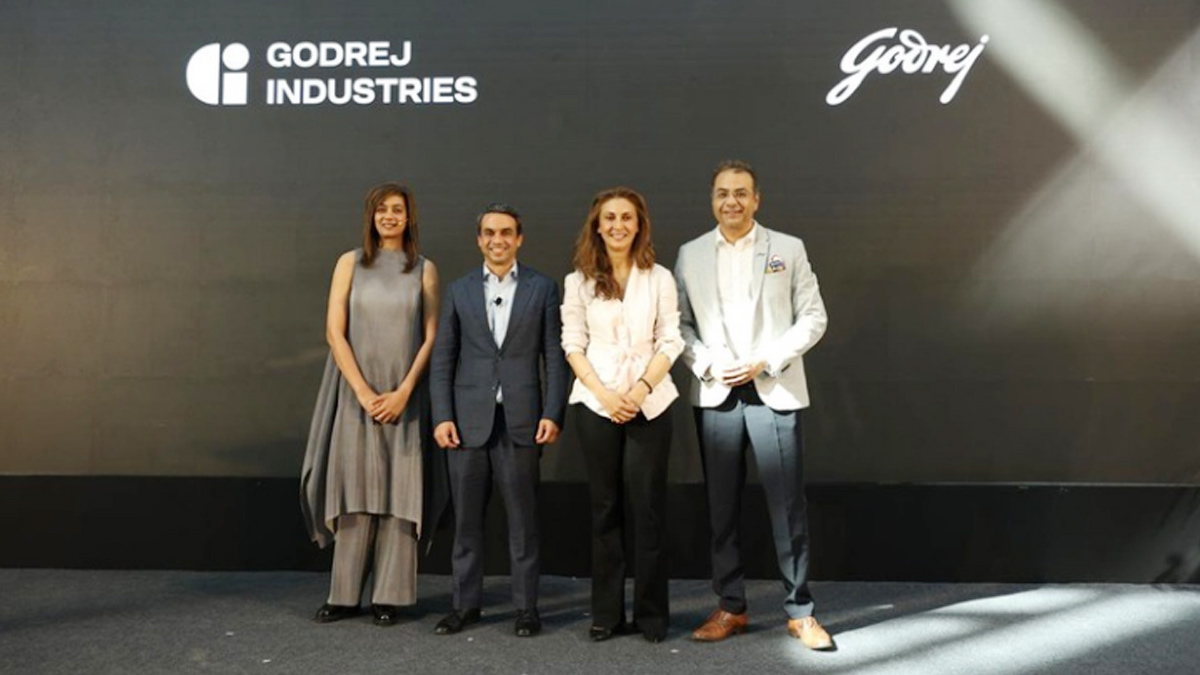
MUMBAI: In a branding storm where shapes did the talking, Godrej is now spelling things out. Godrej Industries Group (GIG) has issued a clarification on its newly introduced ‘GI’ identifier, addressing questions around its purpose and design following a wave of online criticism. At the centre of the debate were two concerns: whether the new mark replaces the long-standing Godrej logo, and whether its geometric design mirrors other corporate identities.
The company has drawn a clear line. The Godrej signature logo, it said, remains unchanged and continues to be the sole logo across all consumer-facing products and services. The ‘GI’ mark, by contrast, is not a logo but a corporate group identifier intended for use alongside the Godrej signature or company name, and aimed at stakeholders such as investors, media and talent rather than consumers.
The need for such a distinction stems from the 2024 restructuring of the broader Godrej Group into two separate business entities. With both continuing to operate under the same Godrej name and signature, the identifier is positioned as a way to differentiate the Godrej Industries Group at a corporate level.
The rollout, however, triggered a broader conversation on design originality. Critics pointed to similarities between the GI mark’s geometric composition and logos used by companies globally, raising questions about distinctiveness.
Responding to this, GIG said its intellectual property and legal review found that such overlaps are common in minimalist, geometry-led design systems. Basic forms such as circles and rectangles appear across dozens of brand identities worldwide, the company noted.
It added that the identifier emerged from an extensive design process and was chosen for its simplicity, allowing it to sit alongside the Godrej signature without competing visually. While acknowledging that elemental shapes may appear less distinctive in isolation, the group emphasised that the mark is part of a broader identity system that includes a custom typeface, sonic branding and other proprietary elements.
Following legal and ethical assessments, the company said it found no impediment to using the identifier, reiterating that the GI mark is a corporate tool not a consumer-facing symbol.
In short, the logo isn’t changing but the conversation around it certainly has.