MAM
The rise of brand Rohit Sharma

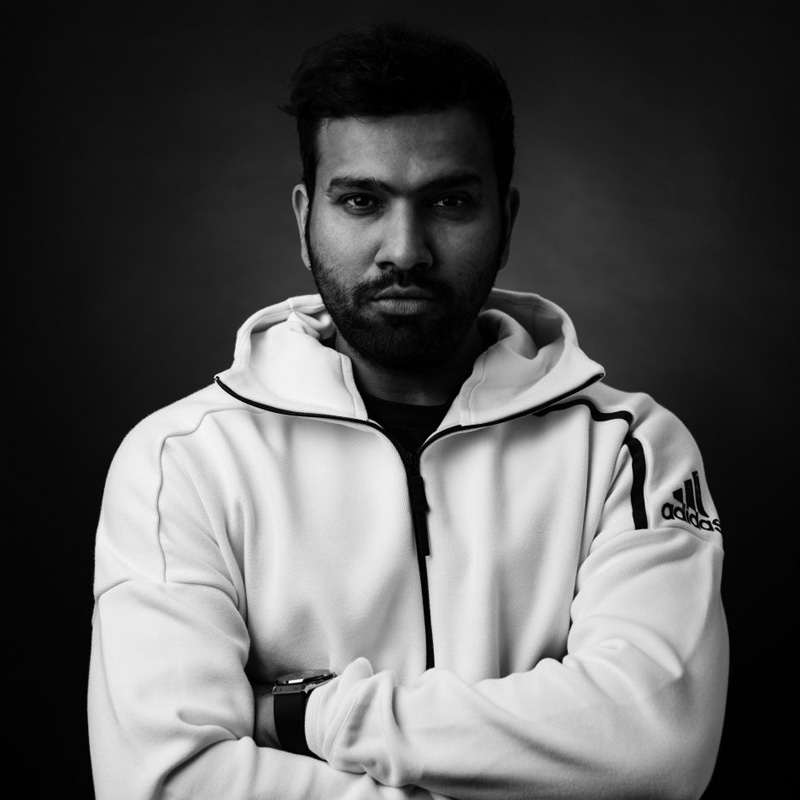
MUMBAI: He is the only batsman in the world to score double century twice in limited overs, the maximum number of individual sixes (16) in an ODI match and the only captain to win the Indian Premier League (IPL) title thrice. The vice-captain of the Indian cricket team also leads Mumbai Indians (MI) in the IPL. We’re talking of none other than Rohit ‘Superman’ Sharma.
Sharma, who lived in a small suburb in Mumbai and didn’t change schools because of financial constraints, today lives in a high-end plush apartment in Worli that costs a whopping Rs 30 crore. But this is not the story about how he became a household name or a prominent player in the Indian cricket team. The hitman has also become a ‘hit’ among leading brands that are willing to splurge millions to sign him as the brand ambassador.
While he makes a pretty decent amount from his cricketing career where he receives an enormous annual salary of Rs 11.5 crore, Sharma draws in an average of over Rs 10 crore annually from brand endorsements. According to industry estimates, his net worth is projected to grow further by approximately 38 per cent by the end of year 2018.

In a career spanning 11 years, Sharma has endorsed brands such as Maggi, Fair and Lovely, Lays, Nissan, energy drink Restless, Nasivion nasal spray, Ceat Tyres, Swiss watches company Hublot, Aristocrat by VIP luggage, Adidas and Oppo mobiles.
While one may think that his brand choices haven’t really been wise and astute in the last few years, he gradually seems to be getting a hang of how the game of brand endorsement is played. Only in 2018, he became the brand ambassador for Relispray, Sharp television and recently the mobile accessories brand Conekt. The renowned tire company Ceat also pays him Rs 3 crore every year to put the brand’s sticker on his cricket bat.
Though the quality and level of brands he has been choosing in the last few years have gone up considerably, it is still a long way for him before he can become the favourite of every brand. Currently, Indian cricket team captain Virat Kohli seems to be every brand’s go-to person as his brand equity was valued higher than football star Lionel Messi in the Forbes top 10 list of global athletes of 2017 with an estimated value of $14.5 million.
Although the early glamour also pushed Kohli to advocate Pepsi and Fair & Lovely Men in 2011, he eventually decided to move away from these brands in 2017. He refused to renew the contract, saying at the time that he would not ask people to consume something that he himself does not. Kohli said, “Things that I’ve endorsed in the past – I won’t take names — but something that I feel that I don’t connect to anymore. If I myself won’t consume such things, I won’t urge others to consume it just because I’m getting money out of it.”
Following this move by the captain, Sharma too does not see himself selling or endorsing a product that he doesn’t believe in. He says that he is extremely cautious about the brands he endorses. In an interview with Indiantelevision.com, Sharma said, “I am extremely cautious about the brands I associate myself with. I don’t want to be selling or getting involved with something that I don’t use myself. I genuinely believe in having a connection with a brand that you endorse and if that’s missing, there is no point in selling fake products/ideas to people.
But how does he really decide on signing a brand or giving it a miss? Says the MI captain, “Whenever I choose to endorse a product, I want my fans and people to experience the product and enjoy it as well. A lot of brands that I have endorsed are used by me and if I don’t see any camaraderie between me and the brand, I don’t go ahead with the association.”
Lately, newcomer Hardik Pandya is also getting better acceptance in the market than the proven and seasoned Sharma. Pandya is increasingly getting brands despite being new as he is flamboyant, stylish and supports different looks and hairstyles.
The hitman still has a long road and career ahead and his star value is unlikely to dim anytime in the future.




Digital
Content India 2026 opens with a copro pitch, a spice evangelist and a £10,000 prize for Indian storytelling
Dish TV and C21Media’s three-day summit puts seven ambitious projects before an international jury, and two walk away with serious development money
MUMBAI: India’s content industry gathered in Mumbai this March for Content India 2026, a three-day summit organised by Dish TV in partnership with C21Media, and it wasted no time making a statement. The event opened with a Copro Pitch that put seven scripted and unscripted television concepts before an international panel of judges, and by the end of it, two projects had walked away with £10,000 each in marketing prize money from C21Media to support development and international promotion.
The jury, comprising Frank Spotnitz, Fiona Campbell, Rashmi Bajpai, Bal Samra and Rachel Glaister, evaluated a shortlist that ranged from a dark Mumbai comedy-drama about mental health (Dirty Minds, created by Sundar Aaron) to a Delhi coming-of-age mystery (Djinn Patrol, by Neha Sharma and Kilian Irwin), a techno-thriller about a teenage gaming prodigy (Kanpur X Satori, by Suchita Bhatia), an investigative crime drama blending mythology and modern thriller (The Age of Kali, by Shivani Bhatija), a documentary on India’s spice heritage (The Masala Quest, hosted by Sarina Kamini), a documentary on competitive gaming (Respawn: India’s Esports Revolution, by George Mangala Thomas and Sangram Mawari), and a reality-horror competition merging gaming and immersive fear (Scary Goose, by Samar Iqbal).
The session was hosted by Mayank Shekhar.
The two winners were Djinn Patrol, backed by Miura Kite, formerly of Participant Media and known for Chinatown and Keep Sweet: Pray & Obey, with Jaya Entertainment, producers of Real Kashmir Football Club, also attached; and The Masala Quest, created and hosted by Sarina Kamini, an Indian-Australian cook, author and self-described “spice evangelist.”
The summit also unveiled the Content India Trends Report, whose findings made for bracing reading. Daoud Jackson, senior analyst at OMDIA, set the tone: “By 2030, online video in India will nearly double the revenue of traditional TV, becoming the main driver of growth.” He noted that in 2025, India produced a quarter of all YouTube videos globally, overtaking the United States, while Indians collectively spend 117 years daily on YouTube and 72 years on Instagram. Traditional subscription TV is declining as free TV and connected TV gain ground, forcing broadcasters to innovate. “AI-generated content is just 2 per cent of engagement,” Jackson added, “highlighting the dominance of high-quality human content. The key for Indian media companies is scaling while monetising effectively from day one.”
Hannah Walsh, principal analyst at Ampere Analysis, added hard numbers to the picture. India produced over 24,000 titles in January 2026 alone, with 19,000 available internationally. The country now accounts for 12 per cent of Asia-Pacific content spend, up from 8 per cent in 2021, outpacing both Japan and China. Key exporters include JioStar, Zee Entertainment, Sony India, Amazon and Netflix, delivering over 7,500 Indian-produced titles abroad each year. The top importing markets are Saudi Arabia, the UAE, Egypt, the United States and the Philippines. Scripted content dominates globally at 88 per cent, with crime dramas and children’s and family titles performing particularly strongly.
Manoj Dobhal, chief executive and executive director of Dish TV India, framed the summit’s ambition squarely. “Stories don’t need translation. They need a platform, discovery, and reach, local or global,” he said. “India produces more movies than any country, our streaming platforms compete globally, and our tech and creators win international awards. Yet fragmentation slows growth. Producers, platforms, and tech move in different lanes. We need shared spaces, collaboration, and an ecosystem where ideas, technology, and people meet. That is why we built Content India.”
The data, the pitches and the prize money all pointed to the same conclusion: India is not waiting for the world to discover its stories. It is building the infrastructure to sell them.







