MAM
ETMoney uses shock and humour to promote tax-saving among mobile-first millennials


DELHI: The end of every financial year is quite a stressful time for the salaried class as they try to manage their hard-earned money through effective tax-saving plans. The pressure of government deadlines amidst the constant hustle of the work leads to buying of tax-saving products which don’t actually benefit much. To counter this, ETMONEY is promoting its unique tax-saving proposition that enables customers to save up to Rs 78,000 in tax savings.
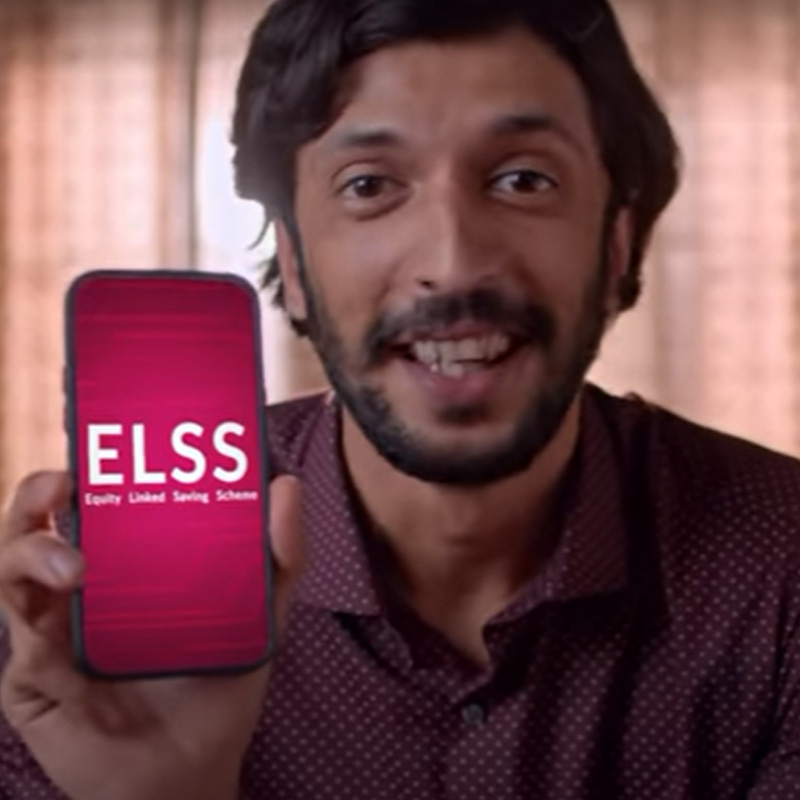
The campaign, conceptualised by DAIKO FHO and produced by Cellardoor in partnership with the Times Internet marketing team led by COO Santosh Navlani features a TVC starring standup comedian and comedy writer Biswapati Sarkar and actor Namit Das. To know more about the campaign, Indiantelevision.com interacted with ETMONEY COO and head of marketing Santosh Navlani, who outlined the basic idea of the campaign and its marketing plans. Edited excerpts follow:
Elaborate more on the campaign: from ideation to execution, what were the touchpoints you were planning to address?
The core idea behind the campaign is that at the end of every financial year, Indians clamour to get done with their tax-saving investments. In the rush to meet the deadline, most people just buy tax-saving products without evaluating if it's doing anything for them beyond the tax-saving. Most often, it is akin to giving away the Rs 100 on something just because you will save Rs 30 (max 30 per cent tax saving). In this rush to save Rs 30, we forget Rs 70 of our hard-earned money is also getting deployed and should ideally make you better off financially or otherwise.
Another part of the problem is that people don’t really know what the maximum tax they can save is. Taxation laws in India are notoriously complicated and figuring out various deductions, the clauses for each and then knowing your maximum tax saving limit is not something that everyone knows at the back of one’s hand. This results in taxpayers leaving money on the table.
With this campaign, our aim is to help Indian taxpayers not only save maximum tax possible but also do it in a way that helps them better their financial lives. As part of the campaign, we first built a solution on ETMONEY that after looking at the user's current life stage and investment gives them a personalised tax plan. It details the maximum tax someone can save along with products where they should invest.
The second part was ensuring we have all the tax-saving products we suggest to be made available for purchase. With this, we are India’s only non-banking fintech app that helps people plan to save as high as Rs 78,000 in taxes & make instant online purchases, right from their smartphones.
Do you think the Indian millennial is serious about tax saving? Most of the marketers see the generation as someone who believes in spending more than saving?
The last quarter of any financial year is the time when every salaried Indian, including millennials think of tax savings, either due to self-realization or due to reminders from HR/Payroll managers. Due to this, there is a big population that comes new-to-market every year as well as people who either have missed the bus of tax-saving in the past or have planned/saved tax earlier that they need to do much more structured in the new year. So, while the audience believes in living life to fullest & maximum spending, the external factors definitely create an environment for them to become self-aware of the need to plan one’s taxes well. We are banking upon this big cohort of such individuals to drive maximum savings for themselves as well as impact for the brand.
Why did you choose Biswapati Sarkar and Namit Das as the face of a campaign? Why do you think a comedian talking about investments will make the cut?
Tax & finance can be mostly boring or has been overly emotional on television advertising. Tax-saving is important, but given the mobile-first Indian millennials we want to target, we wanted to drive home the point through shock or humour. Shock has been demonstrated through one not even being aware that Rs 78,000 tax saving is possible (most people who know, know that it is Rs 46,800). When not shock, we have used humour through the “crazy happiness” one gets when some finds a sum of lost money (i.e. when one accidentally finds some money which was either written off or lost).
Biswa brings that lightness we wanted in the communication to the brink of being scary (through shock). On the other hand, Namit Das is truly representative of ETMONEY users. Young, suave and someone who really knows that making his money work hard is as important as earning it.
What is the effective marketing strategy for the campaign? On which channels and media are we going to see it?
We have significant budgets lined up for promotions across TV, print, outdoor & digital. We are also planning to leverage our audience’s love & passion towards music by producing a music video on tax (a fun song we believe people would want to listen to again & again). Besides, we have created tons of education material that we are putting on YouTube as well as distributing that content via our app & other properties. On outdoor, we are using a concentrated strategy on metro trains, airports & areas where working population flocks.
Our audience on TV is mostly working or earning population. There is a strong affinity towards Live Sports. Hence we are leveraging Live Cricket on TV & OTT platforms. Given our audience likes to stay updated on current events, we are leveraging the reach of news on TV as well as OTTs. We are also making weekend entertainment as well as movies to build out the reach further & increase the frequency.