Connect with us

News Broadcasting

Network18’s initiatives to curb the spread of Covid2019 among employees

Published

on

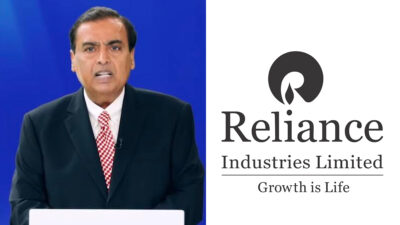
MUMBAI: News outlets have been relentlessly covering the Covid2019 pandemic outbreak in India. A cursory glance at any channel would show reporters taking precautions such as wearing masks, gloves and maintaining distance from others. Despite all the precautions, Network18, which houses a bunch of national and regional news channels under the TV18 umbrella, was one of the media companies that found some employees to have tested positive for Covid2019. It swung into action immediately through the systematic intervention and timely assistance of various departments, primarily the HR.

Over the past two months, the media organisation tested more than 700 colleagues and their immediate families. From among the more than 7000 employees across the length and breadth of India, only 16 colleagues have tested positive. Every positive case has been followed up with meticulous contact-tracing. The company said that where possible, it cared for all those who have tested positive and their families at Reliance’s facilities.

“Sixteen have tested positive, but in the circumstances, it is an extraordinary statistic and a testament to all our efforts. Most of them have recovered and many are asymptomatic. We have tested most colleagues at Reliance facilities and treated them and their families at RIL's hospitals,” said a Network18 spokesperson.

Advertisement

The media company, owned by Reliance Industries, adopted the ‘safety first’ mantra from day one. Because of the strict work protocols the broadcaster put in place, the infection did not spread. “Protection of our colleagues is at the heart of our strategy. Ratings may have suffered in some weeks for some channels, but we know our priorities. There can be no compromise on the safety of our people,” stated the firm.

The Covid tracker application, an early innovation from Reliance, has been keeping a close eye on symptoms. If there is the slightest hint that someone is unwell with signs of the virus, Reliance doctors take charge. “They have been on call for any emergency and continue to provide consultation. This has helped in tracing a few colleagues early on, which has helped in early isolation and treatment," informed the company.

Some key initiatives it took to reassure colleagues of its preparedness and planning:

Advertisement

1. Except those at the frontlines of TV news broadcasts, all others are working from home. Arrangements have been made for those working from home to do so as if it were business-as-usual.

2. Teams are working in batches that don’t come in contact with each other. Employees also take turns working alternate weeks. Although this has meant that the organisation is operating with much smaller teams than its regular strength, this practice has the merit of safety.

3. All employees are equipped with masks, gloves, sanitisers and immunity-boosting vitamin pills. Many reporters in the frontlines are armed with PPE suits. Every square-inch of the facilities is disinfected with anti-viral treatment and cleaned daily and deep-cleaning takes place several times a week. All mass-contact surfaces are cleaned with disinfectants many times daily.

Advertisement

4. Reporters and camerapersons never enter the news floor, or indeed the office premises. All outdoor equipment is disinfected daily, and so are cabs. Reporters and camera teams are being equipped with protective kits.

Several employees wrote testimonials for the company after they recovered. One recovered person, who works with tech ops in Mumbai, wrote: “Please accept my deepest gratitude for your support in that difficult time. Your support has been invaluable to me and I could not imagine how I would be able to survive in those critical days without your help. I remember Sanjeev sir's effective steps helped me to get admitted in the hospital quickly when my test result came positive. Organisation also arranged a medical check-up and sample collection for my family at home on the same day and sent necessary medicines to them. This effort was speechless. I would like to take special moments to thank all the HR team, Teleport team, Reliance hospital team and last but not least Reliance family for being with me and my family in those days.”

Advertisement
Click to comment

Leave a Reply

Your email address will not be published. Required fields are marked *

News Broadcasting

Induction cooktop demand spikes 30× amid LPG supply concerns

Supply worries linked to West Asia tensions push households and restaurants to turn to electric cooking alternatives

Published

on

MUMBAI: As geopolitical tensions in West Asia ripple through global energy supply chains, the familiar blue flame in Indian kitchens is facing an unexpected challenger: electricity.

What began as concerns over the availability of liquefied petroleum gas (LPG) has quickly evolved into a technology-driven shift in cooking habits. Households across India are increasingly turning to induction cooktops and other electric appliances, initially as a backup but now, for many, a necessity.

A sudden surge in demand

Recent data from quick-commerce and grocery platform BigBasket highlights the scale of the shift. According to Seshu Kumar Tirumala, the company’s chief buying and merchandising officer, demand for induction cooktops has risen dramatically.

Advertisement

“Induction cooktops have seen a significant surge in demand, recording a fivefold jump on 10 March and a thirtyfold spike on 11 March,” Tirumala said.

The increase stands out sharply when compared with broader kitchen appliance trends. Most appliance categories are growing within 10 per cent of their typical demand levels, while induction cooktops have witnessed explosive growth as households rush to secure an alternative cooking option.

Major e-commerce platforms including Amazon and Flipkart have reported rising searches and orders for induction stoves. Quick-commerce apps such as Blinkit and Zepto have also witnessed stock shortages in major metropolitan areas including Delhi, Mumbai and Bengaluru.

Advertisement

What was once considered a convenient appliance for hostels, small kitchens or occasional use has suddenly become an essential addition in many homes.

A crisis thousands of miles away

The trigger for this shift lies far beyond India’s kitchens.

Escalating conflict in the Middle East has disrupted shipping routes through the Strait of Hormuz, one of the world’s most critical energy corridors. Nearly 85 to 90 per cent of India’s LPG imports pass through this narrow waterway, making the country particularly vulnerable to supply disruptions.

Advertisement

The ripple effects have been swift.

India currently meets roughly 60 per cent of its LPG demand through imports, and tightening global supply has already begun to affect domestic availability and prices.

Earlier this month, the price of domestic LPG cylinders increased by Rs 60, while commercial cylinders rose by more than Rs 114.

Advertisement

To discourage panic buying and hoarding, the government has also extended the mandatory waiting period between domestic refill bookings from 21 days to 25 days.

Restaurants feel the pressure

The strain is not limited to households. Restaurants, hotels and roadside eateries are also grappling with supply constraints as commercial LPG availability tightens under restrictions imposed through the Essential Commodities Act.

In cities such as Bengaluru and Chennai, restaurant associations report that commercial LPG availability has dropped by as much as 75 per cent, forcing many establishments to rethink their kitchen operations.

Advertisement

Some restaurants have reduced menu offerings, while others are rapidly installing high-efficiency induction systems, creating hybrid kitchens where electricity now shares the workload with gas.

For smaller eateries and roadside dhabas, the shift is less about sustainability and more about survival.

A potential structural shift

The government has maintained that there is no nationwide LPG crisis and has directed refineries to increase production to stabilise supply.

Advertisement

Nevertheless, the developments of March 2026 may already be triggering a longer-term behavioural shift.

For decades, LPG has been the backbone of cooking in Indian households. However, recent disruptions have highlighted the risks of relying on a single fuel source.

Increasingly, households appear to be hedging against uncertainty by adopting electric cooking options to guard against price volatility and delivery delays.

Advertisement

If the current trend continues, the induction cooktop, once viewed as a niche appliance, could emerge as a quiet symbol of India’s evolving kitchen economy.

Continue Reading

Advertisement News18
Advertisement All three Media
Advertisement Whtasapp
Advertisement Year Enders

Copyright © 2026 Indian Television Dot Com PVT LTD

This will close in 10 seconds

×