iWorld
Story of product, digital marketing and tech to ensure customer retention: Voot’s Akash Banerji


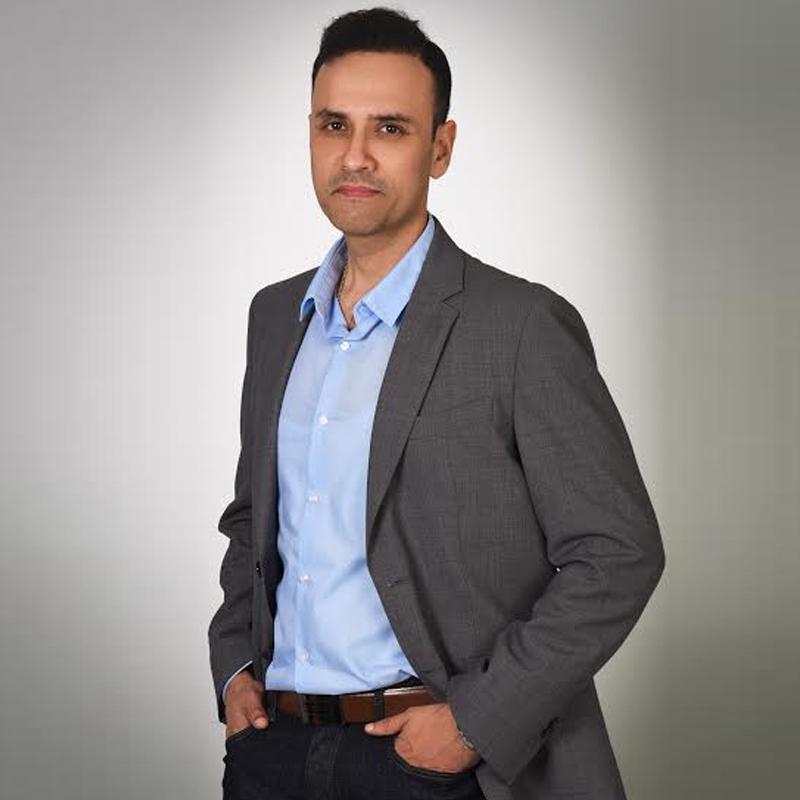
MUMBAI: This is not only the time to focus on what the business is gaining but also giving the best experience to existing consumers, Viacom18 AVoD business head Akash Banerji believes. While he notes that there has been an obvious upsurge in engagement, Banerji highlights that consumers are watching a variety of shows and sampling a wider roster of content.
“Ealier, consumers would only come to watch certain content. But now they are much more open to watching different stuff and experiment. And then they're also trying to sample what works for them and what doesn't. So their propensity to try out new content also seems to have increased,” Banerji says in an interaction with Indiantelevision.com.
It has been more than two months since the country has started grappling with this pandemic. People had taken refuge in the leading over-the-top players including Voot to beat the monotony and blues of the lockdown. In such a crisis, Banerji believes innovation becomes an inherent part of every business’s DNA. One of the big steps that Voot has taken is doing collaborations and partnerships with content platforms at scale. He mentions that their partnerships with UpGrad, Cultfit, Sadhguru are aimed at giving knowledge, tips around health and helping them stay focused. Moreover, it has partnered with nearly about 15 linear live channels also.
Banerji also talks about Voot’s new show amid lockdown Go Fun Yourself hosted by Kusha Kapila. “Our idea was to bring a content piece to life, where engagement with the consumer has to be at the centre and driving the entire content creation path. It's a great win-win for both the platform and viewers. We get a lot of content and they find a voice and a platform to showcase their talents and abilities,” he adds.
Other than user-generated content, two types of genres have worked very well during this period for the platform: mythology and romance. Moreover, a rich roster of news has also seen good uptick.
While many of the players and experts in the OTT ecosystem are speaking about growth of connected devices during this period, Banerji says the growth already started happening at scale even before Covid2019 happened. He says, citing industry sources, that about the end of last year itself there were about 15-16 million users. He adds that it won’t be surprising if that number doubles in July-August.
“Right now, while the individual consumption on mobile has increased significantly, this is also a time when all the families and individual members in the family are coming together and watching content. The interesting thing is now these consumers prefer to watch content that they wish to do. But on a device, joint watching and group consumption can also happen. Now, connected TV absolutely sits right in the middle. It offers the flexibility of video on demand. And yet, it offers the flexibility to watch content on a bigger device and with everyone together. So the growth was already there. It has only got accelerated,” he adds.
While there has been a sudden spike in traffic on all OTT platforms creating more pressure on back-end, he mentions that most of the OTT platforms don’t only plan a capacity on the basis of average consumption but for peak levels which is always 20-30 per cent more than what the platform will be seeing naturally at any given point in time. While many OTT platforms have seen a substantial increase, he says that the backend, the tech part has always been geared to have managed to service the demand in a very, very seamless fashion. “If they have not planned for it, I think now would also be the time for a lot of the platforms to go back to the drawing board and plan it out,” he mentions.
For the tech team, another challenge is spike in users.
“I think what the product and the tech team need to see is how different will the journey of a new consumer be from that of an existing company. What is the content that you're going to dish out to a new consumer versus an existing consumer? How will the new person discover his or her target content, what is the kind of ad load you would provide or do you want to give them an ad experience for the first few times? How do you ensure that the retention levels of the new consumer are sustainable?” he asks.
“So it's a story of the product, digital marketing and tech to ensure how and what the behaviour of a new consumer is. You should have the necessary tools to know who the new consumers are and try the maximum retention possible,” he concludes.