iWorld
Mubadala to invest Rs 9,093.60 crore in Jio Platforms


Mumbai: Reliance Industries Ltd and digital services platform Jio Platforms announced today that Abu Dhabi-based sovereign investor Mubadala Investment Company (Mubadala), will invest Rs 9,093.60 crore in Jio Platforms at an equity value of Rs 4.91 lakh crore and an enterprise value of Rs 5.16 lakh crore.
Mubadala’s investment will translate into a 1.85 per cent equity stake in Jio Platforms on a fully diluted basis.
With this investment, Jio Platforms has raised Rs 87,655.35 crore from leading global technology and growth investors including Facebook, Silver Lake, Vista Equity Partners, General Atlantic, KKR and Mubadala in less than six weeks.

Jio Platforms, a wholly-owned subsidiary of Reliance Industries, is a next-generation technology platform focused on providing high-quality and affordable digital services across India, with more than 388 million subscribers. Jio Platforms has made significant investments across its digital ecosystem, powered by leading technologies spanning broadband connectivity, smart devices, cloud and edge computing, big data analytics, artificial intelligence, Internet of Things, augmented and mixed reality and blockchain.
Jio’s vision is to enable a digital India for 1.3 billion people and businesses across the country, including small merchants, micro-businesses and farmers so that all of them can enjoy the fruits of inclusive growth.
Reliance Industries chairman and managing director Mukesh Ambani said: “I am delighted that Mubadala, one of the most astute and transformational global growth investors, has decided to partner us in our journey to propel India’s digital growth towards becoming a leading digital nation in the world. Through my longstanding ties with Abu Dhabi, I have personally seen the impact of Mubadala’s work in diversifying and globally connecting the UAE’s knowledge-based economy. We look forward to benefitting from Mubadala’s experience and insights from supporting growth journeys across the world.”
Mubadala Investment Company managing director and group CEO Khaldoon Al Mubarak said: "We are committed to investing in, and actively working with, high-growth companies which are pioneering technologies to address critical challenges and unlock new opportunities. We have seen how Jio has already transformed communications and connectivity in India, and as an investor and partner, we are committed to supporting India's digital growth journey. With Jio’s network of investors and partners, we believe that the platform company will further the development of the digital economy."
Mubadala invests and partners to advance Abu Dhabi’s diversified, globally integrated economy across sectors that are driving global growth and addressing critical challenges. A significant aspect of this mandate is transformative information and communications technology investments which include cognitive computing, ICT infrastructure, telecoms, and satellite operations.
To further its commitment to innovation and technology, Mubadala established its Ventures arm in 2017 to partner early with visionary founders and support innovative businesses. Mubadala’s Ventures business currently manages several venture funds in the US, Europe and Middle East.
Today, Mubadala’s portfolio spans advanced manufacturing, semiconductors, metals & mining, pharmaceutical and medical technology, renewable energy and utilities, and the management of diverse financial holdings.
The transaction is subject to regulatory and other customary approvals.
Morgan Stanley acted as financial advisor to Reliance Industries and AZB & Partners, and Davis Polk & Wardwell acted as legal counsel.






iWorld
Govt pushes live events sector to Rs 196 billion by 2028
LEDC roadmap targets 15–20 million jobs and global hub status by 2030
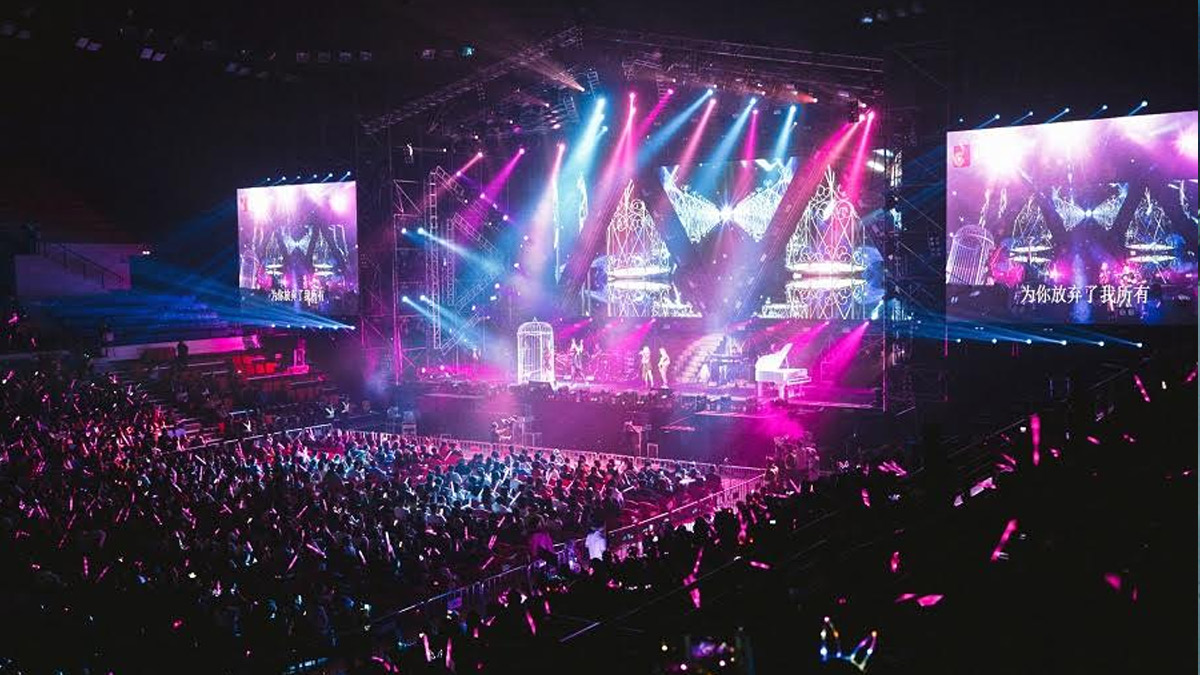
MUMBAI: India’s live events story is getting louder and this time, it’s policy turning up the volume. The fourth meeting of the Live Events Development Cell (LEDC), chaired by Chanchal Kumar, was held on 30 April 2026 at Vigyan Bhavan, bringing together representatives from nine Central Ministries, six States and 12 industry stakeholders to chart the sector’s next phase of growth. The numbers already tell a compelling story. India’s organised live events industry was valued at Rs 145 billion in 2025 and is projected to grow at 10 per cent to Rs 196 billion by 2028 making it one of the fastest-expanding segments within the media and entertainment ecosystem.
Set up in July 2025 by the Ministry of Information and Broadcasting, the LEDC is tasked with turning that momentum into a structured growth engine. Its long-term ambition is ambitious, position India as a global live events hub by 2030 while generating an additional 15–20 million jobs.
At the meeting, officials emphasised the sector’s multiplier effect spanning tourism, employment and allied industries while underlining the need for coordinated execution. A key update was the rollout of a single-window clearance system for live event permissions via the India Cine Hub portal, aimed at simplifying approvals and improving transparency.
States have been urged to adopt the system, alongside implementing the “Model Executive Order for Streamlining Licensing and Permissions for Live Events in India, 2026” by 31 May 2026. The framework seeks to standardise what has long been a fragmented and time-consuming regulatory process.
Beyond permissions, the discussion also turned to infrastructure and talent. A draft concept for greenfield venue development was tabled, alongside plans to build a skilled workforce. The Indian Institute of Mass Communication, in collaboration with industry bodies MESC and EEMA, is set to introduce certificate courses tailored to the live events sector.
Chanchal Kumar stressed that alignment across stakeholders is already in place, with the next challenge being execution at scale. The government, he noted, remains committed to creating a facilitative and transparent ecosystem for organisers.
For an industry once seen as fragmented and event-driven, the message is clear, India’s live events business is no longer just about the show, it’s about building an entire stage for growth.