iWorld
Disney+ Hotstar’s ‘Multiplex’ to pit OTTs against each other


KOLKATA: An unprecedented crisis has compelled producers to re-imagine the film distribution model suddenly. As theatres remain shut across the country, producers are developing camaraderie with over-the-top (OTT) platforms. While Amazon Prime Video was the first OTT platform to go aggressive over digital premieres of films, Disney+ Hotstar is taking the trend forward with the launch of Disney+ Hotstar ‘Multiplex’. From July, it will premiere seven Bollywood movies for its subscribers and this might escalate the conflict between producers and multiplex owners.
Disney+ was scheduled to launch in India during IPL 2020 which later got postponed due to the Covid2019 pandemic. The rebranded Disney+ Hotstar could have emerged a clear winner on the back of India’s most popular sporting event. Now, it is banking on another segment which has crazy fandom – Bollywood.
“At Disney+ Hotstar, we firmly believe in pushing boundaries to achieve the unexpected. A few years ago, we took an audacious step of bringing sports closer to people by streaming it LIVE on mobile devices – a move that forever changed the course of LIVE sports in India. Today as we launch Disney+ Hotstar Multiplex, we find ourselves yet again at the cusp of making a revolutionary change by bringing the biggest Bollywood movies directly to millions across the country,” The Walt Disney Company APAC chairman and Star and Disney India president Uday Shankar said in a press statement.

The belief was that only small budget movies would go to OTT and the big ones would want the ROI via theatres. But as Shankar launched the service alongside top Bollywood stars such as Alia Bhatt, Akshay Kumar, Ajay Devgn and Abhishek Bachchan, that idea is bound to change.
“Any OTT player who is releasing films will see a significant increase in subscribers. Usually, movie-going costs for a family range between Rs 1000-2000 depending on which city and where they are watching the movie. Against that, they can always subscribe to platforms like Disney+ Hotstar at a lower price and get done for the year. Hence, there will be a new set of consumers who will come on these platforms. If somebody becomes a subscriber for a movie, they will continue for other content once and the platforms will acquire subscriber for a lifetime. So, the tectonic shift in movie-release business is going to be a big win for OTT players,” says PwC India media, entertainment and sports advisory, partner and leader Raman Kalra.
Experts believe the move will dramatically increase the subscriber base of the service even as Media Partners Asia projected it could have 25 per cent of the total online video revenue pie by 2025. After Disney’s acquisition, Hotstar has grown personalisation and search functionality as the platform has invested in scaling its premium entertainment proposition.
Even though the tussle between OTT and multiplexes will continue, Shankar said that they both will grow together. “Even when films started releasing on TV, theatres grew. Digital premiere will give a new life to the industry. We have 500 million mobile screens in this country right now where films can be watched. If we can reach out to them, it will be a great outlet for the industry to showcase its creativity and tell stories. We should not see this as a short-term tactical compromise, we should see as a big leap for our film industry,” he said during the virtual press conference.
Kalra also believes that the audience will love to go back to theatres once everything settles downs. But a parallel set of movies will be produced keeping OTT platforms in mind. However, he, too, believes that both sides will have enough demand in the market given the lower screen density in India.
“We thought why not use the opportunity of the pandemic to create a big, alternative world of exhibition, and create a network of virtual theatres – private theatres – in everybody’s homes, and that is what we are doing today,” Shankar said.
This also leads to another question. Will such mega launches spell the death knell for smaller OTT players? Kalra thinks these international players and homegrown players always have had a different strategy. If more people flock to these larger platforms, the latter will definitely have enough demand if they make content and monetisation strategy focusing on the kind of subscriber they want to target and accordingly give them the expected experience.
“It will create a contest between various OTT players particularly negative for the likes of ZEE5 and Amazon Prime Video which have focused more on originals,” says SBICap Securities institutional equity research head Rajiv Sharma. “It will have some serious short term implications and is a matter of concern for multiple players because they have been overlooking participating in the digital value chain.”
The conflict started when Amazon Prime Video acquired the rights for Gulabo Sitabo. Then came the stunner that Akshay Kumar’s Laxmmi Bomb would be released on Disney+ Hotstar. Not to mention that the upcoming movie of late actor Sushant Singh Rajput, Dil Bechara, will be the move that flags off the Multiplex service.
“Competitive intensity may increase now among OTT players also. This will have a cascading effect as the contest to chase movies and delay in the opening of malls will continue to add to producers’ problem as they will have to focus only on digital to generate revenue,” Sharma adds.
Kalra agrees that there might be disappointment coupled with a lot of debate and discussion. While he, too, says that in the long-run, theatres and digital screens will co-exist, he believes the theatre owners will also have to change the business model keeping the need for contactless experience in mind.






iWorld
Govt pushes live events sector to Rs 196 billion by 2028
LEDC roadmap targets 15–20 million jobs and global hub status by 2030
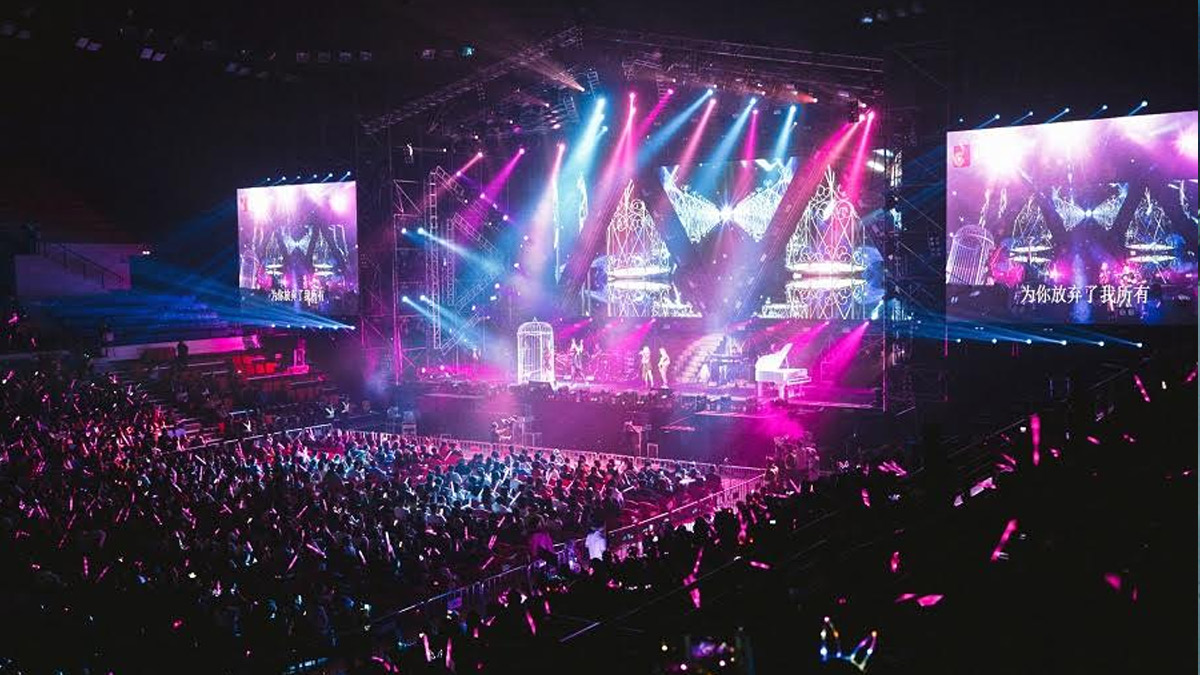
MUMBAI: India’s live events story is getting louder and this time, it’s policy turning up the volume. The fourth meeting of the Live Events Development Cell (LEDC), chaired by Chanchal Kumar, was held on 30 April 2026 at Vigyan Bhavan, bringing together representatives from nine Central Ministries, six States and 12 industry stakeholders to chart the sector’s next phase of growth. The numbers already tell a compelling story. India’s organised live events industry was valued at Rs 145 billion in 2025 and is projected to grow at 10 per cent to Rs 196 billion by 2028 making it one of the fastest-expanding segments within the media and entertainment ecosystem.
Set up in July 2025 by the Ministry of Information and Broadcasting, the LEDC is tasked with turning that momentum into a structured growth engine. Its long-term ambition is ambitious, position India as a global live events hub by 2030 while generating an additional 15–20 million jobs.
At the meeting, officials emphasised the sector’s multiplier effect spanning tourism, employment and allied industries while underlining the need for coordinated execution. A key update was the rollout of a single-window clearance system for live event permissions via the India Cine Hub portal, aimed at simplifying approvals and improving transparency.
States have been urged to adopt the system, alongside implementing the “Model Executive Order for Streamlining Licensing and Permissions for Live Events in India, 2026” by 31 May 2026. The framework seeks to standardise what has long been a fragmented and time-consuming regulatory process.
Beyond permissions, the discussion also turned to infrastructure and talent. A draft concept for greenfield venue development was tabled, alongside plans to build a skilled workforce. The Indian Institute of Mass Communication, in collaboration with industry bodies MESC and EEMA, is set to introduce certificate courses tailored to the live events sector.
Chanchal Kumar stressed that alignment across stakeholders is already in place, with the next challenge being execution at scale. The government, he noted, remains committed to creating a facilitative and transparent ecosystem for organisers.
For an industry once seen as fragmented and event-driven, the message is clear, India’s live events business is no longer just about the show, it’s about building an entire stage for growth.