MAM
Beauty & Lifestyle Virtual Roundtable: It is the best time for Indian customers

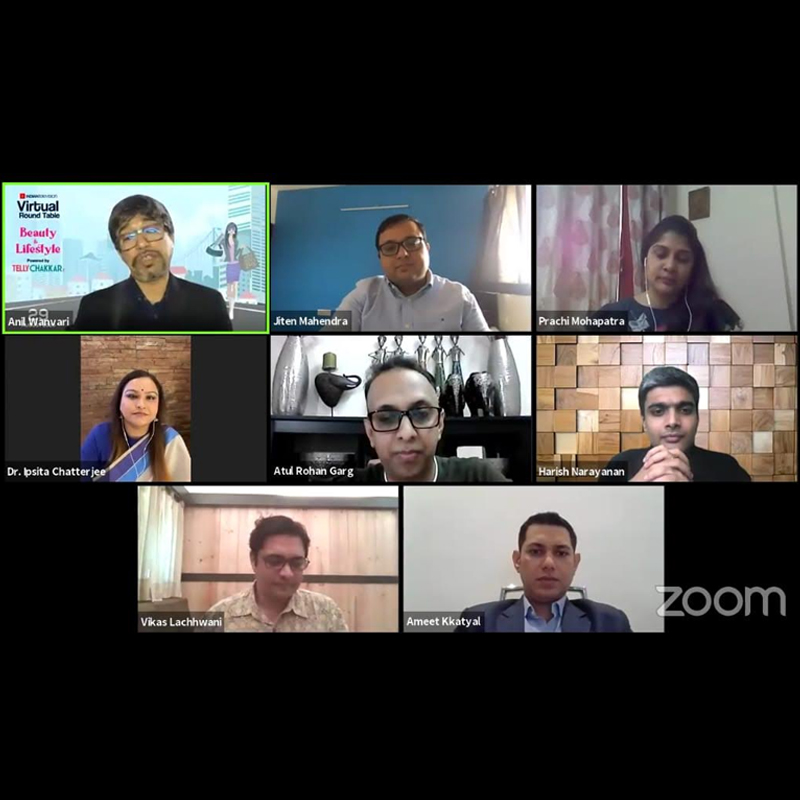
NEW DELHI: While the onset of the great Indian festive season with Onam might not have been the exact point of revival for the beauty and lifestyle industry, as many of the players were expecting it to be, it surely has set the ball rolling into a more positive direction, concluded the eminent panelists on Indiantelevision.com’s Beauty and Lifestyle Virtual Roundtable, hosted and moderated by our founder CEO & editor-in-chief Anil Wanvari.
Present on the panel were VLCC Health Care Ltd chief business officer Ameet Kkatyal, Baggit head of marketing Atul Rohan Garg, Lotus Herbals Pvt Ltd head of innovation, development, and brand strategy Ispita Chatterjee, Myntra head of marketing Harish Narayanan, Max Fashion India SVP marketing Jiten Mahendra, Future Group India CMO-FBB Prachi Mohapatra, and mCaffeine director and co-founder Vikas Lachhwani.
Mohapatra noted that though the numbers are not completely black or white, meaning the spending was neither great nor completely muted. “It wasn’t a complete washout for us. In fact, 2018-19 were bigger washouts than this year, because of the floods. In 2020, I was looking at a far more muted response, sentiment-wise as well as number-wise, but the response has surprised us. We hadn’t set our numbers at a very optimistic level but the growth has been far more than what we had expected.”
The panel is now looking at the response as a better prelude for the months to come, expecting that the industry will start picking up from the second week of September and will continue to do so throughout the festive season. They all looked very positive about the fact that they are well prepared for it.
Lachhwani shared that luckily they were on the right side of the business during the pandemic and did not face as much loss as compared to other contemporaries. He added, “We spent these 4-5 months to think ahead and spend a lot of time on R&D. We are not itching to come out stronger than ever with new launches.”
Narayanan agrees with Lachhwani. He said that Myntra team too has spent a great deal of time on research and development and also launched interesting innovations via properties like Myntra Studio where they are trying to catch the customers. Going ahead, his focus will be to keep strengthening the company’s goodwill with not just the consumers but also brand partners and is looking at constant innovation to support that.
Mahendra elaborated that this time has helped them greatly in identifying their loyal consumers and create segmentations accordingly. “About 80-90 per cent of our revenues are coming from our loyalty base and we are doing a lot of work on segmentation.”
He added that the focus is on finding out which alternate channels that got relevant during these months will stay relevant post-Covid2019 and is working towards building their strengths on them. “Be it WhatsApp, vernacular content, or video calls, we are looking at all the possible channels that will help us. There is a lot of pent-up demand, I am sure and we will have to build our brand behaviour around customer surroundings.”
Chatterjee noted that being a resilient brand, they innovated a lot during the pandemic. “The first challenge that we faced was that our UG is very aspirational and with the whole sentiment being very negative, it was important for us to reach out to them. So, we invested a lot in influencer activities, especially micro and nano influencers. We also resorted to cold calling, which worked really well for us.”
She added that their tech and innovations team is working really hard to introduce concepts of AI, VR, etc. to make the space more inclusive and positive towards catering to the post-pandemic fears of the people.
Kkatyal insisted that the industry collectively should be working towards educating the consumers and make them believe that it is safe to go out and shop. “Consumer is scared to step out and needs a lot of hand-holding. We have to prove to them that our outlets are as safe as their homes. We have to break the ice.”
He suggested that it is imperative that the industry collectively runs positive campaigns and inspire customers.
Further, Wanvari raised an interesting question pertaining to the rise of many new local and small-scale brands during the lockdown and if the established players are seeing them as a threat.
To this, Kkatyal replied that out of a hundred brands that rose during the pandemic, only 10 per cent would have made a mark and only one per cent of them would stay. So, he is not threatened by the competition.
He also hinted that the industry might see a lot of brands evaporating or shrinking, or even looking for consolidations in the post-pandemic era and that can be a big opportunity for some of the established companies.
Narayanan noted that it is the best time for Indian consumers as more competition will translate into more innovation.
The panel looked quite hopeful about the future but maintained the coming two-three years are going to be the true litmus test for them. However, they are well-prepared to surf the tough tide.