MAM
Max Life is official life insurance partner for team RCB

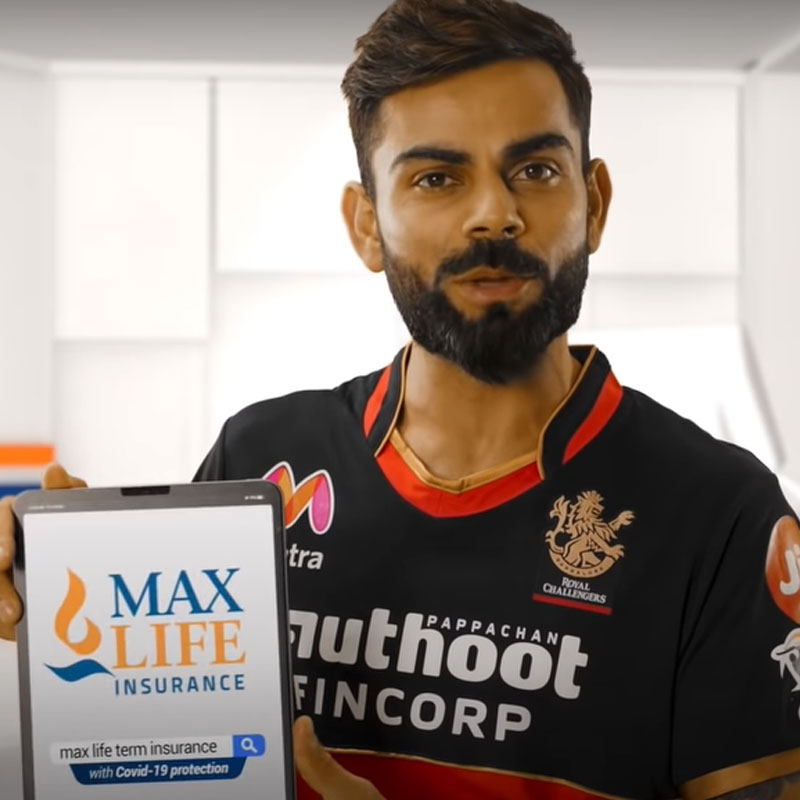
NEW DELHI: Max Life Insurance Company has unveiled its latest ad campaign with Royal Challengers Bangalore. Featuring ace players of the team in a geared up avatar, the brand new television commercial (TVC) attempts to reinforce the importance of financial protection in the form of term insurance to the millennial audiences, given the uncertainties brought upon by Covid2019.
Max Life’s recent India Protection Quotient Express survey conducted in association with Kantar, revealed that only 51 per cent digitally savvy, urban Indian millennials feel financially secure during Covid2019. The survey also revealed that only 36 per cent millennials own term insurance during Covid2019. Given the uncertainties around us, term insurance is a must-have tool to ensure the financial protection of family and loved ones, making it important to fortify its awareness especially among millennials.
The zippy ad film opens up with a chat between the Royal Challengers Bangalore players. The players are seen discussing the importance of physical wellness in order to play on the front foot in the cricket field. But to ensure that one continues to play on the front foot even off-the-field, it is important to remain financially protected with a term insurance plan, the players add. Be it T20 or the year 2020, protective gear in the form of term insurance is required to safeguard loved ones against the financial risks and uncertainties of life. The ad further iterates that with Max Life’s term insurance with Covid2019 rider protection, one can continue to charge #ProtectionFrontFootPe, off the field.
The ad film ends on an encouraging note, inspired by Max Life’s flagship campaign which says – “You Are The Difference”. The same urges audiences to secure their family’s financial future because even amidst a pandemic, it is You who brings a difference to your loved ones, and they depend on you for security – both emotional and financial.
Read more news on Max Life Insurance
Moreover, to help one navigate the financial perils brought upon by Covid2019, Max Life recently launched its ‘Max Life COVID-19 One Year Term Rider, a Non-Linked Non-Participating Individual Pure Risk Premium Life Insurance Rider (UIN: 104B048V01)’ with comprehensive death and diagnosis benefits. Available at an affordable premium, a single premium the Covid2019 rider is available with non-linked products to customers looking to protect themselves against the ongoing pandemic.
Max Life director and CMO Aalok Bhan said, “Over the past few months, Covid-19 has created unique circumstances for all of us. The pandemic has not only affected us mentally and physically but also brought its own set of financial challenges. At Max Life, ensuring financial protection has always been at the heart of all endeavors. Through the means of our latest ad campaign, we want to reinforce, especially to the millennial audiences, the importance of term life insurance as the most fundamental and cost-effective form of financial protection during such times. By teaming with the dynamic team of Royal Challengers Bangalore, we aim to encourage their wider millennial fanbase to safeguard their family from life’s hardships. By staying invested in a comprehensive term insurance plan one can lead through the tough times with #ProtectionFrontFootPe.”
Déjà Vu Productions director Neelay Shah said, “I found the script to be the right balance of substance and humor which helped me deliver a positive message in the execution of the creative, a first for a life insurance brand."
Adding to the launch, Sonal Dabral, who worked on the script said, “Like cricket, our lives too are full of unforeseen challenges and what better example of it than Covid-19. Reflecting on the need for greater financial preparedness to tide over times like these, Max Life’s latest campaign goes on to establish that in the game of life, it is imperative to gear up well by calculating risks, not just physical but also financial. It aims to inspire the audiences to embrace financial protection in the form of term insurance for the financial protection of loved ones during current times.”
In addition to the television commercial, the ad film is being effected via digital media. The campaign is being further leveraged across print mediums through a series of interesting visuals.