MAM
ASCI cracks down on false claims in education ads


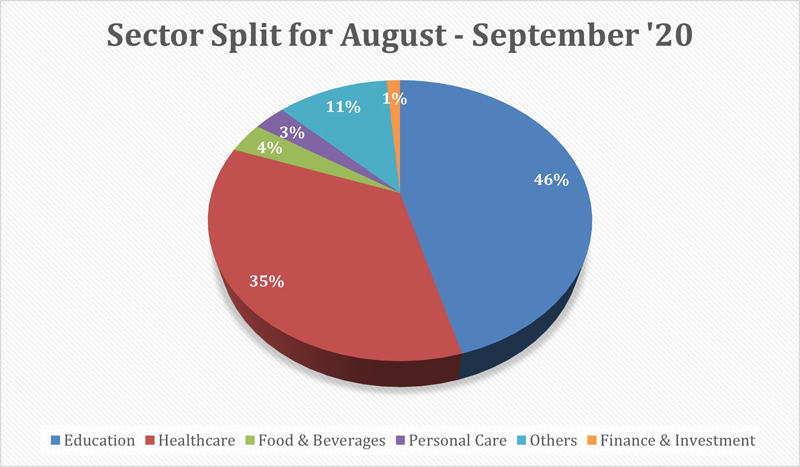
MUMBAI: The Advertising Standards Council of India (ASCI) has cracked down on advertisements from the education sector which made misleading and false claims. During August and September, the regulatory body noticed a sharp rise in advertisements fielded by educational institutes which tried to pass off fake claims and upheld complaints against 101 such ads.
Claims such as top of their field, ranking no.1, 100 per cent job placements, best institute, 100 per cent passing rate, were the most used red flag terms that violated ASCI’s code. One online learning app claimed to be the best and pioneer of live online classes. Many educational institutions didn’t have substantial data and surveys to support the claims they were making and the Consumer Complaints Council (CCC) of ASCI recommended that these advertisements be declared misleading.
In the health sector, with advertisers are trying to leverage consumers’ fears and insecurities amid the Covid2019 pandemic, ASCI cracked the whip on 59 ads which falsely claimed to cure or prevent the infection. Working together and synergizing efforts with the ministry of AYUSH, ASCI has constantly been working towards eliminating such false claims for consumer protection.

The self-regulatory body also looked into non-healthcare advertisements, wherein a company contended that their paint protected home owners from germs, a clothing company claimed to kill 99 per cent germs, while another professed their fabric was anti-Corona. There was even an instance of a sweet confectioner claiming their sweets could combat COVID 19 and improve the immune system. There was a grocery chain that said they would refund their full grocery bill if their customer tested positive for Covid2019 within 24 hours of shopping at their store. These advertisers were told to modify such claims or withdraw their advertisements.
There were some interesting cases flagged in the finance and investment sector too. ASCI received a unique direct complaint from a consumer regarding a campaign TVC run by a leading loan company. The TVC had people covering their mouth only till their nose with the mask. The CCC concluded that such advertisements misuse the Covid2019 situation and upheld the complaint.
ASCI also upheld misleading ad claims made on various digital platforms like Instagram, Twitter and Facebook. Many such claims were taken up by ASCI suo motu.
Overall, ASCI looked into complaints against 317 advertisements during August-September period, of these 64 were promptly withdrawn by advertisers on the council’s intervention. Of the remaining 253, complaints against 221 advertisements were upheld.
ASCI secretary general Manisha Kapoor said: “ASCI, is now in its 35th year since inception. COVID-19 related claims as well as misleading education claims continued to dominate the kind of complaints we received at ASCI during this period. The independent consumer complaints council (CCC), which comprises members of civil society as well as industry, jointly view such advertisements and adjudicate. The CCC goes deep into understanding the underlying complaint and the advertiser response and justification before an opinion is given. ASCI’s only goal is to promote responsible advertising which safeguards consumers.”





MAM
Deepfakes target women in 93 per cent of cases, report finds
Pi-labs study shows 900 per cent rise in female-focused synthetic media; India sees 60 per cent jump in cybercrime complaints.

MUMBAI: Deepfakes aren’t just fooling cameras, they’re hitting women hardest, turning pixels into a new kind of weapon. A new report from creator intelligence platform Pi-labs has revealed that nearly 93 per cent of deepfake victims are women, with deepfake content targeting females surging 900% in recent years. The findings paint synthetic media as a fast-escalating digital threat with a stark gendered impact.
In India, cybercrime complaints involving women rose from about 50,000 in 2024 to nearly 80,000 by 2026, an increase of roughly 60 per cent in just two years. Almost 98 per cent of deepfake pornography is aimed at women, often powered by face-swapping apps and bot networks that disproportionately target females, including school-age girls. Victims typically fall in the 18–30 age group, with Bengaluru reporting a growing share of cases.
Globally, 62 per cent of deepfake abuse cases involving women go unreported due to stigma, in India, over one-third of women facing online harassment take no action, and many reduce their digital presence after abuse. Close to 33 per cent of women remain unaware of protective laws.
City-level trends show Bengaluru leading with nearly 30 per cent of complaints, followed by Hyderabad (14 per cent), Mumbai (13 per cent), Chennai and Kolkata (5 per cent each), and Delhi (3 per cent).
Pi-labs, CEO and founder Anukush Tiwari said, “AI is one of the most powerful technologies of our time, but like every powerful tool, it reflects the intent of those who use it. We are witnessing a growing trust deficit in digital spaces, where identity can be manipulated within minutes and reputations can be damaged overnight.”
Image morphing and deepfake videos remain the most common forms of misuse. The report also notes a new trend: fully AI-generated female personas (not based on real individuals) gaining high engagement on social platforms, raising questions about digital credibility.
Detection remains challenging due to widespread generative tools and rogue creators. Industry estimates suggest over 5,000 face-swap tools and more than 1,000 voice-cloning applications are accessible online.
pi-labs offers pi-authentify, an AI-driven detection system that scans media for generative markers and provides authenticity scores, as well as Namokavach, a verification portal delivering confidential assessments within two working days. The Payal gaming case was resolved using pi-authentify’s forensic analysis.
The report urges minimising digital footprints and adopting detection tools to limit replication risks. It frames the gendered impact of synthetic media as an urgent digital safety issue requiring coordinated action from individuals, platforms and technology providers.
In a world where faces can be borrowed in seconds, the real crime isn’t just creation, it’s the silence that follows, and women are paying the heaviest price.