Brands
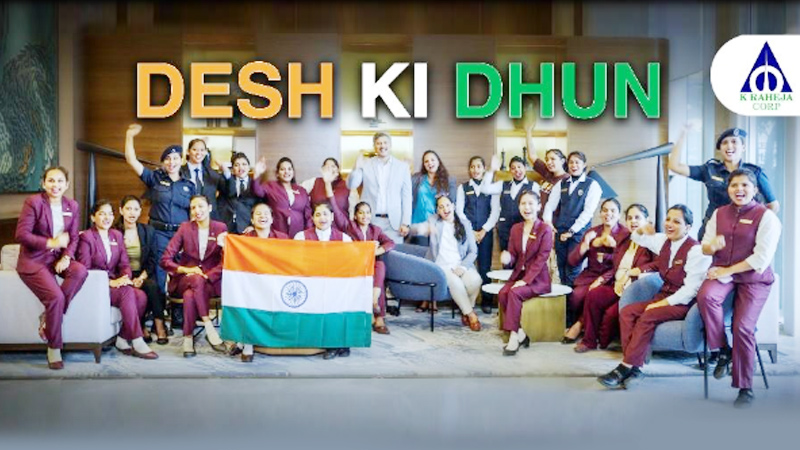
Raheja Corp unveils ‘Azaadi Ki Dhun’
Mumbai: In an interesting blend of creativity and patriotism, K Raheja Corp, India’s leading real estate conglomerate, unveils ‘Azaadi Ki Dhun’ – an acapella anthem from the group, especially penned and crafted to celebrate the spirit of India’s 77th Independence Day. This unique composition is more than just a song; it is a harmonious showcase of the incredible talent within K Raheja Corp, where every note, beat, and rhythm is brought to life purely through the power of the human voice. True to the acapella format, it makes no use of musical instruments.
Sung by a chorus of gifted voices from within the organization, ‘Azaadi Ki Dhun’ is a testament to the versatility of vocal expression – an anthem from our people to India. Those who didn’t lend their voices contributed with an array of innovative sounds, ranging from hums and finger snaps to lip rolls and chest thumps, creating a rich tapestry of auditory experiences. The anthem features a fascinating imitation of several musical instruments—drums, shakers, trumpets, and bass guitars, all skilfully replicated by the people of K Raheja Corp.
Speaking on the musical’s launch, Cheryl D’souza Waldiya, AVP – Corporate Communications, K Raheja Corp, “We are delighted with how ‘Azaadi Ki Dhun’ has come to life. This anthem is a celebration of K Raheja Corp’s commitment to building the nation, something we strive for each day, through our brands, that touch the lives of people across India. With no instruments and purely captivating voices, the lyrics resonate well, capturing the essence of what we stand for. What’s interesting is that we’ve involved on-site labourers, adding an authentic touch, making this anthem not just a piece of music, but a true representation of the spirit of real estate and the foundations upon which our country is built.”
Brands
Workday unveils Sana, a new AI tool for businesses
New conversational interface, 300+ skills and deep integrations aim to turn AI from sidekick to operator
CALIFORNIA: Workday has fired a fresh salvo in the enterprise AI race, rolling out “Sana”, a system it touts as “superintelligence for work”, designed not merely to assist, but to act. The pitch is blunt: stop dabbling with disconnected copilots and start letting AI run the plumbing of business.
Unveiled globally on March 20, Sana arrives as a three-part stack, Sana for Workday, a conversational interface; a self-service agent with more than 300 skills; and Sana Enterprise, which plugs into tools from Gmail and Outlook to Salesforce and Slack. The aim is to collapse the sprawl of enterprise software into a single AI-led workflow engine.
At its core, Sana promises four things: find, act, build and automate. Employees can query internal data, execute tasks such as updating records or contracts, generate dashboards, and trigger multi-step workflows, all within the same interface. The twist is where it sits, inside Workday’s existing systems, inheriting their permissions, compliance rules and audit trails.
“AI only works in the enterprise when it’s connected to trusted, deterministic systems,” said Aneel Bhusri, co-founder and chief executive. “Sana is what brings it all together… a powerful way for people to search, reason and orchestrate work across the enterprise.”
The critique of current AI deployments is familiar, flashy pilots, little real impact. Workday’s answer is to embed intelligence where decisions are made and actions executed. Gerrit Kazmaier, president, product and technology, framed it as a shift from suggestion to execution: “AI agents take action using trusted context, not just provide suggestions… a single experience where AI is embedded directly in the flow of work.”
Early adopters suggest traction. Berner claims 90 per cent adoption within 40 days, scrapping 400 ChatGPT licences. Cheffelo calls Sana its “AI backbone”, while Telavox says the conversation has shifted from automating tasks to reimagining entire processes.
Analysts, too, see a broader play. Josh Bersin described the integration as “a major milestone”, arguing it could reshape both customer and employee experience by making AI-native workflows the default.
Sana is being bundled via Workday’s Flex Credits, no separate licence, no added paywall, a move that lowers friction and speeds adoption. Meanwhile, Sana Enterprise extends the system beyond Workday, allowing users to search documents, schedule meetings or track project tickets across multiple platforms in one conversation.
The bet is clear: whoever controls the workflow, controls the future of enterprise software. With Sana, Workday is trying to move AI from a helpful assistant to an invisible operator. If it works, the software menus may vanish, and with them, the way work itself is done.