AD Agencies
Havas India goes green with swanky eco-certification
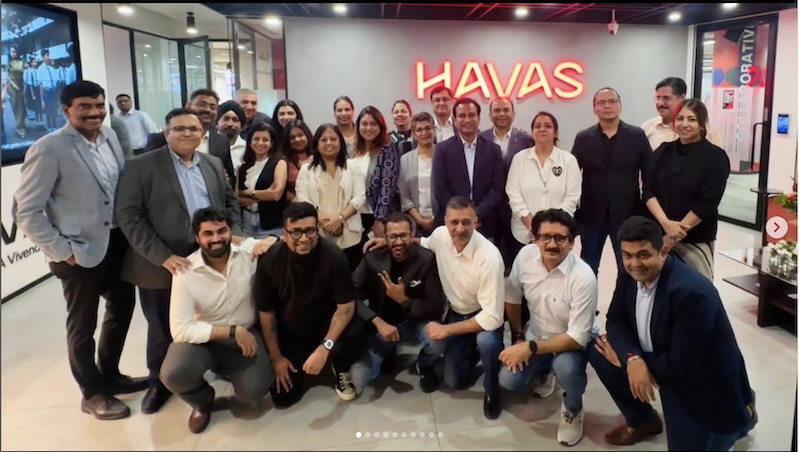
MUMBAI: Havas India has polished its environmental halo after scooping the coveted ISO 14001:2015 certification, positioning itself as the advertising world’s unlikely eco-warrior in a notoriously wasteful industry.
The certification – which required a full year of scrutiny by the rather stern-faced British Standards Institution (BSI) – covers six agencies under the Havas umbrella, including its creative, media and design outfits across multiple locations.
“We believe the future of business lies in responsible and sustainable growth,” declared Havas India group chief executive SEA & North Asia Rana Barua presumably while sitting under an energy-efficient light bulb. “This milestone sets a new benchmark in the industry, reinforcing our position as the most future-ready advertising network in India.”
The rigorous certification process subjected the agency to a forensic examination of its environmental policies, carbon footprint and sustainable resource management – a far cry from the champagne-soaked, private-jet lifestyle traditionally associated with advertising bigwigs.
Havas India chief HR officer & Havas APAC chief inclusion officer Vandana Tilwani was quick to emphasise this wasn’t just a “tick-box exercise” – corporate speak for “we’re actually serious about this” – while hinting at even more ambitious green plans ahead.
Industry insiders suggest the eco-certification could give Havas a competitive edge when pitching to increasingly environmentally conscious clients, allowing them to smugly flaunt their green credentials while rivals desperately recycle their plastic water bottles in meetings.
“Reducing environmental impact not only contributes to a healthier planet, but also inspires stakeholder trust,” said BSI India managing director Theuns Kotze carefully avoiding mention of the mountains of foam board, vinyl banners and promotional material that advertising agencies typically churn out.
With this certification, Havas has thrown down the biodegradable gauntlet to competitors, suggesting that in tomorrow’s advertising world, the ability to save the planet might be just as important as the ability to sell fizzy drinks and luxury watches.

AD Agencies
AdTrust Summit 2026 to examine trust, AI and Gen Alpha in advertising
Two-day summit in Mumbai to explore ethics, regulation and the future of advertising trust
MUMBAI: At a time when advertising is navigating a delicate trust deficit, the Advertising Standards Council of India is preparing to bring the industry to the table. On 17 and 18 March, the body will host the inaugural AdTrust Summit 2026 in Mumbai, a two-day gathering designed to spark conversation around responsibility, regulation and credibility in modern advertising.
The summit, to be held at the Jio World Convention Centre in Bandra Kurla Complex, will bring together leaders from advertising, media, technology and policy to examine how brands can build trust in a marketplace increasingly shaped by algorithms, influencers and artificial intelligence.
In an age of deepfakes, dark patterns and blurred lines between content and commerce, the question is no longer just how brands capture attention, but whether audiences believe what they see. The AdTrust Summit aims to unpack that challenge.
Day one will turn its attention to the youngest digital natives. Titled Decoding Gen Alpha, the session will unveil ‘What the Sigma?’, a study by ASCI and Futurebrands Consulting that explores how children growing up in a hyper-digital environment encounter advertising and commercial messaging.
The report presentation will be delivered by Santosh Desai, founder and director at Think9 Consumer Technologies and a social commentator known for his insights into consumer behaviour. The discussion that follows will attempt to decode how Gen Alpha consumes media, interacts with brands and navigates the growing overlap between entertainment and marketing.
In a move that mirrors the subject itself, two Gen Alpha students will also join the conversation, offering a rare perspective from the generation advertisers are trying to understand.
The second panel of the day will shift the focus from observation to implication, asking what the report’s findings mean for brands, agencies and society. Speakers include Karthik Srinivasan, communications strategy consultant; Preeti Vyas, president at Mythik; and Abigail Dias, associate president planning at Ogilvy. The session will be moderated by Sonali Krishna, editor at ET Brand Equity.
Day two moves from insight to regulation. Under the theme From Compliance to Trust, ASCI will release its Ad Law Compendium, a comprehensive guide to India’s advertising regulations.
The day will open with a keynote by Sudhanshu Vats, chairman at ASCI and managing director at Pidilite Industries, followed by a chief guest address by Sanjay Jaju, secretary at the Ministry of Information and Broadcasting.
Legal experts from Khaitan & Co., including Haigreve Khaitan, senior partner, and Tanu Banerjee, partner, will present an overview of the current advertising law landscape in India and examine whether existing frameworks are equipped to deal with emerging technologies and formats.
Subsequent panels will explore issues increasingly shaping the industry’s ethical compass. Conversations will range from the limits of persuasive design and the rise of dark patterns, to the growing scrutiny brands face from digital creators and consumer watchdogs.
One session will also feature Revant Himatsingka, widely known online as the Food Pharmer, whose critiques of packaged food brands have sparked debate around transparency and corporate accountability.
Later discussions will turn toward media literacy among Gen Alpha, asking how children can be equipped to navigate a digital world where gaming, content and commerce are becoming indistinguishable.
The summit will conclude with a final panel on the future of advertising, bringing together voices from agencies, legal circles and technology platforms to discuss how innovation, intelligence and integrity can coexist.
For an industry built on persuasion, trust has always been its quiet currency. But as audiences grow more sceptical and digital ecosystems more complex, that currency is under pressure.
Events like the AdTrust Summit suggest the advertising world knows it cannot afford to take credibility for granted. The real challenge now is turning conversation into commitment.