Applications
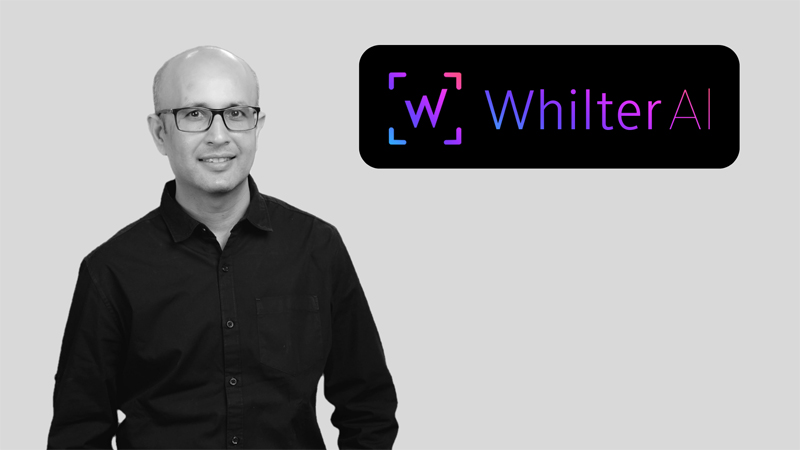
“Whilter.ai is planning a global expansion targeting the US and European markets:” Pankaj K Arora

Mumbai: In a world where digital interactions have become the norm, brands are increasingly challenged to create meaningful, personalised connections with their audiences. The age of one-size-fits-all marketing is fading, giving rise to a new era where every engagement feels unique and tailored. This shift is driven by advancements in technology, and one of the leaders in this transformation journey is Whilter.ai.
Founded in 2023 by Pankaj K Arora and Prashant Yadav, Whilter.ai is revolutionizing the way brands communicate through the power of Generative AI, offering a cutting-edge solution that creates hyper-personalized videos at scale, setting a new standard in digital storytelling.
Indiantelevision.com caught up with Whilter.ai co-founder Pankaj K Arora to delve deeper into their business model, offerings, future plans and more…
Edited Excerpts:
On the inspiration behind starting Whilter.ai, and on envisioning it transforming B2C communication
The inspiration to start Whilter.ai came from recognizing a significant gap in how businesses communicate with their consumers. Traditional marketing methods often felt impersonal and failed to engage the audience effectively. We envisioned Whilter.ai as a transformative tool that leverages the power of Generative AI to create personalised, interactive video content. This not only enhances engagement but also builds a stronger emotional connection between brands and their consumers, ultimately transforming B2C communication into a more dynamic and personalized experience.
On the major challenges that you faced while developing Whilter.ai, and how you overcame them
Entering a new market with an innovative concept like Whilter.AI required us to be agile and adaptive. We faced challenges in educating the market, establishing the value of personalized videos, and overcoming initial skepticism from potential clients. However, by showcasing tangible results on customer engagement and conversion rates, we were able to build credibility, gradually expanding our client base.
Secondly, balancing the creative aspects of video production with the technical demands of automation and personalisation was a delicate task. We fostered close collaboration between our creative and technical teams. This synergy ensured that our AI-generated content maintained a high standard of creativity and relevance, meeting the aesthetic and emotional expectations of end consumers.
On Whilter.ai’s use of generative AI setting it apart from traditional video marketing solutions
Whilter.ai stands out from traditional video marketing solutions through its innovative use of Generative AI. Unlike conventional methods that rely on pre-recorded or manually edited content, our platform generates personalised videos at scale, tailored to each viewer’s preferences and behaviours. This level of customization ensures that the content resonates more deeply with the audience, leading to higher engagement and better overall performance. Generative AI allows for real-time adjustments and creativity that static video solutions simply can’t match.
On smart video technology works and the role of GenAI in it; and the user-friendliness of your platform
Prashant: Our smart video technology at Whilter.ai harnesses the power of generative AI (GenAI) to create hyper-personalized videos at scale. Here’s a breakdown of how it works:
We begin by gathering and analyzing data which is crucial in understanding the unique characteristics and needs of each customer. GenAI comes into play by generating personalized content based on the analyzed data. Our platform, then dynamically assembles the video components, ensuring that each video is unique and specifically tailored to the individual recipient. Once the videos are created, they can be distributed through various channels, such as email, social media, or websites. We continuously monitor performance and use AI-driven insights to optimise future video campaigns.
User-friendliness: Currently, our platform is accessible only to direct customer teams. We are actively collecting direct market feedback to improve our product. In the near future, we plan to launch a DIY version that will allow any creator or D2C brand to use the platform. One particular use case we’re focusing on is festive greetings. A DIY, user-friendly platform to send festive greetings on your brand’s behalf is a frequently requested feature from our customers. We’re excited to make this a reality soon.
On the measurable results that your clients have seen in terms of engagement, conversions, and brand recall
Clients using Whilter.ai have reported significant improvements in various key metrics. Engagement rates have increased substantially due to the personalised nature of the videos, leading to longer view times and higher interaction levels. Conversion rates have also seen a notable boost, as personalized content tends to drive more effective calls-to-action. Additionally, brand recall has improved, with audiences remembering and resonating with the customized messages far better than traditional, generic advertisements.
On your scalable pricing model making personalised video creation accessible to businesses of all sizes
Our scalable pricing model is designed to democratise access to high-quality, personalised video creation. By offering flexible pricing tiers, we cater to businesses of all sizes, from startups to large enterprises. This ensures that even smaller businesses can leverage the power of personalised video marketing without the burden of prohibitive costs. Our model allows clients to scale their usage and investment based on their specific needs and growth, making it a practical and cost-effective solution for any marketing budget.
On Whilter.ai’s plans for global expansion, and how do you see the company evolving in the next few years
Whilter.ai is planning a global expansion targeting the US and European markets. Our goal is to establish a strong international presence by offering affordable, scalable, and hyper-personalised video communication services. We are currently enhancing our platform to support multiple languages and transitioning towards a self-serve model, making it easier for brands and producers to leverage our technology.