MAM
Personalisation gets a makeover at Media Investment Summit 2025: Brands speak human in the digital age

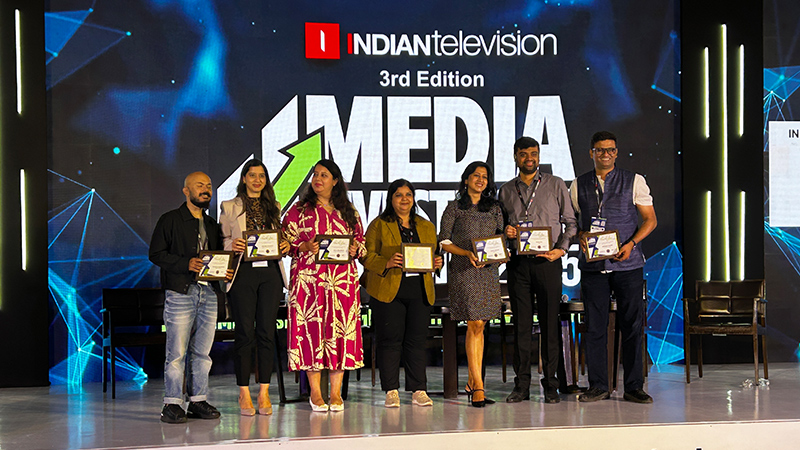
MUMBAI: It was anything but business as usual at Indiantelevision.com’s Media Investment Summit 2025. The curtain rose with a compelling session titled ‘Panel 1: Building Personalised Brands in the Digital Age’, where marketing mavericks laid bare the future of branding—minus the fluff, minus the spam, and all about relevance.
Moderated by Giri Digital Solutions director of content & new media Abhishek Prakash the panel saw brand leaders unpack the hard truth: personalisation is not a “nice to have”—it’s the survival toolkit in an age of shrinking attention spans and overflowing feeds.
“Personalisation has evolved beyond just calling someone by their first name”, opened Prakash. “In our YouTube MCN, we work with creators and brands to develop narratives that reflect emotional resonance, not robotic targeting”.
Cipla director & head of growth & omnichannel marketing Aditya Das stressed the human side of data. “For Cipla, hyper-personalisation begins with understanding pain points, not just segments. The focus is on emotional connection across every patient touchpoint, and data is only as good as the insight it brings to the doctor’s table—or app”, said he.
Table Space CMO Megha Agarwal believes workspace personalisation is not just physical but deeply experiential. “Data without empathy is surveillance. Empathy without data is guesswork. For us, the coffee machine remembers the CEO’s latte, not the advertising copy”, she said. Agarwal laid out how real estate branding is not just pre-sale persuasion but post-sale retention, with employee satisfaction now a key conversion metric.
“Attention is the currency today”, said Bharti AXA Life Insurance deputy VP marketing Harshita Hemnani. In a life-decision industry like insurance, relevance and purpose matter more than ever. “We’re not just selling policies—we’re helping customers meet life aspirations”, she added. Hemnani outlined four pillars of personalisation—technology, empathy, intelligence, and creativity—highlighting that only when all four converge does a brand message land meaningfully.
Mahindra Holidays & Resorts VP – customer operations Shweta Srivastava stressed the role of immersive content and brand storytelling. “It has to be emotional”, she said, citing Google’s viral 2021 ad on partition reunions as a case study in storytelling with soul. She also touched on the power of augmented reality (AR) in helping customers visualise their dream holidays, saying, “It’s not fiction. It’s functional”.
Tata Realty marketing head – west & south zone Kiran Bhambani argued that in commercial real estate, brands are not just selling square footage but a daily experience. “Our job is to reduce attrition, not just sell walls”, she said. Using virtual tours, voice-led campaigns, and CRM automation, Tata Realty now offers clients an office that listens before it speaks.
Business Standard VP – marketing head Moneesh Chakravarty warned against drowning in dashboards. “If spreadsheets could make decisions, we’d all be billionaires”, he joked. His mantra: marry intuition with insight. “You need to treat media not as traditional or digital—but as responsive”.
In their final remarks, panellists urged marketers to stay human in their automation. As Prakash put it: “Don’t just personalise—empathise. Make the algorithm feel like a friend, not a stalker”.
Srivastava summarised it with flair: “Personalisation is no longer about inserting names in emails. It’s about making people feel seen and heard—consistently, contextually, and with care”.
With that, the panel set the tone for the summit—personalised branding is not about shouting louder. It’s about speaking clearer and closer to the consumer’s heart.