MAM
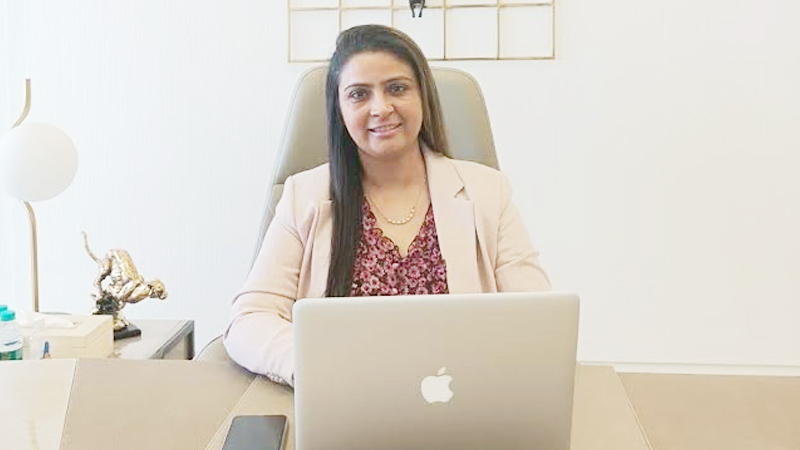
HCBS Developments ropes in Dimple Bhardwaj to fire up sales and brand buzz
MUMBAI : HCBS Developments has brought in real estate veteran Dimple Bhardwaj as assistant vice president – channel sales, marketing and communication, adding serious firepower to its leadership lineup. With over 20 years in the trenches at Raheja Developers, Bhardwaj now steps into a pivotal role at HCBS to sharpen its brand, energise channel partnerships, and fuel growth in the Delhi NCR region.
Bhardwaj’s résumé reads like a masterclass in real estate marketing. As head – channel sales, marketing and communication at Raheja, she drove integrated campaigns that boosted market visibility and reach. She’s also worn the general manager – marketing & communication hat, crafting multi-platform outreach across flagship projects.
With a postgrad in PR and journalism from IIMAT, Chennai, Bhardwaj’s toolkit spans customer engagement, CRM, sales strategy, and brand storytelling — essentials in a market where perception sells before possession.
HCBS Developments group managing director Saurabh Saharan said, “We are thrilled to have Dimple in our leadership team; her deep industry knowledge and proven leadership in high-impact real estate marketing align perfectly with our vision. Dimple’s addition to our team will not only accelerate our ongoing projects but also strengthen our connection with customers and channel partners alike.”
Bhardwaj commented, “I am excited to join HCBS Developments at such a pivotal time in its journey. With over two decades of experience in real estate marketing and channel sales, I look forward to bringing strategic depth and innovation to the company’s outreach. My focus will be on driving meaningful customer engagement, strengthening our brand presence, and supporting HCBS’s long-term growth vision.”
The move signals HCBS’s intent to not just build homes, but a future-ready brand that speaks louder, connects deeper, and sells smarter.

MAM
GUEST COLUMN: How data and adtech are driving OOH growth in India
Data and technology are reshaping OOH and boosting advertiser confidence.
MUMBAI: Out-of-Home (OOH) advertising is evolving from a traditional, location-driven medium into a data-informed channel that blends physical presence with digital intelligence. For Nipun Arora, co-founder of Osmo, this transformation is redefining how advertisers plan, execute, and measure campaigns in India. In this piece, Arora explores how traffic, mobility, and AI-powered data are enhancing site and audience insights, why DOOH is accelerating precision planning, and how authenticity, creativity, and repeat exposure are driving renewed advertiser confidence in OOH.
For years, Out-of-Home (OOH) advertising operated with minimal reliance on data. Site selection was largely driven by visibility, location, and a planner’s understanding of traffic patterns.
That is now changing rapidly.
The first shift came with traffic data, offering basic estimates of vehicular movement. This evolved into mobility data powered by GPS signals, enabling deeper insights into audience movement and behavior. Point-of-interest data further refined this by helping advertisers understand who is likely to be present around a location.
Today, artificial intelligence and computer vision are unlocking an entirely new layer of site and audience intelligence. Together, these data streams are transforming OOH from a real estate-led medium into a data-backed one.
The rise of Digital Out-of-Home (DOOH) is accelerating this shift. Campaigns can now be planned, scheduled, and optimized with increasing precision bringing OOH closer to an adtech model. That said, as a physical medium, OOH still operates within real-world constraints, making this transition gradual rather than absolute.
At the same time, advertisers are returning to OOH with renewed interest.
One of the biggest drivers is authenticity. Unlike digital platforms, OOH offers real-world visibility free from bots, fraudulent impressions, or ad blockers. What you see is what exists.
There’s also growing digital fatigue. Consumers are overwhelmed by constant online advertising, often choosing to skip or ignore it. OOH, by contrast, engages audiences naturally within their environment, without interruption.
Mobility further strengthens its impact. As people move through cities daily, OOH benefits from repeated exposure building recall over time in a way few channels can match.
Add to this the power of creativity. Large formats and contextual executions don’t just capture attention, they often extend beyond the physical space, finding life on social media.
Finally, the increasing availability of data at the planning stage is boosting advertiser confidence. Better insights mean better decisions and more accountability.
As cities grow and movement increases, OOH is uniquely positioned at the intersection of physical presence and data intelligence. Its evolution from billboards to big data isn’t just a technological shift, it’s a redefinition of the medium itself.
Note: The views expressed in this article are solely the author’s and do not necessarily reflect our own.