Ad Campaigns
DLF unveils Privana North at Times Square in bold diaspora-focused branding spectacle
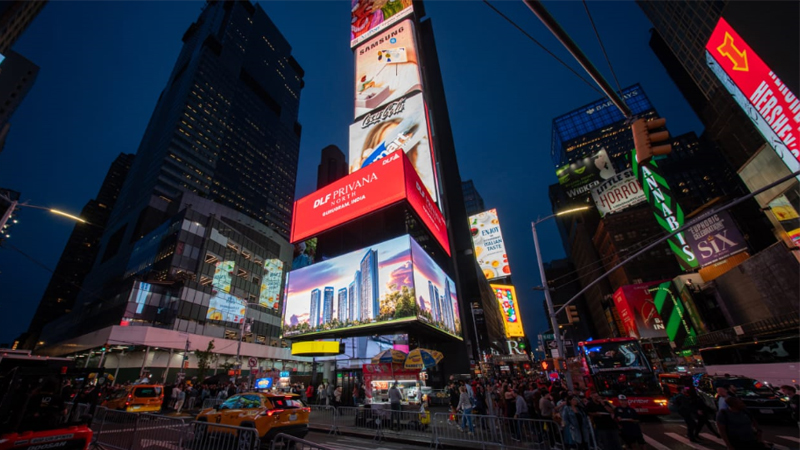
MUMBAI: Times Square saw more than tourists stop and stare this week—India’s real estate behemoth DLF took over the iconic digital skyline to introduce its latest showpiece: DLF Privana North. As crimson hues lit up the three-sided digital tower known as ‘The Cube’, New York became ground zero for one of India’s flashiest real estate launches.
DLF unveiled the name and first look of Privana North on 18 June in a high-impact marketing stunt aimed squarely at the Indian diaspora. The 50-storey glazed towers of the Gurugram-based project stood tall, not in concrete, but in LED glory, above the legendary red stairs at 2 Times Square—a globally photographed backdrop that promises maximum eyeballs.
The unveiling formed part of DLF’s larger strategy to court NRI investors, who account for nearly 30 per cent of its residential sales. Nearly half of this NRI chunk comes from the United States alone, making the Big Apple a strategic choice for the launch. It wasn’t just about showing off a new skyscraper. This was DLF waving the Indian urbanisation flag on a global screen—quite literally.
DLF Privana North is the latest phase of the 116-acre DLF Privana township in Gurugram’s Sectors 76 and 77. The project follows Privana South and West, both of which sold out in under three days before they even officially launched. Privana North is expected to push the bar further, becoming the crown jewel of the township.
The Times Square reveal was more than a marketing gimmick. It reflected a confident crossover between real estate and show business. It placed India’s housing ambitions under Manhattan’s neon lights, where eyeballs from every continent converge—and Instagram follows.
Privana North has been in investor and buyer chatter for more than a year. Its formal introduction on a global stage adds momentum to DLF’s positioning as not just a builder, but a storyteller in the evolution of urban India. Gurugram, once a cluster of villages, now gets billboarded in the world’s most-watched intersection.
‘The Cube’ features six massive LED screens angled across Broadway, 7th Avenue and 47th Street. With millions of daily footfalls and billions of potential impressions online, DLF’s digital takeover ensures that Privana North already has the world’s attention—even before its foundation stone is laid.

Ad Campaigns
Amazon Ads maps 2026 as AI and streaming rewrite ad playbooks
NATIONAL: Amazon Ads has laid out a sharply tech-led vision for the advertising industry in 2026, arguing that artificial intelligence, streaming TV and creator partnerships will combine to turn brand building into a more precise, performance-driven business.
At the heart of the shift, the company says, is the fusion of AI with Amazon’s vast trove of shopping, browsing and streaming signals, allowing advertisers to move beyond blunt reach metrics to campaigns designed around real customer behaviour.
“The future of advertising is not about reaching more people, but the right people with messages that resonate,” said Amazon Ads India head and vice president Girish Prabhu. “By combining AI with deep customer insights, we help brands move from broadcasting campaigns to having meaningful conversations wherever audiences spend their time.”
One of the biggest changes, according to Amazon Ads, will be the collapse of the wall between media planning and creative development. Retail media, powered by first-party data, is increasingly shaping everything from brand discovery to final purchase, pushing marketers to design campaigns around audience insight rather than internal instinct.
AI is also moving from a support tool to a creative engine. Agentic AI, which automates and accelerates production, is expected to make high-quality creative accessible even to small businesses, compressing weeks of work into hours and giving challengers the ability to compete with larger brands on speed and scale.
Behind the scenes, AI-driven analytics will take on a bigger role in campaign optimisation, identifying patterns, spotting opportunities and recommending actions that would previously have required teams of analysts.
Streaming TV is another big battleground. With India’s video streaming audience now above 600 million and connected TV users at 129.2 million in 2025, advertisers are set to treat streaming not just as a branding channel but as a performance engine, measured increasingly by sales, sign-ups and bookings rather than just reach.
Finally, Amazon Ads sees creators and contextual advertising reshaping how brands tell stories. Creators will act less like influencers and more like long-term partners, while scene-aware ads on streaming platforms will allow brands to insert hyper-relevant offers into the flow of what viewers are watching.
Taken together, Amazon Ads argues, these shifts mark a move towards advertising that is both more human and more measurable, where AI handles the complexity, and creativity does the persuading.