MAM
Veteran journalist M L Kotru, former The Statesman editor, dies at 91

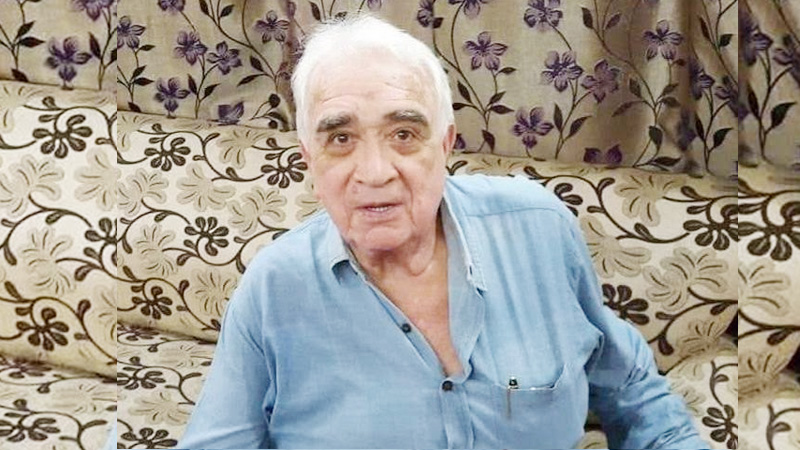
MUMBAI: M L Kotru, one of India’s most respected journalists and a former editor of The Statesman, passed away on Thursday at his home in Gurgaon. He was 91.
Kotru’s career stretched across nearly sixty years, during which he reported, edited and mentored across some of India’s leading publications. He began with stints at Sunday Mail and ANI before rising through the ranks at The Statesman, where he worked for years as diplomatic correspondent and later as editor. Even after stepping away from full-time newsroom roles, he remained active in commentary, contributing columns to The Statesman until 2013 and writing frequently for outlets in his native Kashmir.
Beyond his professional accomplishments, Kotru played a vital role in shaping generations of reporters. A senior member and former secretary-general of the Press Club of India, he was widely regarded as a guiding hand for younger colleagues. His writing earned recognition with the Watumull Award for The Other Side, a series praised for its evocative depth and sharp observations.

Condolences poured in from colleagues and protégés across the media industry. Furquan Moharkan of Morning Context described him as “the doyen of journalism,” while fellow journalist Parul Chandra remembered him as “a reporter’s editor and a brilliant writer.” The Press Club of India called his passing “an irreparable loss to journalism,” honouring him as a founding presence who upheld integrity and rigour in the profession.




MAM
Three senior OpenAI infrastructure executives join Meta
Key members of Stargate project move to rival amid aggressive AI spending race.

MUMBAI: Three key architects of OpenAI’s ambitious data centre plans have switched sides and joined Meta Platforms, according to people familiar with the matter. Peter Hoeschele, who played a central role in OpenAI’s high-profile Stargate initiative, is among the new hires. He is joined by Shamez Hemani, who focused on computing strategy and business development, and Anuj Saharan, another leader in the computing organisation. The Information first reported their departure from OpenAI on Thursday.
The moves come as Meta CEO Mark Zuckerberg has pledged to spend aggressively on AI infrastructure. The company is projecting capital expenditure of up to $135 billion this year alone, with hundreds of billions more expected before the end of the decade to support its Meta Superintelligence Labs and new models such as Muse Spark.
OpenAI, which is pushing ahead with massive data centre expansion, had described its early lead in securing computing power as a competitive advantage. Stargate, originally announced last year as a $500 billion venture involving OpenAI, Oracle, and SoftBank, has since become an umbrella term for the company’s broader data centre ambitions. However, the project has seen recent adjustments, including a pause on its UK plans and the decision not to expand the Abilene, Texas site.
A spokesperson for Meta declined to comment, while Hoeschele, Hemani, and Saharan also declined to comment. OpenAI said it was grateful for the contributions of the three employees and remains focused on hiring talent for its infrastructure plans. The company recently brought in former Intel executive Sachin Katti to lead its industrial compute efforts.
In the high-stakes race to build the future of artificial intelligence, talent is proving to be as valuable as computing power itself. Meta’s latest hires suggest the competition for top infrastructure minds is intensifying, even as OpenAI continues to scale its own ambitious projects. The move highlights how quickly the AI talent war is heating up across Silicon Valley.







