Applications
The balance between technology and human touch in education and how teachers are adapting to these changes


Mumbai: I wish to begin with a thought-provoking question: Can technology and AI replace teachers? Technology will not replace teachers who use it judiciously to enhance their teaching skills
The COVID-19 pandemic disrupted learning environments and classrooms in early 2020, compelling many schools to transition to distance learning. The widespread adoption of technology to connect students and teachers during this crisis accelerated trends that were already in motion
Over the past few decades, and especially due to COVID-19, learning spaces have undergone a significant transformation. In both face-to-face and online settings, educators have witnessed a profound evolution at the intersection of teaching and technology.
Technology-Enabled Classrooms
In traditional brick-and-mortar classrooms, the introduction of smart boards and other interactive display tools has allowed teachers to bring their lessons to life, fostering a more engaging and dynamic learning environment. These technological advancements have enabled educators to illustrate complex concepts through multimedia, simulations, and video graphics, helping students comprehend and apply information firsthand.
The role of the teacher has shifted from being the sole disseminator of knowledge to a facilitator who guides students through interactive and visually stimulating educational experiences
The New Role of Teachers in the Tech Age
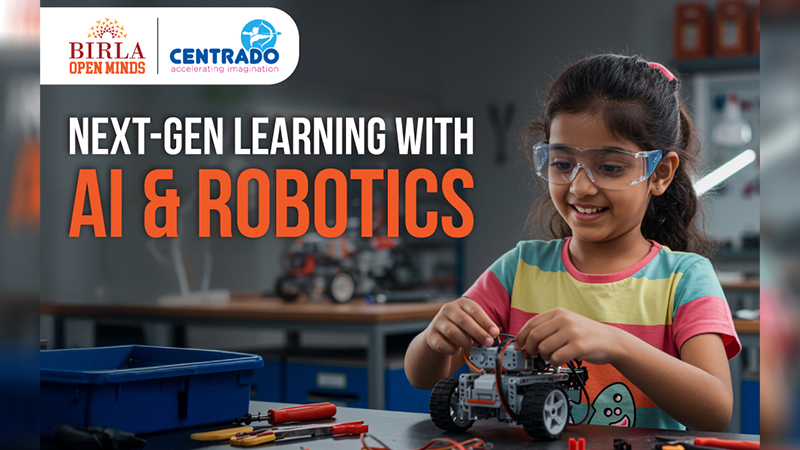
New classroom technologies, management tools, and collaboration tools are significantly enhancing teaching experiences. HOTS (Higher Order Thinking Skills) and LOTS (Lower Order Thinking Skills), central to the Birla Open Minds Curriculum, combined with technology, improve learning outcomes by allowing students to problem-solve, analyze, and become digital natives while maintaining a balanced human approach and sustainable use of resources.
The benefits of embracing technology are evident. As teachers integrate technology, their administrative tasks have lessened, and technology has become an effective enabler for creating content, lessons, and curriculum materials. This integration helps teachers understand and address the learning needs of their students more effectively.
Teachers are now able to monitor more students simultaneously, assign lesson plans that students receive when ready, and share actionable content through a network of technology-enabled tools, both in the classroom and at home.