Cable TV
Is IPTV DASH mechanism the way forward for cable operators in India?

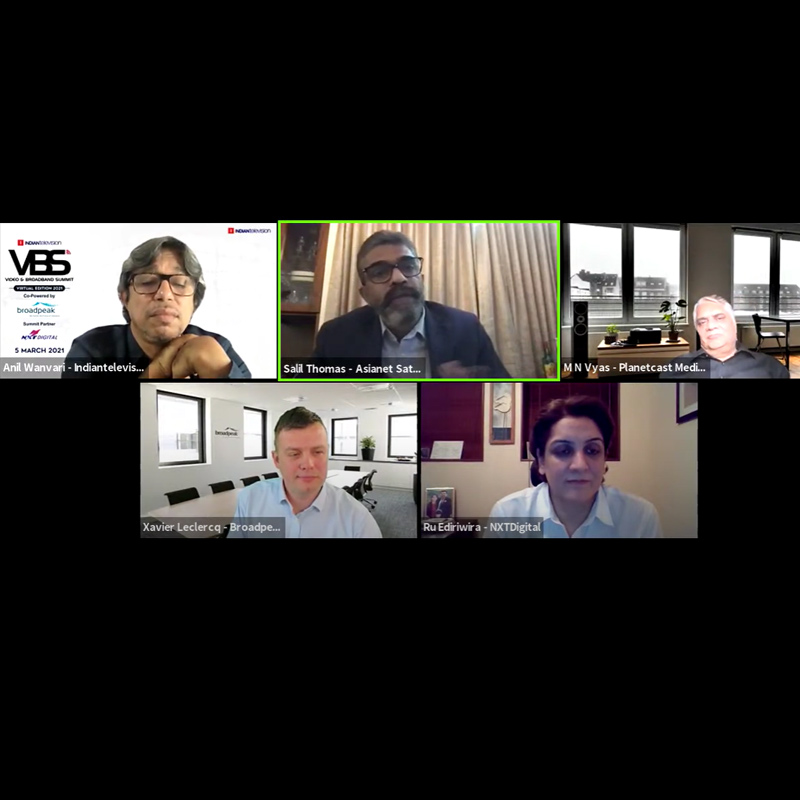
KOLKATA: Cable television service, the biggest video service provider in India, now needs to look at new technologies for cutting down cost of operations as well as simpler content delivery. At a time when multi-system operators (MSOs) are extending their offerings to broadband services, IPTV network can be the way forward, experts opined at a session at the Video and Broadband Summit (VBS) 2021.
The panel discussion, ‘Future proofing DPOs on video delivery solutions’ included NXTDigital group CTO Ru Ediriwira, Asianet Satellite Communications Ltd vice president & technology head Salil Thomas, Broadpeak Business Development vice president Xavier Leclercq, and Planetcast Media Services founder director MN Vyas and was moderated by Indiantelevision.com founder and CEO , editor-in-chief Anil Wanvari.
Although 100 per cent future-proofing is hard to achieve, any organisation should be future-ready in terms of technology, Ediriwira said. “You don’t know what new technology will come around the corner and completely disrupt your industry, way of working. Look at social media, more kids watch YouTube than TV. You have to keep abreast of what is going on and how future generations are changing their content habits, viewing habits,” she added.

Vyas agreed to the view that futureproof is something that is never possible. But the companies have to look at what is really needed at least in the next five years. According to him, a sea change is needed in the current distribution system. Broadcasters and DPOs have to realise that their role has to be minimal now and TV has to be more intelligent, he stated. The operators need to take an approach where they can take and leverage the existing resources along with adding new things.
While looking at the future is important, working on the right technology at the right time is also crucial. Thomas explained that they launched a 4K Android TV set-top box three years ago but the boxes are still sitting in their inventory as consumers are not ready for that. Hence, catching up is important rather than jumping ahead of time, he explained.
“There is a transition happening which is trying to focus more on new users, young audiences and having the ability to reach more screens. We are sort of moving away from the traditional broadcaster domain. This is an interesting turning point,” Leclercq noted.
According to Ediriwira, the cable industry is seeing logical progression. However, while the industry is nine years into DAS, MPEG-2 slots are still around. While operators are making a push for MPEG-4 and HD boxes, they are a long way off from adopting 4K boxes. MSOs have the advantage, unlimited bandwidth to push 4K and 8K, but there is no content, she said. Moreover, if the industry is not able to sell a huge amount of HD boxes, take off of 8K or 4K boxes will not be possible either.
“We are seeing people are moving to different devices like fire stick, Chromecast, plug it into TV and install an app and deliver to content. This is a relatively cheaper and cost-effective way of adding new devices and adding streaming applications. On top of it, the difficulty with this is some of the HD, 4K channels have trouble growing in ninjas. This is basically heavy for the networks, for each individual session coming from one of those set top boxes back to the network. You will basically load the network with unicast traffic,” Leclercq mentioned.
Broadpeak has introduced a technology called MABR that can be used to push multi-screen ABR content (DASH, HLS) over an ISP network. That can be a cable MSO network for example, he added. This content can be pushed all the way to set top box and then it can be consumed by the end device. Operators are starting to build this multicast ABR proposition, he said.
According to Thomas, IPTV DASH and multicast broadcast is a way forward. IPTV DASH replaces the traditional MPEG-2 TS video structure with a more flexible and adaptive technology. It essentially offers the best of both worlds – the greater flexibility offered by OTT combined with the scalability and low latency at stake with IPTV. It can reduce the huge cost of maintenance for cable networks.
He added that the aging of cable networks is a big factor that should be considered. Rather than incurring high maintenance cost, it is better to go for fibre-based IP network which will cater to both cable and broadband services. It is better to move TV on the same platform, he stated. Vyas also agreed that someday the industry has to really get into IP deliveries.
“It is a possibility and we most MSOs have now converted our network to fibre on which we are running both broadband as well as cable. The move to run a full IPTV network that is something any of us have not considered yet. It is very easy for us to drive everything as a broadcast mechanism on Radio Frequency box. But it is definitely worth considering as a potential future capability but at the moment most of us are focusing on trying to upgrade our networks to IP . We have to think about the last mile level also. That requires huge investment from each of the cable operators. We have to help them,” Ediriwira mentioned.
She added that until that does not happen, the MSOs have to use current technologies. The operators are anyway upgrading their networks and moving to fibre. While she believes that operators should look at transitioning from cable broadcast mechanism to IP network mechanism, she is not certain how helpful it will be for rural areas.




Cable TV
Hathway Cable appoints Gurjeev Singh Kapoor as CEO
Leadership change comes as cable TV faces shrinking subscriber base and modest earnings pressure
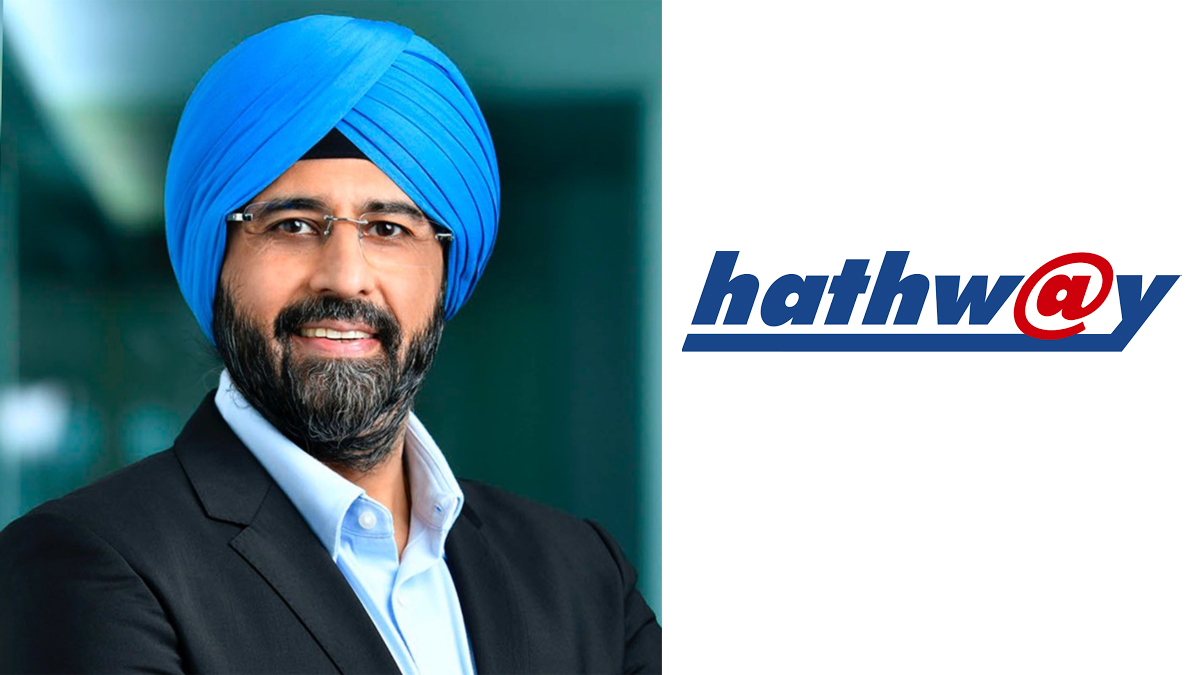
MUMBAI: Hathway Cable and Datacom has tapped industry veteran Gurjeev Singh Kapoor as chief executive officer, marking a leadership pivot at a time when India’s cable television business is under mounting strain.
Kapoor will take over from Tavinderjit Singh Panesar, who is set to retire in August after a long innings with the company. Panesar, chief executive since 2023, has held multiple leadership roles at Hathway, including his latest stint beginning in 2022.
Kapoor brings more than three decades of experience in media and entertainment. He most recently led distribution at The Walt Disney Company’s Star India business, now part of JioStar. His career spans television distribution and affiliate partnerships, with stints at Sony Pictures Networks India, Discovery Communications and Zee Entertainment.
Panesar, with over three decades in the industry, has worked across strategic planning, distribution and business development in media, broadcasting and manufacturing. His past associations include ESPN Star Sports, Star India, Apollo Tyres and JK Industries.
The transition lands as the cable sector grapples with structural disruption. Traditional operators are losing ground to streaming platforms, while telecom and broadband players tighten the squeeze with bundled offerings.
An EY report estimates India’s pay-TV base could shrink by a further 30 to 40 million households by 2030, taking the total down to 71 to 81 million. The slide follows a loss of nearly 40 million homes between 2018 and 2024, a contraction that has already wiped out more than 37,000 jobs in the local cable operator ecosystem.
Hathway’s numbers reflect the strain. The company reported a consolidated net profit of Rs 93 crore for FY25, down from Rs 99 crore a year earlier. Revenue inched up to Rs 2,040 crore from Rs 1,981 crore. As of December 2025, it had about 4.7 million cable TV subscribers and roughly 1.02 million broadband users.
Kapoor steps in with a familiar brief but a shrinking playbook. In a market where viewers are cutting cords faster than companies can reinvent them, the new chief executive inherits a business fighting to stay plugged in.