Brands
DMart announces key leadership appointments

MUMBAI: Avenue Supermarts, the parent company of DMart, has announced significant leadership changes, including the appointment of Anshul Asawa as chief executive officer designate and senior managerial personnel, effective 15 March 2025. Asawa will succeed Ignatius Navil Noronha, the current managing director & CEO, when his term ends on 31 January 2026.
Reports are that Navil chose not to renew his contract after 20 years of being at the helm of the company transforming it from a five store operation to 380 stores all over India. In the process, he managed to accumulate a 1.95 per cent stake in DMart, which is valued at around Rs 5,000 crore, making him one of the richest professional CEOs in India.
Asawa will officially assume the role of MD & CEO on 1 February 2026, subject to shareholder and regulatory approvals.

An alumnus of IIT Roorkee and IIM Lucknow, Asawa brings a wealth of experience from his 30-year career at Unilever, where he held leadership roles in India, Asia, and Europe. Most recently, he served as country head for Unilever Thailand and general manager for the home care business in greater Asia. Known for his consumer-centric approach and focus on digital transformation, Asawa has spearheaded innovations in sales, marketing, and distribution.
Additionally, DMart has announced the following appointments and changes effective 11 January 2025:
* Hitesh Shah has been named head of the pharma business and designated senior management personnel. Shah, who joined DMart in 2007, has over 30 years of experience in sales, marketing, and retail management, including a 13-year tenure at Hindustan Unilever.
* Rajeev Chandrasekharan, previously general manager – DC, will now serve as head of the centre of excellence, overseeing process audits. With 23 years of experience in supply chain and operations, Chandrasekharan has been with DMart since 2015 and has also worked at Procter & Gamble, Gillette, and Toyota (Oman).
* Ashutosh Dhar will transition to the role of head-loss prevention but will no longer be classified as senior management personnel due to a change in reporting structure.
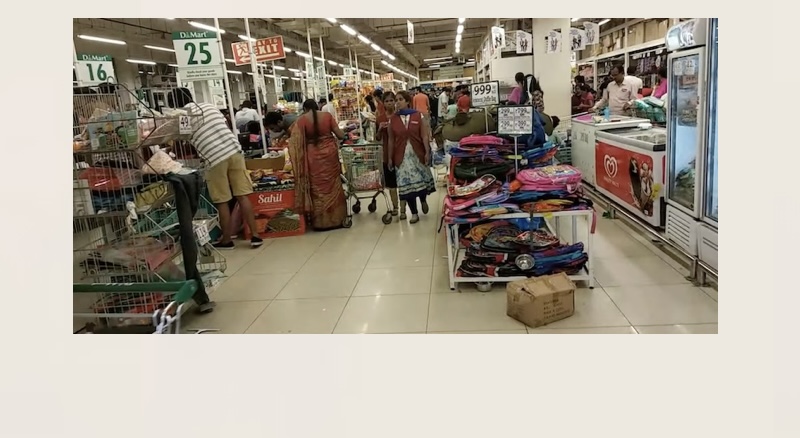
DMart, founded by Radhakishan Damani, operates 381 stores across India, offering a wide range of home and personal products at competitive prices. Headquartered in Mumbai, the company continues to expand with new locations planned across the country.




Brands
Godrej clarifies ‘GI’ identifier after logo similarity debate
Says GI is not a logo, will not replace Godrej signature across products.
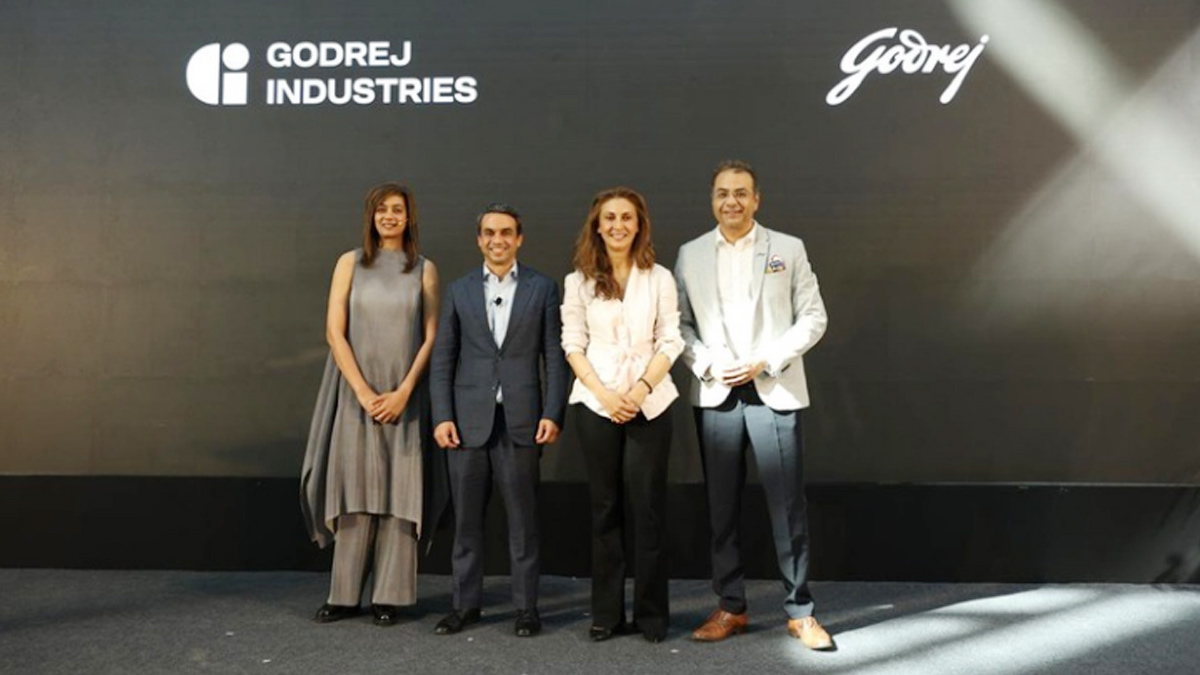
MUMBAI: In a branding storm where shapes did the talking, Godrej is now spelling things out. Godrej Industries Group (GIG) has issued a clarification on its newly introduced ‘GI’ identifier, addressing questions around its purpose and design following a wave of online criticism. At the centre of the debate were two concerns: whether the new mark replaces the long-standing Godrej logo, and whether its geometric design mirrors other corporate identities.
The company has drawn a clear line. The Godrej signature logo, it said, remains unchanged and continues to be the sole logo across all consumer-facing products and services. The ‘GI’ mark, by contrast, is not a logo but a corporate group identifier intended for use alongside the Godrej signature or company name, and aimed at stakeholders such as investors, media and talent rather than consumers.
The need for such a distinction stems from the 2024 restructuring of the broader Godrej Group into two separate business entities. With both continuing to operate under the same Godrej name and signature, the identifier is positioned as a way to differentiate the Godrej Industries Group at a corporate level.
The rollout, however, triggered a broader conversation on design originality. Critics pointed to similarities between the GI mark’s geometric composition and logos used by companies globally, raising questions about distinctiveness.
Responding to this, GIG said its intellectual property and legal review found that such overlaps are common in minimalist, geometry-led design systems. Basic forms such as circles and rectangles appear across dozens of brand identities worldwide, the company noted.
It added that the identifier emerged from an extensive design process and was chosen for its simplicity, allowing it to sit alongside the Godrej signature without competing visually. While acknowledging that elemental shapes may appear less distinctive in isolation, the group emphasised that the mark is part of a broader identity system that includes a custom typeface, sonic branding and other proprietary elements.
Following legal and ethical assessments, the company said it found no impediment to using the identifier, reiterating that the GI mark is a corporate tool not a consumer-facing symbol.
In short, the logo isn’t changing but the conversation around it certainly has.