News Broadcasting
K Madhavan: From God’s own country to leading Walt Disney’s Indian mousehouse

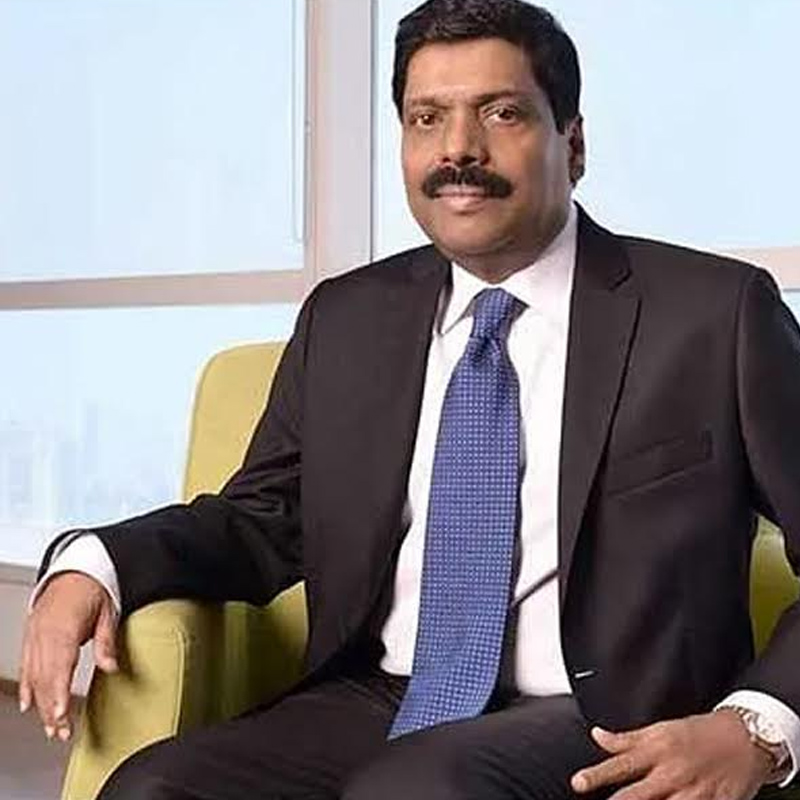
MUMBAI: When The Walt Disney Co international operations and direct-to-consumer chairman Rebecca Campbell was scouting for an executive to fill the big shoes of former Star India, Disney India and APAC head Uday Shankar, she did not have to look far. Though the announcement took some time a-coming, K Madhavan, country manager of Star & Disney India, was the obvious choice. As the overseer of the media conglomerate’s television and studios business in India, Madhavan had worked closely with Uday, until the latter departed in late 2020 to concentrate on an entrepreneurial venture with his former boss James Murdoch.
An unassuming executive from Kerala, K Madhavan is known to be a hard core numbers man with an extremely razor sharp financial mind. He did well in academia as well; he holds a post graduate degree in commerce, and is a certified associate of the Indian Institute of Bankers. He cut his teeth as an investment banker, when he was roped in as a director to help turn around ailing Malayalam network Asianet in 1999. Within a year, he fortified his position and was elevated to MD & CEO of Asianet Communications.
His keen understanding of what Malayalam viewers want to watch facilitated the growth of Asianet’s viewership and made it the favourite of those who live in God’s own country. The network was turned around and it soon became a dominant player in Kerala. He did this even as ownership of the network changed hands, more than once – from promoter Reji Menon to the-then BPL and now BJP top shot and venture financier Rajeev Chandrasekhar. In fact, K Madhavan, ended up owning a tidy piece of it as well, as he grew the network’s footprint in Kannada in concert with Chandrashekar as chairman.
Until, of course, it landed in the hands of News Corp supremo Rupert Murdoch’s Star TV in 2008. Star acquired a majority stake in Asianet’s general entertainment channels (separated from the news business) for a handsome $235 million and an assumption of $20 million in debt. Madhavan pocketed a neat sum for his efforts even as he was appointed as Star India’s south head in 2009.
From thereon, there was no looking back. When Star India took control of Asianet, its portfolio consisted of Asianet and Asianet Plus (Malayalam GECs), Asianet Suvarna (a Kannada GEC) and Telugu channel Sitara. To that was added Star Vijay from the Star India network. Several other channels followed: Asianet Movies, Star Maa (through an acquisition of MAA Television network). Today, it has more than 13 pure play southern language channels, covering general entertainment, movies, in Malayalam, Kannada, Tamil and Telugu. Of course, Star India itself has many other regional language channels covering Marathi and Bengali. At the helm of this dizzying growth was Madhavan with Uday, and the Murdochs giving him total freedom. Observers today value the southern language business of Star at around $3 billion (valued at $1.33 billion in 2013 at the time of its acquisition by Star).
When The Walt Disney Co acquired Twenty First Century Fox a couple of years ago for a massive $72 billion, along with it came all of its Indian assets including the southern language business. Uday, used to working in the maverick style of the Murdochs, quickly had K Madhavan hoicked as country manager of Star & Disney India, leading the media conglomerate’s television and studios business, while he was bumped upstairs to look after the APAC business and Hotstar directly.
When Uday decided to turn entrepreneur in 2020, day to day operations were left in the hands of K Madhavan, who worked closely with Campbell at the worst of times when the media and entertainment industry – and Star and Disney India – had to face lockdowns courtesy the pandemic and an acceleration towards digital video consumption. The way he steered the company impressed the Disney headquarters in Burbank.
“A skilled leader with an extensive background in media, KM has taken our vast Star networks and local content production businesses to new heights,” said Campbell on his elevation. “I have seen first-hand how he has adeptly managed our India business, which has been and will continue to be critical to our global and regional strategy.”
With the leadership issue for Star India and Disney India settled, it should lead to some clarity on the road ahead for the company which did an estimated top line in excess of $1.7 billion last year. K Madhavan will now be able to steer the network and make it future ready in a country where many homes have antiquated CRT TV sets, many have yet to buy one, while a small fraction have high-end 4K sets even as some are graduating to HD, and the young are increasingly consuming video content on their handsets.
Like Uday, he has the respect and attention of Burbank, Disney's and Star India's senior leadership who hold his strategic decision making and vision for the group in high regard. Like Uday, he has an entrepreneural streak, combined with a strong systems approach which should bode well for him in an organisation which thrives because of its processes-driven environment. And of course his deep understanding of what the Indian video viewing consumer wants to watch. His success at Asianet bears testimony to that. The only difference: the canvas is larger and wider now and covers a swathe of demographics, languages and platforms, right from TV to movies to digital.
To his advantage, K Madhavan has the track record and the wherewithal to take the right steps. After all, not every executive can make the transition from heading a small network in God’s own country to leading India’s largest media and entertainment network.