iWorld
With $120 million infusion, UpGrad poised to turn unicorn
Kolkata: At a time when edtech platforms are booming in India, higher learning major UpGrad has raised $120 million from Temasek, a global investment company headquartered in Singapore. With this, UpGrad is speeding toward a landmark $1 billion valuation.
This is the first external funding raised by the edtech major. Since its founding six years ago in 2015, upGrad has been 100 per cent owned, funded, and run by its co-founders as a capital-efficient business.
The Mumbai-based start-up plans to use the fresh capital to further strengthen its team, scale its global market operations, bolster its technology and product capabilities, pursue M&A opportunities, expand graduate and post-graduate degree portfolio in India, and scale up operations to achieve its $2 billion revenue goal by 2026, thereby reinforcing its position as a global higher-edtech leader emerging from India.
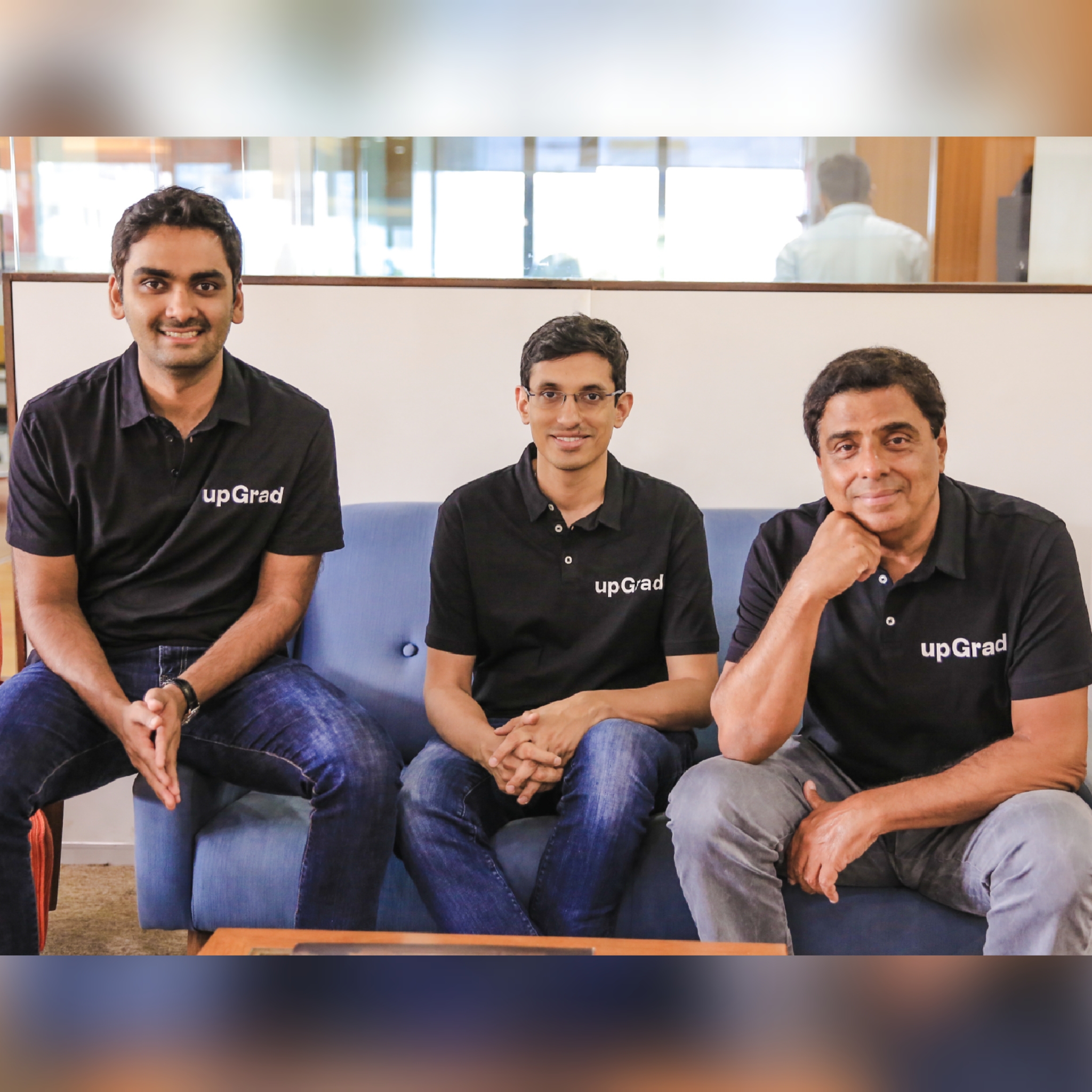
upGrad co-founders Ronnie Screwvala, Mayank Kumar and Phalgun Kompalli said in a joint statement, “We welcome Temasek in our mission to power career success for each and every member of the global workforce as their trusted LifeLongLearning partner and drive meaningful career outcomes. This capital will further fuel our commitment towards global expansion as well as deeper India penetration, as we march forward with our goal of making India the teaching capital of the world.”
Screwvala told Bloomberg that he expects to raise another round of capital in three to six months.
Credit Suisse acted as the exclusive financial advisor to upGrad, and Rajaram Legal acted as legal advisor.
UpGrad’s current repertoire includes over 100 courses in subjects like data science, machine learning, artificial intelligence, coding, finance and law, in collaboration with universities like Michigan State University and the Indian Institute of Technology Madras. About a million learners, mainly from India as well as four dozen other countries, take courses that run from six months to two years.

iWorld
Matka King campaign turns Mumbai into a city of cards
Massive card billboard, buses and shelters recreate 1960s Bombay.
MUMBAI: Mumbai isn’t just shuffling traffic this week, it’s dealing in drama, one card at a time. A high-impact outdoor campaign for Matka King has quite literally taken over the city, transforming everyday streets into a living, breathing throwback to the world of 1960s Bombay. At the centre of the spectacle is a towering billboard near the city’s T1 airport, created by visual artist Rob, assembling hundreds of playing cards into a striking portrait of Brij Bhatti, the infamous Matka King portrayed by Vijay Varma. The installation doesn’t just sit on the skyline; it commands attention, pulling eyes upward in a city otherwise known for looking straight ahead.
But the campaign doesn’t stop at a single visual. The streets themselves have been drafted into the narrative. Vehicles wrapped entirely in vintage playing card designs are cruising through Mumbai, while bus shelters constructed to resemble houses of cards have begun appearing across key locations. The effect is immersive less an advertisement and more a temporary rewriting of the city’s visual language, where modern Mumbai briefly slips into a stylised past.
The campaign leans heavily into experiential storytelling, extending the show’s world beyond screens and into public spaces. By using tactile, physical installations rather than purely digital amplification, it taps into a growing trend in entertainment marketing where scale, spectacle and shareability converge to create cultural moments rather than just promotional bursts.
Created by Abhay Koranne and directed by Nagraj Popatrao Manjule, the series features a wide ensemble cast including Kritika Kamra, Sai Tamhankar, Siddharth Jadhav and Gulshan Grover, among others. Produced under banners including Roy Kapur Films, the show is currently streaming on Prime Video across India and more than 240 countries and territories.
For now, though, the real action isn’t just on screen, it’s unfolding at traffic signals, bus stops and billboards. In a city that rarely pauses, this is one campaign that has managed to stop people mid-step and deal itself straight into public attention.