Connect with us

News Broadcasting

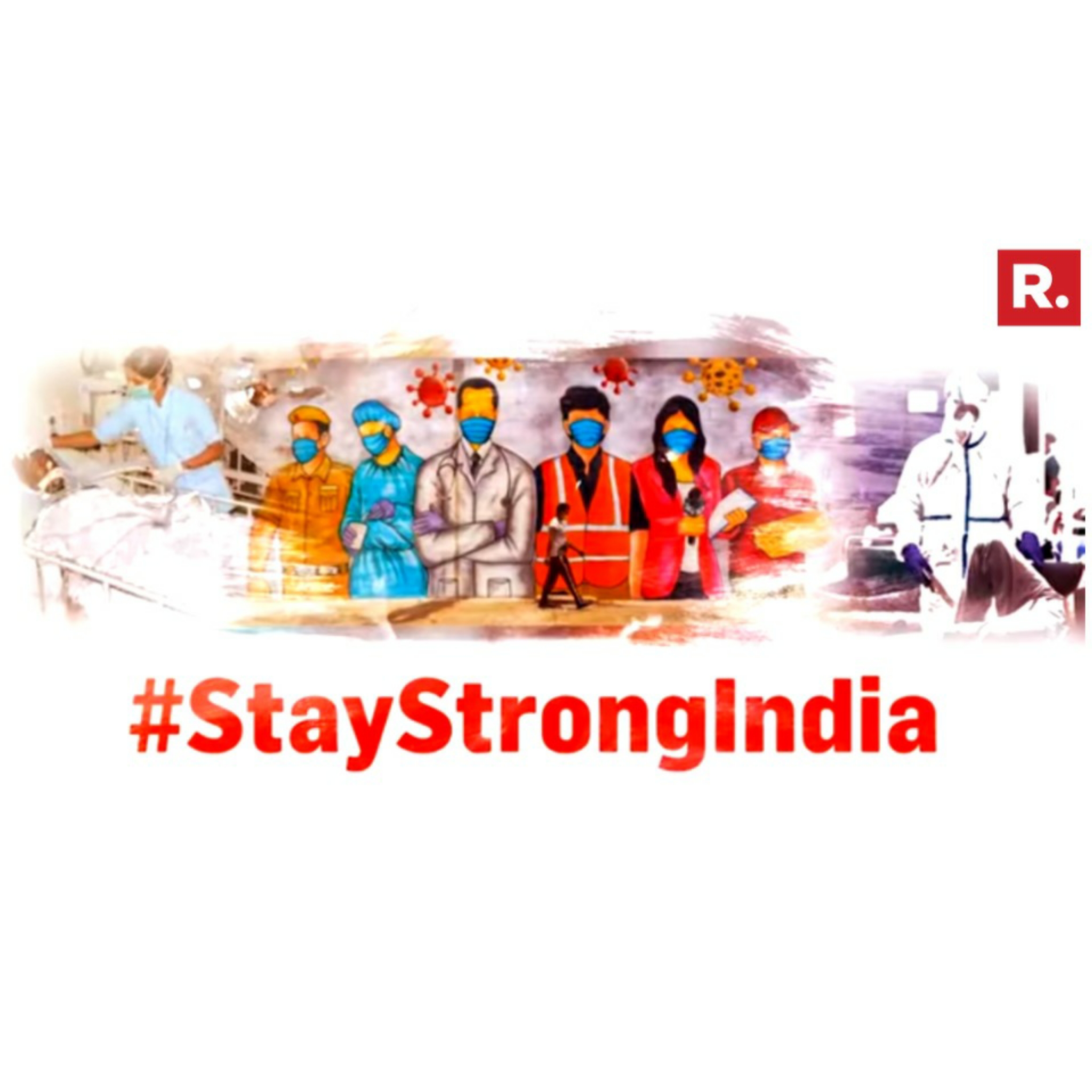
Republic fights second Covid wave with ‘Stay Strong India’

Published

on

NEW DELHI: Since the onset of the second wave of Covid-19, Republic Media Network has dedicated 100 per cent of its programming on the nation’s fight against Covid. Republic’s #StayStrongIndia campaign has become a viral chorus across the globe, a worldwide expression of solidarity, a symbol of India’s resolve and one that has rallied Indians to come together to defeat Covid-19.

Republic Media Network’s Stay Strong India campaign is rooted in sinking our old differences, our varied ideologies, as a nation and working towards a combined win against the ongoing pandemic. The campaign has made it a point to showcase all sides of the story and not just the doom and gloom that crores of Indians are battling daily. 

The core focus of the campaign has been to ensure a solution-based approach and not to stoke panic; to become an information and news headquarters for Covid-19 so that every Indian — in India or abroad— has the right to verified information and combined solutions.

Advertisement

Some of the aspects of Republic’s #StayStrongIndia campaign are as follows:

●       A special primetime show at 6pm daily dedicated coverage on one crucial subject linked to Covid-19.  In this show, experts and the top names from the medical fraternity come together to answer the questions from viewers on a particular aspect of Covid-19. The dedicated programming has seen an overwhelming response and directly connects the citizens in a Pandemic to the expert voices that have answers based on experience, science and facts.

●       Special interviews with game changers and trailblazers in the fight against Covid – from Covid heroes to medical experts to app creators to policy makers to foreign and Indian vaccine makers and ministers across India: Daily interview segments with the biggest newsmakers in India’s Covid-19 fight are on Republic.

Advertisement

●       Daily coverage of not just the points of concern but also the points of hope on how India is uniting to fight Covid.

●       Stay Strong India is also about holding the system accountable. Republic’s Special Investigative Team <SIT> has been filing deep investigative reports on critical shortages and unscrupulous activity across the country and holding the system accountable to drive on ground change, so that maximum resources reach those who most need it.

●       Live interactive special shows connect citizens directly to medical experts to answer Covid queries, which in turn has ensured Republic is the voice and destination of the people at a time when we battle our toughest crisis. 

Advertisement

●       Republic TV brings live reports of the Covid situation from the rural regions. In a special five-minute recurring daily segment, the channel beams the visuals of what is happening in our villages and small towns.

●       In a special segment on My Vaccine Story, Team Republic vlogs its vaccination process, from the time of reaching the vaccination centre to getting the jab, it breaks the hesitation around vaccination.

●       The Network has ensured 100 per cent ground coverage by Republic reporters from hotspots to detail the ground situation.

Advertisement

●       Republic TV under the banner of Stay Strong India has dedicated its Super Prime Time debates to Covid related issues.

Republic Media Network editor-in-chief Arnab Goswami said, “ Yes these are the most difficult of times. They have frustrated us and challenged us. They have taken us to the depths of loss and despair. And yet in these times most of all we must believe that we will overcome. We will turn things around together. We will not give up and not let anything stop our fight back. Because when history is written India will rise by fighting its biggest battle in decades. We will rise. Only India can. Only India will. We will.

The campaign of Stay Strong India has reverberated across the globe. With landmark buildings including Burj Khalifa, in Dubai and the Adnoc headquarters in Abu Dhabi lit up with the message “Stay Strong India”, it is clear that the campaign has resonated across the world. Diplomats and leaders from all over have been using the hashtag – whether it is the UAE or Israel, thereby standing strongly with the resolve of this great nation.


Advertisement

Click to comment

Leave a Reply

Your email address will not be published. Required fields are marked *

News Broadcasting

Induction cooktop demand spikes 30× amid LPG supply concerns

Supply worries linked to West Asia tensions push households and restaurants to turn to electric cooking alternatives

Published

on

MUMBAI: As geopolitical tensions in West Asia ripple through global energy supply chains, the familiar blue flame in Indian kitchens is facing an unexpected challenger: electricity.

What began as concerns over the availability of liquefied petroleum gas (LPG) has quickly evolved into a technology-driven shift in cooking habits. Households across India are increasingly turning to induction cooktops and other electric appliances, initially as a backup but now, for many, a necessity.

A sudden surge in demand

Recent data from quick-commerce and grocery platform BigBasket highlights the scale of the shift. According to Seshu Kumar Tirumala, the company’s chief buying and merchandising officer, demand for induction cooktops has risen dramatically.

Advertisement

“Induction cooktops have seen a significant surge in demand, recording a fivefold jump on 10 March and a thirtyfold spike on 11 March,” Tirumala said.

The increase stands out sharply when compared with broader kitchen appliance trends. Most appliance categories are growing within 10 per cent of their typical demand levels, while induction cooktops have witnessed explosive growth as households rush to secure an alternative cooking option.

Major e-commerce platforms including Amazon and Flipkart have reported rising searches and orders for induction stoves. Quick-commerce apps such as Blinkit and Zepto have also witnessed stock shortages in major metropolitan areas including Delhi, Mumbai and Bengaluru.

Advertisement

What was once considered a convenient appliance for hostels, small kitchens or occasional use has suddenly become an essential addition in many homes.

A crisis thousands of miles away

The trigger for this shift lies far beyond India’s kitchens.

Escalating conflict in the Middle East has disrupted shipping routes through the Strait of Hormuz, one of the world’s most critical energy corridors. Nearly 85 to 90 per cent of India’s LPG imports pass through this narrow waterway, making the country particularly vulnerable to supply disruptions.

Advertisement

The ripple effects have been swift.

India currently meets roughly 60 per cent of its LPG demand through imports, and tightening global supply has already begun to affect domestic availability and prices.

Earlier this month, the price of domestic LPG cylinders increased by Rs 60, while commercial cylinders rose by more than Rs 114.

Advertisement

To discourage panic buying and hoarding, the government has also extended the mandatory waiting period between domestic refill bookings from 21 days to 25 days.

Restaurants feel the pressure

The strain is not limited to households. Restaurants, hotels and roadside eateries are also grappling with supply constraints as commercial LPG availability tightens under restrictions imposed through the Essential Commodities Act.

In cities such as Bengaluru and Chennai, restaurant associations report that commercial LPG availability has dropped by as much as 75 per cent, forcing many establishments to rethink their kitchen operations.

Advertisement

Some restaurants have reduced menu offerings, while others are rapidly installing high-efficiency induction systems, creating hybrid kitchens where electricity now shares the workload with gas.

For smaller eateries and roadside dhabas, the shift is less about sustainability and more about survival.

A potential structural shift

The government has maintained that there is no nationwide LPG crisis and has directed refineries to increase production to stabilise supply.

Advertisement

Nevertheless, the developments of March 2026 may already be triggering a longer-term behavioural shift.

For decades, LPG has been the backbone of cooking in Indian households. However, recent disruptions have highlighted the risks of relying on a single fuel source.

Increasingly, households appear to be hedging against uncertainty by adopting electric cooking options to guard against price volatility and delivery delays.

Advertisement

If the current trend continues, the induction cooktop, once viewed as a niche appliance, could emerge as a quiet symbol of India’s evolving kitchen economy.

Continue Reading

Advertisement News18
Advertisement All three Media
Advertisement Whtasapp
Advertisement Year Enders

Copyright © 2026 Indian Television Dot Com PVT LTD

This will close in 10 seconds

×