MAM
The role of AI in shaping tomorrow’s workforce

The rapid advancement of AI technologies, particularly in recent years, has sparked both excitement and concern about their potential to replace human roles across various sectors. Tools like ChatGPT have demonstrated the ability to perform tasks that were once the exclusive domain of humans, such as writing, coding, and even creative endeavours like photography and editing. As AI continues to evolve, it raises a pressing question: Can AI truly take over human jobs, and if so, what does that mean for the future of work?
The introduction of tools like Chat GPT, Sora, GitHub and others has given us a peek into how AI can change the way we live and work. The tasks that used to take hours or days can now be completed in minutes. And this is just the beginning. As AI evolves, we will enable humans to take over multiple roles across fields. In industries like customer service, technical writing, and content creation, AI is already making inroads by handling routine inquiries, drafting reports, and even brainstorming creative ideas. ChatGPT and its peers are reducing the need for human labour in some areas, demonstrating AI’s potential to take on roles that involve knowledge-based work.
How well is AI doing our jobs?

At this very moment, 57 per cent of content on the internet that exists is generated by AI, according to a study by Amazon Web Services. Another report by Forbes stated that 90 pet cent of content on the internet will be generated by AI by 2025. Automation in manufacturing has already replaced many manual jobs with robots capable of performing tasks faster and more efficiently than humans, reducing costs and increasing productivity.
The field of programming, once seen as an impenetrable domain for AI, is now being influenced by it. Advanced AI tools can write code, assist in debugging, and automate repetitive tasks, making development cycles faster and more efficient. Companies are leveraging AI to handle everything from boilerplate code generation to automating the testing process, reducing reliance on entry-level programmers.
AI is also making headway into creative areas like photography and editing, once thought to be immune to the impact of AI. In photography, AI-powered tools can automatically edit images, adjust lighting, and enhance photo quality, removing much of the manual labour involved in post-production. Video editing, too, is being streamlined by AI, which can cut and arrange footage based on pre-set preferences. AI is also creating music, providing voice assistance, teaching some of the hardest subjects and many more things across many industries. If we assume AI is going to take over every industry at the same rate, most of the jobs we have today will be taken over by AI sooner than expected.
The reality of AI taking over our jobs
While some jobs will inevitably be automated and taken over, AI is more likely to reshape roles rather than eliminate them entirely. The World Economic Forum’s Future of Jobs Report highlights that by 2025, AI could replace 85 million jobs, but it is also expected to create 97 million new ones. This shift shows that the focus will be on changing the types of jobs people do, rather than reducing the number of jobs overall.
Moreover, no company can run entirely on AI. A recent incident of Microsoft’s “Blue Screen of Death” showed the dangers of over-reliance on technology. A faulty update from CrowdStrike caused a global outage, disrupting hundreds of planes, hospitals, trains, offices, and more. It was a clear reminder of the risks of depending too much on AI or any technology. To truly benefit from AI’s potential, we must combine its strengths with human oversight, ensuring a balanced approach as we move forward. From what we have seen so far, “AI won’t replace human jobs but the people who can use AI could replace them”. With evolving technology and workplaces continuously streamlining operations, we will need to adapt to the technology and upskill ourselves to become more efficient.
Conclusion: Will AI take over?
AI is undoubtedly transforming industries and changing the way we work, but a complete takeover of human roles remains unlikely—at least for now. While AI excels in automating tasks and replicating certain aspects of creativity, it cannot fully replace human ingenuity, empathy, and emotional understanding. The future of work will likely see a blend of AI and human collaboration, where AI handles repetitive and technical tasks, and humans focus on creative, strategic, and emotionally driven roles. As AI continues to advance, it’s crucial that employees and companies adapt, ensuring that the benefits of AI are harnessed while preserving the unique qualities that only humans can bring to the table.
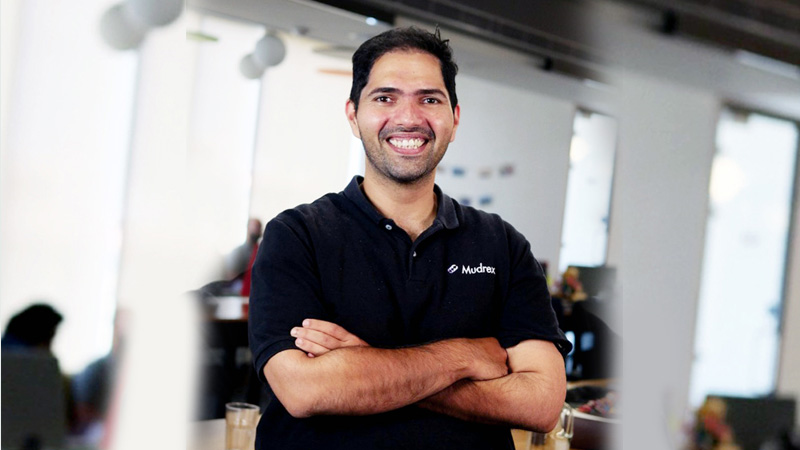
The article has been authored by Mudrex CEO & co-founder Edul Patel.







MAM
VML India lands two finalist spots at Cairns Hatchlings 2026
The Mumbai agency is back in Australia with two teams, a UN brief and 24 hours to impress

MUMBAI: VML India is heading to Australia again. The Mumbai-based creative agency has secured two finalist spots at the Cairns Hatchlings 2026 competition, one in the Audio category and one in Design, making it the only Indian agency to have reached the finals in both editions of the contest since its launch in 2025.
Four people will make the trip. Senior copywriter Shilpi Dey and senior art director Raj Thakkar will compete in Audio. Art directors Shabbir and Shruti Negi will go head-to-head with the world’s best in Design. The finals take place at the Cairns Convention Centre from 13th May, culminating in an awards ceremony on 15th May.
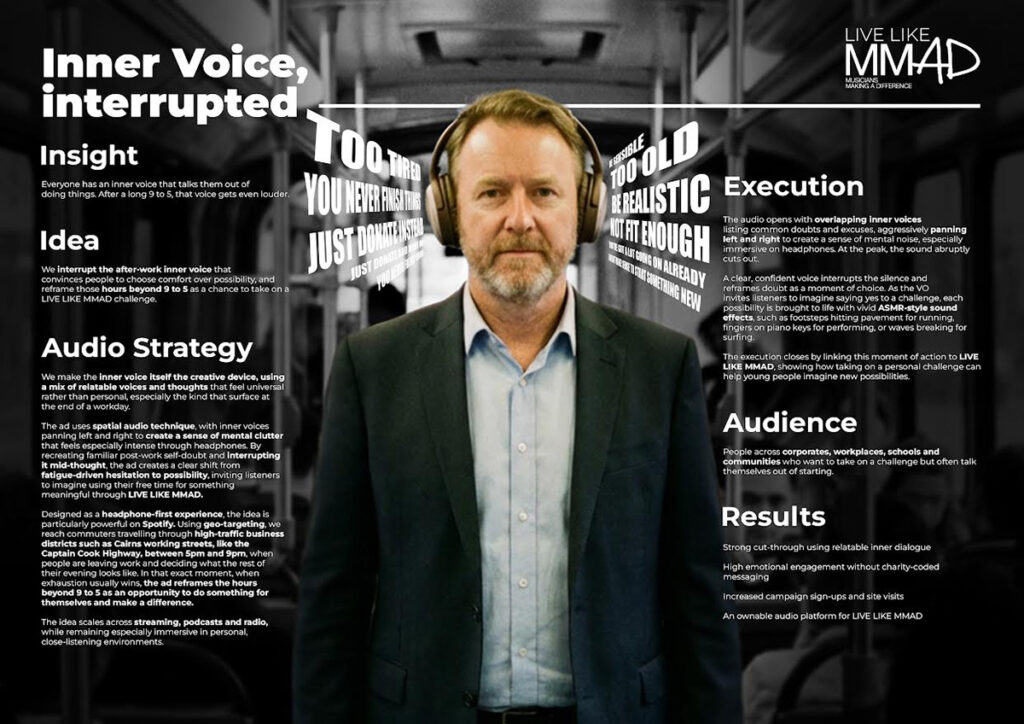
The work that got them there is worth examining. For the Audio category, Dey and Thakkar tackled a brief for LIVE LIKE MMAD with a campaign called Inner Voice, Interrupted. Using spatial audio techniques, the campaign recreates the overwhelming self-doubt that descends after a long workday, physically panning negative thoughts left and right before cutting the noise entirely to reveal a confident inner voice. Strategically targeted at commuters via Spotify during evening rush hours, the campaign reframes the hours after work as an opportunity for personal growth and charitable action.
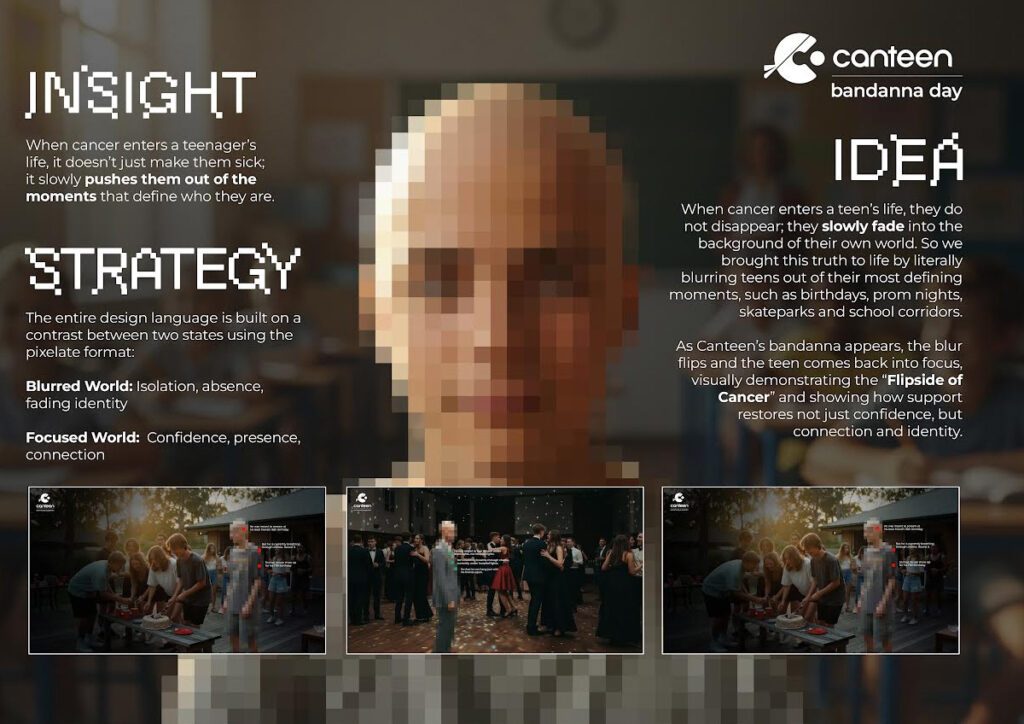
For the Design category, Shabbir and Negi worked on a brief for Canteen’s Bandanna Day, a campaign highlighting how cancer pushes teenagers out of their own defining moments. Using a pixelated design language to create stark contrast between a blurred world of isolation and a focused world of connection, the campaign, titled The Flipside of Cancer, shows teenagers fading into the background of birthdays, skateparks and school proms. As a Canteen bandanna appears, the blur flips and the teenager snaps back into sharp focus.
Kalpesh Patankar, group chief creative officer of VML India, made no attempt to disguise his satisfaction. “We are immensely proud to see our teams consistently excel on the Cairns Hatchlings platform since its inception,” he said. “They have masterfully tackled challenging briefs across diverse categories, demonstrating both layered storytelling and a unique creative approach. This exceptional teamwork is truly inspiring.”
Dey and Thakkar, returning to the finals after last year’s run, were candid about the demands of the audio medium. “It’s one of the most demanding mediums, where we only have a few seconds to capture a listener’s world with sound alone, so absolute clarity is essential,” they said. “The true measure of creative work is its ability to create positive change, and our audio submission was made to help those who need it most while encouraging people to silence the inner voices that hold them back.”
Shabbir and Negi, competing in Design for the first time, described the experience as “a completely different beast.” “We see it as an opportunity to showcase our expertise, raise the bar, and challenge ourselves in new ways, while also learning from creative minds from across the globe,” they said.
In Australia, the four finalists will face a live 24-hour brief from the United Nations before presenting in a live pitch session. Twenty-four hours, one brief, one shot. VML India has been here before. It knows exactly what is at stake.