MAM
Budget 2022: A clear push towards a digital economy, start-ups

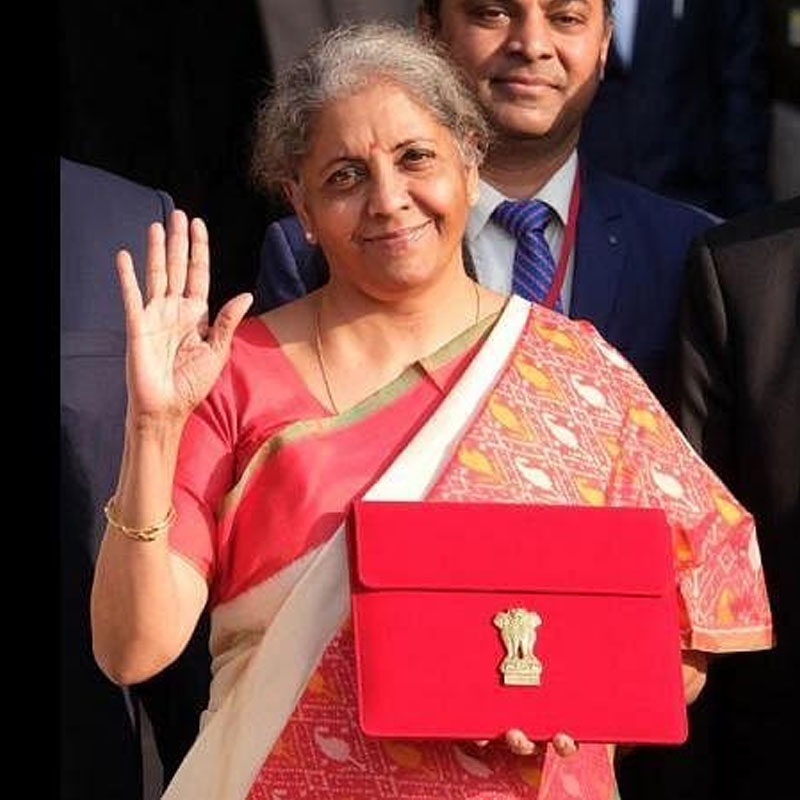
Mumbai: Finance minister Nirmala Sitharaman on Tuesday presented the Union Budget 2022 in Parliament. The minister said that the country is set to clock an economic growth rate of 9.2 per cent in the current financial year, in what was her shortest Budget speech yet. While the budget made no tax concessions for the salaried class, some of the key areas it focussed on was a push towards a digital economy, and start-up ecosystem.
The FM proposed a 30 per cent tax on income from transactions of cryptocurrencies and other virtual assets. Also, to bring such assets under the tax net, Sitharaman proposed a one per cent TDS (tax deducted at source) on transactions in such asset classes above a certain threshold, while also including gifts in crypto and digital assets in the to-be taxed list.
Sitharam also said that the Reserve Bank of India (RBI) will launch a ‘Digital Rupee’ based on blockchain technology in 2022-23. The Central Bank Digital Currency (CBDC), according to the finance minister, will provide a significant boost to the digital economy and lead to a more efficient and cost-effective currency management system.
The FM also announced the extension of the Emergency Credit Line Guarantee Scheme (ECLGS) that provided additional credit to over 1.3 crore MSMEs till March 2023. Additionally, its guarantee cover has been expanded by Rs 50,000 crore to Rs 5 lakh crore. Apart from this, in a year riddled with mental health well-being concerns amid the pandemic, FM Sitharaman announced the launch of a ‘National Tele Mental Health Programme’ for better access to quality mental health counselling and care services, in a move that signifies the normalising of mental health as a legitimate area of focus for us as a nation.
Industry reactions on the Union Budget have been pouring in, and most of the industry stakeholders saw the twin announcements of the digital rupee and the taxation on “virtual digital assets” as a focused drive from the government to regulate the crypto space. Some felt that regulating a decentralised space is a paradox in itself, and took the cautious approach by saying how this plays out needs to be seen.
Here is what the industry experts had to say:
CoinSwitch founder and CEO Ashish Singhal who is also the co-chair of Blockchain and Crypto Assets Council (BACC) welcomed the government’s decision to introduce central bank digital currency (CBDC) to accelerate digitisation. Calling it the ‘the gateway to the future decentralised world, aka Web3.0’, he said, “The budget provides clarity on taxation and shows the government’s intent to take a business-friendly approach while protecting the interest of consumers and the exchequer. The regulatory guidance on tax from the government furthers the mainstreaming excitement of this emerging asset class with over $6bn worth of investments in India. Hopefully, this will induct more digital-savvy Indians into the financial ecosystem willing to explore newer forms of investing and wealth creation.”
OKX.com CEO Jay Hao believes that India is slightly lagging in the digital currency race mainly due to the regulatory hurdles and reluctance in accepting the growing popularity of digital assets/digital currency around the world. “If we look at the global scenario, central banks around the globe have already launched or are about to launch their digital currency,” said Hao, adding that he hoped the announcement made regarding CBDC is implemented without any further delay as it will give a much-needed push to the blockchain industry in India. He also asserted that higher taxes may discourage investors from choosing crypto as an investment avenue and delay the mass adoption of crypto assets in India.
CoinDCX co-founder and CEO Sumit Gupta hailed taxation of Virtual Digital Assets or Crypto as a step in the right direction. According to him, this will give a much-needed clarity and confidence to the industry. The introduction of CBDC sends a clear signal of India being a digital-first, efficiency-driven, and transparency-led system, he added.
Mudrex CEO and co-founder Edul Patel also termed it as a progressive step towards boosting crypto adoption in the coming years. The sentiment was shared by other industry executives who felt the government legitimatised crypto assets in India in an indirect way by coming out to tax the same.
Dentsu India chief client officer Narayan Devanathan said the budget is “future-focused, aiming at the distant vision of India@100”, instead of being focussed on the present. Expressing dismay over the omission of much-needed concessions in critical sectors like health, Devanathan said, “A punishing 2021 for the aam aadmi with more-than-usual expenditure on health and sustenance meant the general populace was looking for immediate relief that would place more cash in their household budgets. That did not happen. Nor was there any extraordinary investment in relieving the healthcare expenditure burden. Even the MSME sectors were only handed a slightly longer lease of life with the extension of the ECLGS, but there was no real move to stimulate consumption by placing more cash at consumers’ disposal, for example, extending LTA claims to restaurants (and not just accommodation).”
According to Blink Digital co-founder and COO Rikki Agarwal the government sent mixed signals with its proposed announcement of a new digital rupee powered by blockchain technology and taxing digital assets. While the move has cleared the impending ambiguity around the cryptocurrencies in India, signifying its acceptance as an asset and legalising it to boost the economy, imposing heavy taxes on digital assets is an indication that the government intends to discourage the same, he says, adding, “We will wait for more clarity on the regulations.”
Wunderman Thompson South Asia CEO Shams Jasani said the budget highlighted that government is finally recognising that digital is getting to be bigger and bigger. “With so much talk on digitisation I think the digital revolution has already come in India. And the sheer push on digital infrastructure in the country will help a lot more content consumption and a lot more content creation as well. Also, the reach of the medium is going to grow into the rural areas and smaller towns & cities,” he said, adding that, “Governments across the world are going to ultimately get into the digitalisation of currencies, backed by Crypto technology or blockchain technology, and that is the future of currencies. So that is going to take off and that will also legitimise the whole idea of cryptocurrencies in India.”
DDB Mudra Group chief operating officer and chief financial officer Anurag Bansal opined that the Union Budget looks neutral, with no major changes in taxation, adding that the launch of digital Rupee based on blockchain technology is a big move to bring in official cryptocurrency in India. Managing the Fiscal deficit while pushing for growth and investments is a great balancing act taken on by the government, he feels; one that will give a boost to capital investments and infrastructure development.
White Rivers Media CEO and co-founder Shrenik Gandhi termed the budget as ‘fairly balanced’ in that there is sufficient emphasis being laid on up-skilling, and making right investments in tech which is the need of the hour. Speaking of the expected benefits, he added, “Let’s not forget that this is India’s #Budget and not a Big Bazaar scheme announcement. So, the immediate benefit may not be seen right now but considering the long-term narrative, it is a fairly established budget.”
According to Publicic Groupe South Asia CEO Anupriya Acharaya, the Budget was positive, growth-oriented and with reforms in the right direction. “The advent of 5G is sure to transform communications – for our industry it will help the creation of better AV, voice and AR/VR experiences. It will also fuel digital payments, streaming entertainment, gaming, e-commerce, tele-medicine etc which in turn will aid more Unicorns! From e-passports, to battery swapping for electric vehicles, setting up of optic fiber in villages, setting up of a digital university and skilling through an e-portal, the big push is for technology, digital infrastructure and empowerment,” she added.
Parle Products senior category head Mayank Shah said putting money in the hands of consumers really helps, so they go out and buy products. “So that was more on the front of ensuring that the demand remained robust given that we have gone through two years of pandemic. That was something that industry expected, either by tax cut, or by increasing the slabs tax brackets or by probably increasing the standard deduction limit. Those were the things that we expected but not much has been done there.”
Thomas Cook (India) MD Madhavan Menon said the budget was disappointing from a Travel & Tourism perspective. “The Budget made no reference to the industry’s recommendations to aid revival, including rationalisation of taxes (a complete GST holiday, exemption of TCS on outbound tours, reduction in indirect taxes), removal of SIES benefit capping of Rs 5 cr,” he said.
Mad Over Donuts ED Tarak Bhattacharya also rued that the budget gave no attention to the hospitality industry in particular. “Our industry continues to bear the brunt of the pandemic, probably more than a lot of other sectors. We were hoping for some relief or some measures that would help the industry in the months and years to come,” he said.
Food and Beverage startup Wat-a-Burger co-founder & CEO Farman Beig said the government has been supportive towards the F & B sector and did announce some steps to help the sector bounce back by shifting the GST compliance onto online food delivery partners on behalf of the restaurants. “However, some relief in terms of ITC (Input tax credit) would have further catalysed the recovery of the sector which otherwise is on the bleeding end. Currently, when the industry is struggling to manage the fixed cost with GST, it requires immediate boost, and cutting down ITC would have worked wonders,” he added.
TCL India head of marketing Vijay Kumar Mikkilineni welcomed the FM’s increased focus on the consumer electronics industry and formation technology. “The 2022 Union Budget allocated 1.97 lakh crore ($26 billion) for PLI projects, notably electronic components, which are among the 13 vital sectors that would undoubtedly help our economy expand. Furthermore, reduced customs taxes will encourage electronics manufacture, which will benefit the electronics industry,” he said.
CEO of SPPL – exclusive licensee of Thomson in India Avneet Singh Marwah said, “This budget has been more like announcements and slogans. I’m surprised how FM missed on health and education, which are two main pillars of the economy, despite the pandemic. On one hand the government talks about how electronics will contribute one trillion to the economy and on the other for consumer electronics no major announcements, no roadmaps have been given to the industry.”