MAM
One-word description of Abby’s this year would be ‘game-changer’: The Ad Club’s Partha Sinha & Rana Barua

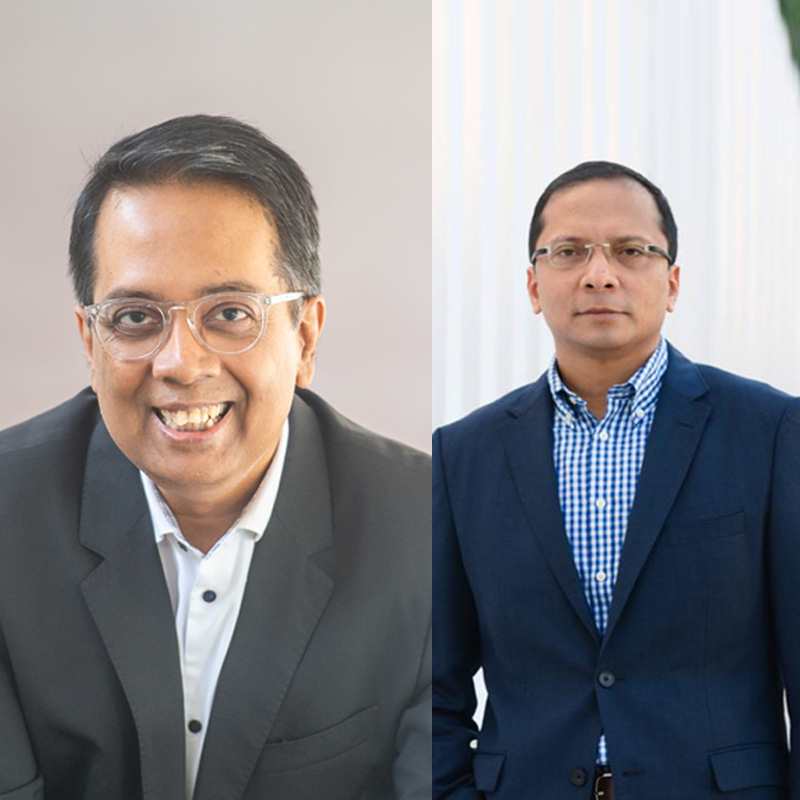
Mumbai: The stage is finally set for the annual awards hosted by The Advertising Club (TAC) to be held from 5 to 7 May at the GoaFest this year. The thirteenth edition of the Abby awards is back on ground after taking an enforced breather of two years, thanks to the pandemic. IndianTelevision.com caught up with The Ad Club president Partha Sinha and Abby Awards Governing Council 2022 chairman and The Ad Club VP Rana Barua to find out what has changed at the Abbys and on the participation from agencies and industry at large at this year’s awards.
The award ceremony that celebrates the cream of the country’s advertising works and the advertising industry at large is in its thirteenth year at the GoaFest. Earlier this year, The Ad Club announced its partnership with the prestigious The One Show for Abby’s 2022, and thereafter the appointment of three International jury chairs to judge the works.
What’s different this time

“One of the key things that we wanted to do was to take Abby’s to global standards and we have done precisely that. We have tied up with the world’s most credible and sought-after award program, The One Show,” says Partha Sinha, diving right into what’s different this year about the awards.
This was unimaginable, says Sinha, reminiscing about the initial days of the awards. “Abby’s used to be a cottage industry- from there we have moved it to The One Show – that’s like the biggest global standard there is.” So, thanks to that a few things will be very different this year, he continues. “That is the standard of judging, the quality of jury we are getting due to the intervention of The One Show, and we also expect this to serve as a shortlist for global awards. Because here the remit maybe South Asia but the standard is global.”
“So South Asia entries will be judged in global light and my guess is that some of the works which will win here will go on to win on global platforms,” Sinha adds.
The work that is being judged is from the last three years, Barua reminds while talking about the awards’ association. “It’s truly now a part of an international circuit via this collaboration. So also, the quality of work is not going to be basic. I think that’s one of the biggest changes that is going to start- maybe some of it this year too but you will see it in the subsequent years- the work quality will automatically start improving.”
The quality of jury chairs that has come in because of The One Show, it’s going to become an introspective pressure on all of them because you have to raise the benchmark of work that’s coming out now, continues Barua. “That’s the exciting bit for us.”
Kind of work being received
What is the kind of work being received in the wake of the pandemic, considering that the pandemic has served as a disruptor for most industries- advertising and marketing included? To that Barua says, “We need to remember that it is three years of work that we are judging this time. So there might be a pre-pandemic, pandemic, and also post-pandemic work from last year- which is when we came out of the pandemic and more or less life was returning to normalcy.”
“Also, because of the strictness of the process, neither Rana nor me- nor anybody in the committee, for that matter, has seen the work. The work is seen and evaluated only by the jury,” he emphasises, adding that, “We will get to see the work and the award only when it wins an award, and when the Abby is made. There’s a sanctity to the whole process and that is the beauty of The One Show. I’m loving it.”
Having said that, Sinha perceives that a key part of the works this time could be humane in nature “because one thing everybody has realised- whether its communication or business or anything- is that you need to have a lot of sympathy, a lot of empathy towards your audience.” Calling the pandemic the biggest teacher, he says, “The pandemic taught us that maybe ‘empathy’ is a bigger power than even ‘persuasion’ so we will get to see some reflection on that, rather than pure persuasion and selling.”
Participation from agencies
Abby’s partnership with The One Show will add credibility and raise levels of transparency to the entire selection process for the awards, which had come in for a fair share of criticism from agencies in the past over transparency in the awarding process. It also saw a few big names in agencies dropping out of the process.
On the participation from agencies this time around after a gap of two years, Barua says, “I can just tell you the participation numbers this year have beaten both 2018 and 2019’s numbers. Both on Creative and on Media we have had some outstanding contributions from all the agencies- independent as well as network agencies.” It’s probably a record-breaking year, he adds, and so next year is going to get tougher for us as the stakes are going to be higher.
Barua acknowledges that because of the timing and uncertainty due to the Omicron wave, few network agencies could not manage to participate within time. “But they have all shown equal participation because of The One Show and from next year we are going to see a maximum number of these agencies coming back.”
Sinha draws attention to another event recently held by TAC- the EMVIES, which was likely the advertising industry’s first large-scale event post the pandemic. “We saw the energy, the number of entries, the quality of entries. And I am not expecting anything lesser- this will be as big, as exciting. The number of entries has surpassed all kinds of records so we think the participation is very strong. My guess is that even the quality of work would be great, as also seen during EMVIES. And I’m expecting the quality to only go upwards from here,” he says.
“And I’m also expecting that because of this global standard jury process, some of the work which wins here will also go on to win on some global platforms,” he further adds.
Earlier this year, post its partnership announcement with the prestigious The One Show for Abby’s 2022, the Ad Club announced the appointment of three International Jury Chairs for judging Abbys this year, namely – Menno Kluin, Aricio Fortes and Myra Nussbaum, who are each stalwarts in the global advertising industry and also some of the world’s most awarded.
Additionally, the Abbys Governing Council announced the names of six advertising professionals, who will be judging Abbys 2022 along with the international judges as jury chairs.
Reaction from jury members
On the excitement from jury members, Barua says, “They were very excited to know about this entire association. For most of the global persons who have come onto the jury, India is a country that they would have loved to become a part of and play a role in this. And they are playing it either directly or indirectly through the network from some of the best agencies.”
If the time had permitted they would have got a wider range of people, says Barua. “Some of these names are absolutely the biggest in the industry. And there’s high excitement, they would love to know what’s happening in the country. Some of the best juries have managed to come onboard. We gave them the right categories to manage so that it’s easy for them to understand the entire thing.”
To give an insight into the kind of responses they were getting from the jury chairs, Sinha read out a text from a jury chairman (whose name is not disclosed for now). “TOS judging interface is a game-changer, it made the whole process on-the-go,” he reads out. “I found the composition of the jury very refreshing and I must appreciate the TAC for being so thorough even though it’s the first year of their collaboration.”
Setting a benchmark
He further went on to say, “If there’s a one-word description of Abby’s this year, it would be ‘game-changer’. Everybody thinks it’s a game-changer. Everybody who judged thinks so too. We know it’s a game-changer. We want to make sure it is.”
Calling it a big change that the industry will always remember, Sinha says, “We spent serious money and effort doing this collaboration. And we did all of that with just one thought in mind,” He continues, “Because I think we owe it to our fellow communication people in the industry, that we do something which’s of a standard. And Abby is going to be of a standard which is going to be recognised by anybody across the globe.”
The TAC duo shared that the international collaboration has generated a lot of interest in the event amongst the global community, which was a little insulated before this. And that includes the kind of speakers the adfest is attracting. “We are getting Dan Wieden – that’s the man behind Nike’s famous ‘Just Do It’ slogan in 1988. Then there’s Menno Kluin – he’s the rockstar in the global creative world today. So suddenly the whole story is changing in a manner where people are now seeing us as a part of a circuit.”
They further add, “We have to get it to the level of those Monaco circuits, Singapore circuits. To be a part of that circuit it has to have that quality, status and stature. And that is precisely what we are doing. So our job as the ad club office bearers would be to make sure we take a very strong step towards preparing our entire circuit in such a way that it is world-class.”
“We have had enough bumps, hurdles, potholes so it’s time for us to even out the entire road and raise the game,” The Ad Club duo signs off.







If your HR software still feels like a glorified spreadsheet with a login page, 2026 is the year to rethink everything. Especially as HR software in India evolves rapidly to meet compliance, scale, and workforce complexity.
Why 2019 HRMS You Chose Probably Isn’t Enough Anymore?
To be honest, most businesses didn’t really choose their HRMS; they just happened to get it. A vendor demo, a short deadline, and a CFO who approved the budget all made you stuck with a system that was “good enough” at the time.
Today, that same system is struggling to keep up with hybrid work, distributed teams, complicated compliance issues, and employee expectations that have changed a lot in just five years. This is exactly where modern HR automation software is redefining how HR teams operate, moving from manual processes to intelligent workflows.
As per the 2025 report by Gartner, more than 58% of HR professionals stated that their existing software did not fully enable their workforce strategy. On the other hand, as per the HR Tech survey conducted by PwC, those companies that invested in modern HRMS systems were able to improve their HR efficiency level by up to 22% and reduce compliance penalties by 15%.
The takeaway is that the HRMS world has grown up, and so have the expectations surrounding it. Be it the CHRO developing the company’s digital transformation plan, the CFO analysing return-on-investment figures, or the CEO looking to grow his organisation without HR being a constraint, this checklist will help you achieve success.
This is your list of top 10 HRMS features your team simply cannot do without in 2026.
1. Unified Employee Data Architecture (Single Source of Truth)
This is the base on which everything else is built. A modern HRMS must get rid of data silos by keeping one central, real-time record of each employee from the time they are hired until they leave. That means that all of your payroll data, performance history, leave balances, benefits enrolment, document management, and compliance records are all in one place.
For companies with more than 500 employees, having HR data that is not organised or that are simply exploring HR outsourcing can cost between $15,000 and $40,000 a year just to fix (Deloitte, 2024). The number goes up quickly when you include the compliance risk from records that don’t match.
What to look for:
- Bidirectional synchronization between modules
- API-first approach to integration
- Access based on roles and responsibilities
- Audits that can withstand a detailed examination, be it by an internal auditor or an employment agency inspection.
2. Payroll That Runs Automatically and Stays Compliant
Payroll has surpassed being a routine month-end task to becoming intelligent software that must be able to handle variable pay packages, multistate/multinationals’ taxation, loans, statutory deductions (PF, ESI, TDS, and PT for India) and even off-cycle processing without a hitch.
The real differentiator in 2026? HR automation software based compliance. Laws about work change. Tax brackets change. There is a fluctuation in the minimum wage based on the region. A good payroll system should always update itself with respect to changes in regulations.
Important numbers to remember:
- 40% of small and medium-sized businesses have to pay payroll penalties every year because of mistakes made while processing (IRS, 2024)
- When compared to manual methods, automated payroll systems can cut processing time by as much as 80%.
- According to SHRM (2025), companies that use integrated payroll-HRMS platforms make 93% fewer mistakes when entering data.
For businesses operating across multiple geographies, especially those leveraging EOR (Employer of Record) arrangements. Your payroll software also needs to interface cleanly with local in-country payroll engines without creating reconciliation nightmares.
3. Employer of Record (EOR) Integration and Global Hiring Support
It’s not just multinationals that hire people from other countries anymore. More and more, startups, mid-sized businesses, and even businesses that only operate in one area are putting together teams that work across state and national lines. And that’s where things get really complicated.
Companies can legally hire workers in places where they don’t have a legal entity through an EOR (Employer of Record) arrangement. But managing those workers on a platform that wasn’t made for it is a mess. Many businesses in India are now combining HR outsourcing models with EOR services to simplify global hiring. Your HRMS must have built-in support for EOR workflows, such as classifying contractors and employees, following local compliance rules, processing payroll in any currency, and creating documents that meet local regulatory standards.
In 2025, compliance confidence was the top driver for 72% of companies using EOR services, according to Velocity Global, but only 34% of those companies said their HRMS could manage such processes.
Request: Onboarding processes suitable for EOR usage, employment contracts valid for multiple jurisdictions, and an overall consolidated overview of all global employees, whether direct or EOR-based.
4. End-to-End Recruitment and Onboarding Automation
The best talent doesn’t wait. The average staffing and recruitment time is around 42 days (LinkedIn Talent Solutions, 2025), therefore, a long and inefficient recruitment process is a competitive disadvantage. This is where HR automation software comes in as a competitive advantage, streamlining hiring workflows, reducing manual intervention and ensuring onboarding is consistent, fast and structured.
More importantly, onboarding automation is where many platforms still fall short. Poor onboarding is expensive: research from SHRM shows that replacing a single employee can cost 50–200% of their annual salary, and a significant driver of early attrition is a disorganised onboarding experience.
Look for:
- Automated Offer Letter generation
- Electronic document acquisition and signature
- Customised onboarding tasks based on job role
- An equipment access checklist
- Buddy programme workflow setup and 30-60-90 day follow-up triggers that you can set up without contacting your vendor.
5. Performance Tracking That Matches Real Work
Not only does it belong in the past, but yearly appraisals are indeed harmful to the performance environment. By 2026, if you’re not paying for continuous performance capabilities in your HRMS solution, then you should probably get your money back, as all modern systems come fully loaded with goal-setting frameworks (OKRs, KRAs), immediate feedback, peer reviews, manager check-ins, and career development planning.
Companies that have adopted continuous performance reported to have a 14% rise in employee engagement levels and a reduction of 12% in voluntary turnover (Gallup, 2024). For those executives looking at retention numbers, that is substantial.
Also non-negotiable in 2026: you’ll want to look for systems which include features to protect managers from making biased evaluations and to help identify future leaders in advance of a leadership vacuum occurring.
6. Leave, Attendance, and Workforce Scheduling Intelligence
This sounds basic, and it should be. Yet it remains one of the most complained-about areas in enterprise HRMS. The problem is not in the collection of leave information but in the intelligent aspect. Is there an algorithm that identifies staffing gaps when three employees ask for leave in the same week? Can it support both the scheduling of shifts for field staff and flexible hours for office personnel?
In India specifically, the Shops & Establishments Act regulations vary according to location and industry. This must be automatically managed in the HRMS software, rather than manually configuring each time the rules change.
Must-have features here include
- Leave management based on policy (this includes compensatory leave and encashment)
- Geo-fencing of attendance data
- Shift swapping coordination
- Auto-calculation of overtime compensation and integration with payroll reporting.
7. Global Mobility and Expat Management
For organisations with international operations or employees on cross-border assignments, global mobility management is no longer a “nice-to-have”. It’s a legal necessity. Moving an employee across borders involves immigration compliance, tax equalisation, shadow payrolls, split payrolls, cost-of-living adjustments, and assignment tracking, all of which need to be managed systematically.
Global mobility mismanagement is an underestimated financial risk. A single failed tax equalisation calculation for an expat can create a liability running into tens of thousands of dollars. And with remote work blurring the lines of tax residency, the complexity is only growing.
The features that you should look out for in an HRMS include:
- Assignment lifecycle management
- Compatibility with mobility service providers
- Compliance alerts specific to countries
- Budget planning with costing tools
- Audit trail records for immigration and taxation purposes.
8. Analytics, Workforce Intelligence, and Predictive HR
If your Human Resource Management System can only tell you last year’s headcount or average tenure, it’s simply functioning as a reporting tool. In 2026, the bar is predictive and prescriptive analytics.
Think about what truly matters to leadership: What matters to your organisation’s executives? Which areas are likely to have high turnover within the next 90 days? What’s the return on investment of a training programme initiated six months ago? Where are the gaps in your diversity among your future leaders? How does your pay compare to the market’s?
For the expanding market of HR software within India, predictive analytics will emerge as a significant differentiating factor among corporate leadership. According to a study conducted by McKinsey in 2025, firms that have more sophisticated workforce analytics tools than others have proven 2.3 times more capable of outperforming their competitors in total shareholder returns.
Look for:
- Pre-built HR dashboards
- Custom report builders
- Cohort analysis
- Attrition prediction models
- DEI analytics and data export capabilities for BI tools like Power BI or Tableau.
9. Employee Self-Service, ESS Mobile App, and Conversational AI
Today’s modern workforce, particularly Gen Z and younger millennials, expects work tools that are just as intuitive as consumer applications. The HRMS that asks your employees to email HR for a payslip and calls up the helpdesk for checking their leave balances has been silently diminishing the reputation of your employer brand.
Employee Self-Service (ESS) with complete mobile access has become a basic expectation for 2026. The factor that makes the winning difference between leaders is the use of conversational AI in the form of chatbots and virtual assistants within the HRMS, who will respond to policy-related queries, manage routine requests, and push out relevant data.
Numbers to make the business case: Adoption of ESS leads to a reduction in HR transaction load by 30-50% (Mercer, 2025). Organisations with high adoption of ESS records 23% greater employee satisfaction levels with respect to HR services.
10. Security, Data Privacy, and Compliance Infrastructure
This tends to be overlooked on checklists, precisely the opposite of what should happen. Employee data might be some of the most highly confidential data within your organisation’s databases, including salary details, health care documentation, performance reviews, discipline records, and even financial data.
By 2025, HR data breaches accounted for 23% of total enterprise data breaches in IBM’s annual Cost of a Data Breach report, and the average financial impact of an HR breach was $4.7 million. In addition, if you are operating in India, there is another legal requirement under the Digital Personal Data Protection (DPDP) Act, 2023, that your HRMS vendor must help you comply with.
Requirements include:
- SOC 2 Type II and ISO 27001 certification
- End-to-end encryption
- DPDP-compliant in data processing
- Access control based on consent
- Data sovereignty of vendor and incident response SLA.
Quick HRMS Features Checklist 2026
| Features | Why It Matters | Key Metric |
| Unified Employee Data | No silos, one-stop information repository | Reduces costs by ₹10 to ₹30 lakh per year |
| Intelligent Payroll Software | Auto-compliance, error-free processing | 80% faster payroll runs |
| EOR Integration | Supports global, cross-border hiring | Only 34% of HRMS platforms support this today |
| Recruitment & Onboarding Automation | Faster hiring, lower early attrition | Reduces time-to-hire by up to 30% |
| Continuous Performance Management | Replaces outdated appraisal cycles | 14% higher engagement reported |
| Leave, Attendance & Scheduling | Compliance + ops efficiency | Reduces leave-related disputes by ~60% |
| Global Mobility Management | Tax, immigration & assignment compliance | Prevents six-figure expat tax liabilities |
| Workforce Analytics & Predictive AI | Strategic decision-making for leadership | 2.3x higher business performance (McKinsey) |
| ESS Mobile App + Conversational AI | Employer brand, employee experience | 30–50% drop in HR transactional load |
| Security & DPDP Compliance | Legal protection, data integrity | Avg. breach cost: $4.7M (IBM, 2025) |
What This Means for Indian Businesses Specifically?
HR software technology in India is projected to reach $1.7 billion by 2027, growing at a 14.2% CAGR (NASSCOM, 2025). That growth is being driven by SMEs and mid-market companies finally graduating from legacy payroll tools and disconnected HR processes toward integrated, cloud-native platforms.
However, what is overlooked in the broader conversations is that Indian organisations have to navigate through a complex landscape of regulations. Your organisation will have to manage PF, ESI, PT (depending on which state you belong to), gratuity, TDS, the recently enacted DPDP act, labor laws applicable to your respective states, and, in the case of multinational firms, payroll in different countries along with EORs.
And this is precisely why choosing the right platform, one designed keeping in mind Indian regulations as well as having international ambitions, is an important consideration.
How TankhaPay Supports Modern Workforce Needs?
When you look at this checklist against the backdrop of India’s workforce, like its sheer diversity, the complexity of state-wise compliance, and the massive base of contractual, gig, and blue-collar workers who are still largely underserved by mainstream HRMS platforms, one platform stands out for addressing this gap thoughtfully.
TankhaPay is purpose-built for Indian businesses navigating the full spectrum of workforce management challenges. From automated statutory compliance (PF, ESI, TDS, PT) embedded directly into its payroll engine to digital onboarding designed for both white-collar and blue-collar employees, TankhaPay brings together the features on this checklist in a platform that doesn’t require an army of IT consultants to configure or maintain.
If your business operates on a contract-based workforce, the Contractor Management feature within TankhaPay will cover you right from attendance till compliance documentation, an area which all major HRMS solutions for enterprises continue to address only as a workaround solution. In the case of CHROs running growing organisations, it means being fully prepared for headcount numbers, attrition rates, and payroll costs. And for CFOs concerned about payroll accuracy and compliance risks without any surprises later on, the dedicated compliance engine from TankhaPay addresses those concerns completely.
As more companies turn towards an EOR approach for cross-state hiring as well as global mobility of key personnel, there is a need for a solution that scales with your ambitions but does not deviate from the rigours of Indian labor law compliance.
Final Thoughts
HRMS selection in 2026 is a long-term strategic investment. The ten capabilities outlined above in our HRMS selection checklist are not merely “nice-to-have” features; they represent the minimum threshold of what constitutes a modern, robust human resources technology platform. If you don’t meet this minimum threshold, you’re not only wasting opportunities; you’re increasing your organisation’s risks in terms of legal compliance, operational excellence, and talent management.
Before signing that new contract, before attending your next product demonstration, or before revisiting your next HR budget allocation, make sure you have this HRMS selection checklist on hand.