MAM
Exclusive: IPL franchise Punjab Kings revenues to grow by 20-25 per cent this season

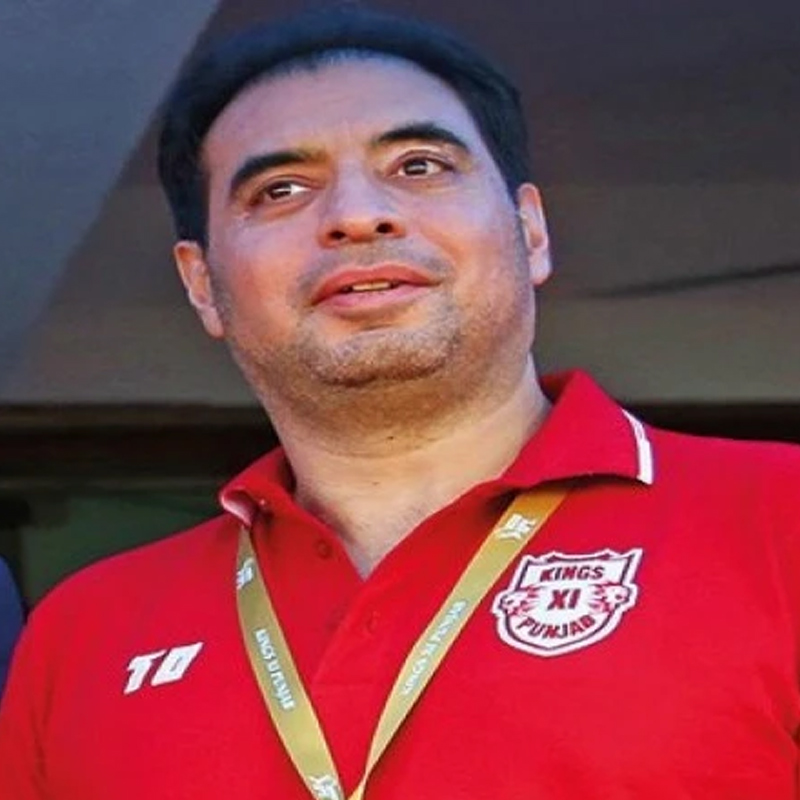
Mumbai: This season, the Indian Premier League (IPL) franchise Punjab Kings revenue will grow by 20-25 per cent. This will be a mix of central revenue and local revenue. Speaking to IndianTelevision.com Punjab Kings co-owner Mohit Burman says that revenues are up by 25 per cent and quite a bit of this jump is from local sponsorship revenue on the jersey and centrally one or two sponsors have been added.
“Licensing and merchandising and ticketing will not impact the P&L. The BCCI running ticketing centrally. Licensing and merchandising has never given money because you do not have the regulation to curtail spurious jerseys that are made in your name and sold outside stadiums. You will never end up making big money from this area. It will only be a small amount of money,” he tells.
Only two sponsorship deals open up on the jersey next year. So the franchise will have to wait two years to do new sponsorship deals. Non-jersey sponsorship deals can be done in the digital space but the value is much less. While the franchise has reached just one IPL final back in 2014, he maintains that it has not made a difference in terms of sponsorship revenue of more than 15 per cent.
Sponsors look for brand visibility at the end of the day and also doing activation with the franchise’s players. “It is all measured back to what the viewership is, the number of games and so and so forth,” Burman says, adding that, “The two new franchises that came in Lucknow and Gujarat benefitted when they did sponsorship deals because there was not enough inventory in the market. The other franchises he explains were riding out Covid and so earlier did long-term deals. It is a question of demand and supply. The two new teams commanded a premium rate maybe of 50 per cent. This has nothing to do about whether a team has won or not.”
He further says that this year the franchises sponsors have focused more on digital activation. There have not been many commercial shots by Punjab King’s sponsors. “They are doing digital activities which both the players and consumers love.”
He also notes the growing trend of sponsors like Jio, Amul, Boat doing deals across franchises. The advantage he says is that the brand gets constant exposure regardless of who is playing.
He says that earlier in a normal situation the franchise did not make as much from ticketing compared to other franchises like Mumbai. That is because Punjab is a very price-sensitive market and it was hard to sell more than 20,000 tickets for a match through the stadium capacity might have been 25-28,000.
Most of the franchise’s revenue comes from the central pool and Burman hesitates when asked to what extent central revenue’s contribution could rise with the media rights auction next month. But he does say that the BCCI splitting the media rights into broadcast and digital was needed to fully exploit the potential rights value.
When asked about the fall in TV viewership he says that a lot of it has gone to digital through mobiles but this is not being measured properly because there is no single currency yet to measure digital. “Digital is not officially measured. So you do not get the real numbers. There is no body controlling digital measurement. The fact though remains that there is a huge shift where people are viewing IPL matches on the mobile. People sometimes mirror the IPL on their TV. The digital value and cost of streaming the IPL will both go up,” he shares.
In terms of future sources of revenue, he points out digital streams like NFTs, metaverse. “It is early days in terms of NFTs. Crypto has to get regulated but it is big money. We also have a $3 million offer sitting on the table regarding the digital rights of our players. From this content can be created. The BCCI has to approve of it,” he tells.
In the pure cricketing space academies is something being pursued big time. In terms of academies, he says that it will be in catchments areas which is Punjab, Kashmir, Haryana. A central Academy will be set up in Punjab, to begin with. The concept is to then set up Academies in other parts of the country. “We have a huge catchment area in North America and the UK which we will possibly explore. We will do scouting and find potential boys who can be funneled into the system. We will use the help of the local federation.”
When asked about the franchise changing its name to Punjab Kings he said that the aim was to use the name Punjab first which is what other franchises do apart from Bangalore. “People must immediately attach the franchise to the market. We wanted to attribute ourselves to the State we come from.” He adds that operating in a Covid environment has been difficult but it was a bigger challenge for the BCCI. “The fact is that we have pulled off all three seasons quite well. The challenge for us was staying in the bubble and keeping everyone on their toes and happy.”
He also explains that costs did not go up due to Covid. That is because matches were played only in one or two venues. So air travel and hotel costs were saved. “This season we are playing in Mumbai. Otherwise we would have been travelling to different cities and spending money on transport and logistics. Things have evened out.” Beyond the IPL Burman owns the St. Lucia franchise in the Caribbean Premier League (CPL) in West Indies. He is happy about how the ownership has turned out and says that the franchise was profitable from the first year.
“We got the franchise at the right price and we did central deals even before we picked up the franchise. We will probably make money on the jersey also. The local government supports our team and we also have a big sponsor. Our revenue split between central and local revenue is almost equitable.” He is also interested in the upcoming league from Cricket South Africa (CSA) but notes that it is in its formative stage.. Right now the Big Bash League in Australia does not allow for outsiders to own a franchise. “Otherwise we would definitely explore it due to viewership and there is a lot of interest in India on the Big Bash League.”
He adds that he is not interested in non-cricket leagues. Years ago Burman had exited the now-defunct Hockey India League because the math was not adding up. “We have to be sure that we will get a return on investment. We do not get into any league if we know that there is no money to make. Ideally, we would like to make money in the first year itself which is what we did in the CPL. We look at leagues where the cricket board is involved as there will be accountability,” he concludes.