Connect with us

MAM

“Run separate creatives for demographic, behavioural campaigns”: Jio Ads CEO Gulshan Verma

Published

on

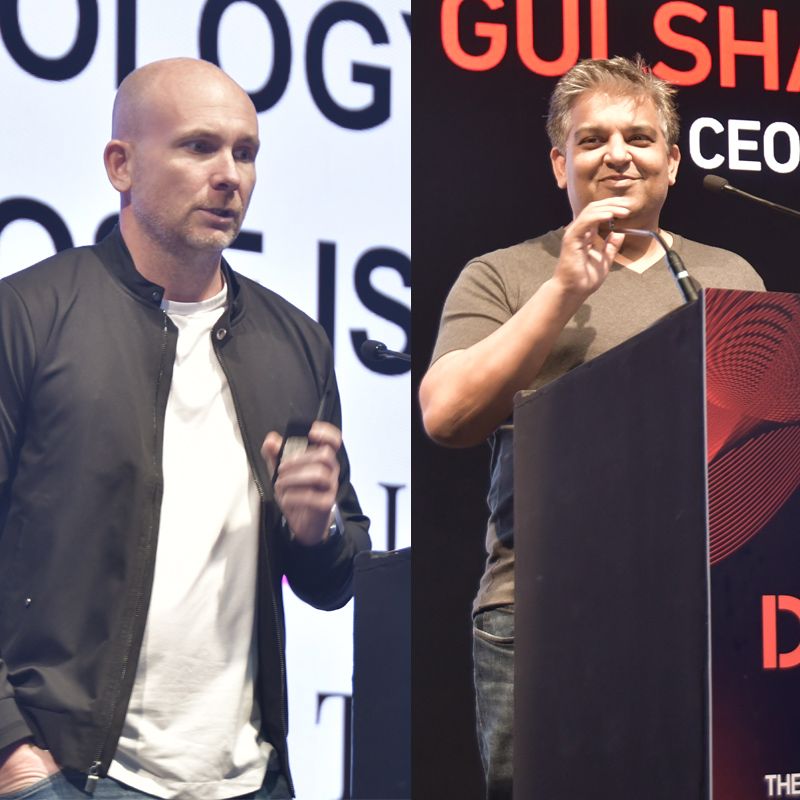
Mumbai: At The Advertising Club’s third edition of D: CODE, Jio Ads CEO Gulshan Verma shed light on the power of targeting the geolocation insights in campaigns. He enlightened the audience on the scale and solutions offered by Jio Ads.

Offering advice for people using digital, he said that one should run separate creatives for demographic and behavioural campaigns. You have to know what you want to do differently given the tendency to feel that digital is everything. He does not believe in this view. He feels that customers are different, whether based on demographics or based on behaviour. People make the mistake of over-targeting and trying to be super efficient. “My point of view is that if you look at people who buy toys, 50 per cent are parents, 30 per cent are gifts, and 20 per cent are random. If you only focus on people who are willing to buy your product, then you will never build a new product.”

Also, one must remember that omnichannel and geo-location insights offer the opportunity to understand consumers at scale. One should not only focus on online signals. One per cent of Indians have a pet. The key is to figure out who has visited a vet in the last six months. That is how you can find that one per cent. His advice is to not ignore geographical and real-world signals. Finally, brands must remember to put privacy first when they run digital campaigns and build a digital strategy. Why should consumers trust you with their information and give you their insights? How will you create value for them? One has to put privacy first.

Advertisement

“We are the advertising arm of Jio. A year ago, the team was just the two of us. We are now 170 people. We are a platform that links consumers in multiple contexts.”

He noted the billions of relationships that the company has with consumers who work with the company and carry its SIM cards. The company is also a content provider and aggregator. Jio, he said, also happens to be the country’s largest retailer. It works closely with companies like ONDC. The aim is to build an idea of how all three work for marketers digitally. 450 million consumers trust Jio with their identity, billing relationships, and what they watch. 13.47 million people have ordered fast food. 12.69 million people have bought mutual funds. Many of them are parents. There is a difference of opinion on how many are on EMI. Many watch OTT. The company brings all this data together and puts it out for advertisers. 

The company worked with the mutual fund association, AMFI. What is interesting is that every ad goes after people deterministically. So, for instance, the ad can target someone who has an EMI with the message, why have an EMI? Mutual funds should be an investment. One ad was targeted at people who the company knows have bought mutual funds. Marketing effectiveness can be tracked to determine whether or not those individuals are still active in mutual funds. Is the campaign able to add more customers? What is interesting is that the mobile reflects both one’s online and real life. That is how the company is able to understand both the consumers’ lives.

Advertisement

He also gave the Tata Sky campaign as an example of creative excellence. The message is that the DTH service provider watches you while you watch it. It can take the viewers’ emotions from that. A range of emotions were shown. It was not just a video. There were A.I. filters, influencers, different screen sizes, people watching on the train, in the bar together. This concept, he said, was super powerful. I executed fabulously well and took the interesting opportunity.

Meanwhile, S4 Capital CEO – Asia Pacific Michel de Rijk presented the Tata Tea example done for Independence Day and emphasised how the integration of data and content with technology enables agencies to create high-quality content overnight in just their own studio. He said that media monks aim to make a positive impact by integrating data and content with technology at the heart of everything that the agency does. The aim is to make things real on digital screens. But technology with a purpose is useless, he warned. It needs real intention to create new digital worlds. One of the principles his agency follows is ensuring that there is a real impact on consumers. The unreal engine is used to deliver real business growth for the agency’s partners. Tata Tea had approached the agency two weeks before Independence Day.

It wanted to connect with every state in the country. The aim was to spread the message that the company truly understands India and spread the pride of the nation on Independence Day. Another objective was CSR. The campaign was about iconic moments that happened since Independence and the impact that those moments still have today. It was filmed in a studio in Delhi. The agency did not visit any locations. It was shot in one day. It was about unleashing the power of hyper localisation through virtual production. Creating the experience in a cost-efficient digital way is the focus. He said that the unreal engine is a tool developed by Epic that not only significantly changed the gaming, cinema industry but now has moved into the ad industry. One can create high quality film content in a cost efficient manner.

Advertisement

The other thing he noted is that it works in real time. One can create quick, snappy content for the digital environment on the different platforms that are out there. This is especially important for brands with different SKUs or localisation needs, which are very strong. The third thing is Meta. It is about creating avatars that are close to real environments, real identities. He said this is going to be a massive improvement from what it is today. It is about combining real and unreal worlds. The broad application of web3 will be important. On the real world side, he said that he believes that when tech supports art to create meaningful interactions for consumers, real business outcomes are achieved. This was seen in Tata Tea. Real cultural changes will happen. It is important to pioneer tech-driven creativity, which is what his agency focuses on.


Click to comment

Leave a Reply

Your email address will not be published. Required fields are marked *

Brands

Champions again: How India’s brands roared after the T20 World Cup win

From food delivery apps to dating platforms, Indian brands wasted no time riding the wave of India’s historic back-to-back T20 World Cup victory over New Zealand

Published

on

Ahmedabad: On March 8, 2026, which also happened to be International Women’s Day, India scripted history by clinching the ICC Men’s T20 World Cup for the second consecutive time, defeating New Zealand in a thrilling final. As fireworks lit up stadiums and streets across the country, another kind of celebration erupted simultaneously: India’s marketing machine kicked into overdrive.

Within minutes of the final whistle, brands from every sector, tech giants, quick commerce players, streaming platforms, and even a condom brand, were racing to craft the cleverest, most culturally resonant posts. Here’s a breakdown of how India Inc. celebrated the nation’s historic win.

Zomato: The Repeat Order

Advertisement

Zomato, India’s ubiquitous food delivery app, kept things refreshingly simple. Playing on its own product language, the brand posted: “Repeat order delivered 🏆 #INDvsNZ.” It was short, punchy, and perfectly on-brand, a nod to India’s back-to-back title, framed through the lens of what Zomato does best: delivering again and again.

Netflix India: Now Watching History

Netflix India leaned into its streaming identity with a clever checklist format: “2007 ✅ / 2024 ✅ / 2026 ✅ / NOW WATCHING: HISTORY BEING MADE 🇮🇳💪.” By bookending India’s three T20 World Cup victories as a watchlist completed in real-time, Netflix framed the nation’s triumph as unmissable content, the kind of story only live cricket can tell.

Reliance Jio: Typing the Win

Telecom giant Reliance Jio delivered a wordplay masterclass: “India typed ‘WIN’ in Black Caps today. 🏆” The double entendre, referencing both the act of typing in capital letters and the Black Caps (New Zealand’s cricket team), was crisp, witty, and instantly shareable. It was a reminder that in the age of social media, the best brand moments often come in a single sentence.

Google India: Teen Bhai

Advertisement

Google India took a more data-forward approach, posting “Teen bhai… 🔥” alongside a screenshot of Google Search’s AI Mode highlighting India’s three half-centurions in the final, Abhishek Sharma (52 off 21 balls), Sanju Samson (89 off 46 balls), and Ishan Kishan (54 off 25 balls). It was a subtle showcase of its AI search capabilities wrapped in patriotic pride. “Teen bhai” (meaning “three brothers”) referenced the trio of batting heroes who powered India to a massive total of 255/5.

Zepto: The Women’s Day Double Whammy

Quick commerce platform Zepto scored the most culturally savvy moment of the day by merging two celebrations into one. Earlier on Women’s Day, Zepto had posted: “Women’s Day gift idea: World Cup trophy 🏆 #WomensDay2026.” After India’s win, they quote-retweeted their own post with the simple reply: “Gift delivered 🇮🇳💜.” It was meta, timely, and perfectly executed, riding both national pride and the Women’s Day conversation in a single stroke.

CashKaro: They Tasted So Good, India Ate Them Twice

Cashback platform CashKaro went for bold visual storytelling with a striking creative: a tiger sitting over the T20 World Cup trophy with a plate of kiwi fruit, accompanied by the tagline, “They tasted so good, India ate them twice.” The use of the tiger as India’s symbol, paired with a cheeky jab at New Zealand’s kiwi identity, made this one of the most talked-about creatives of the day.

Manforce: Round 2 Always Gives the Best Satisfaction

Advertisement

In perhaps the most audacious play of the lot, condom brand Manforce posted a creative featuring the T20 World Cup trophy against a stadium backdrop with the copy: “Guess Round 2 always gives THE BEST SATISFACTION.” The innuendo-laden post, hashtagged #BackToBackChampions, was quintessential Manforce, a brand well-known for consistently using cricket moments to drive cheeky, double-meaning campaigns that generate massive engagement.

Parle-G: Pehle Dip Se Aakhri Cup Tak

Beloved biscuit brand Parle-G went the emotional, illustrative route with a vibrant artwork showing Indian cricketers lifting the World Cup trophy superimposed onto a giant Parle-G biscuit. The tagline, “Pehle dip se aakhri cup tak / Parle-G humesha saath rahega” (From the first dip to the last cup, Parle-G will always be with you), was a masterstroke of nostalgia marketing, connecting the simple act of dunking a biscuit in tea to an entire nation’s cricket journey.

Domino’s India: No Kiwi on This Pizza

Domino’s India served up a deliciously savage quip: “India mein pineapple on pizza chala nahi, Kiwi toh kya hi chalta 😜🏆 #Champions #India.” By invoking the age-old pineapple-on-pizza debate, Domino’s made a clever statement: if Indians won’t accept pineapple on pizza, there’s certainly no room for the Kiwis (New Zealand) either. It was the kind of post that got fans and foodies alike sharing in equal measure.

JioHotstar: History Repeated, History Defeated

Advertisement

As the official streaming home of the ICC T20 World Cup, JioHotstar had the most at stake and arguably the biggest platform. The brand’s post was thunderous in its simplicity: “HISTORY REPEATED, HISTORY DEFEATED!” A bold, all-caps declaration that served as both a celebration of India’s second consecutive title and a subtle flex for the broadcaster that streamed every ball of it.

Tinder India: It’s a Match Again

Dating app Tinder India proved that no brand is too far removed from cricket fever with a perfectly on-brand line: “India just matched with the world cup again 💙🇮🇳.” By using its own core product concept, a “match”, to describe India’s World Cup triumph, Tinder struck a note that was both clever and effortlessly native to the platform’s voice.

Snabbit: Sabko Dho Diya

Home services startup Snabbit rounded out the celebrations with a pun-driven visual: an Indian jersey hanging out to dry, with the copy “Sabko dho diya, ab champions hawa khayenge,” roughly translating to “Washed everyone clean, now the champions ride the breeze.” The laundry-meets-cricket metaphor (“dho diya” means both “to wash” and “to thrash completely”) was a crowd-pleaser that perfectly captured the irreverent, punchy spirit of Indian moment marketing.

The bigger picture

Advertisement

What these posts collectively demonstrate is the extraordinary maturity of Indian digital marketing. Brands no longer simply congratulate, they connect their core product identity to the cultural moment in ways that feel earned rather than opportunistic. In the space of under an hour, the same victory inspired a food app to talk about repeat orders, a dating app to talk about matches, a laundry startup to talk about washing opponents, and a telecom giant to make a pun about capital letters.

The convergence of India’s World Cup win with International Women’s Day added yet another dimension, as Zepto demonstrated brilliantly, showing that the best brands are always watching for the intersection of multiple cultural conversations.

India’s cricketers gave the country a night to remember. And India’s marketers, it seems, were ready and waiting.

Advertisement
Continue Reading

Advertisement News18
Advertisement All three Media
Advertisement Whtasapp
Advertisement Year Enders

Copyright © 2026 Indian Television Dot Com PVT LTD

This will close in 20 seconds