News Broadcasting
Not just emerging, India should aim to be a resurgent superpower: Rajnath Singh

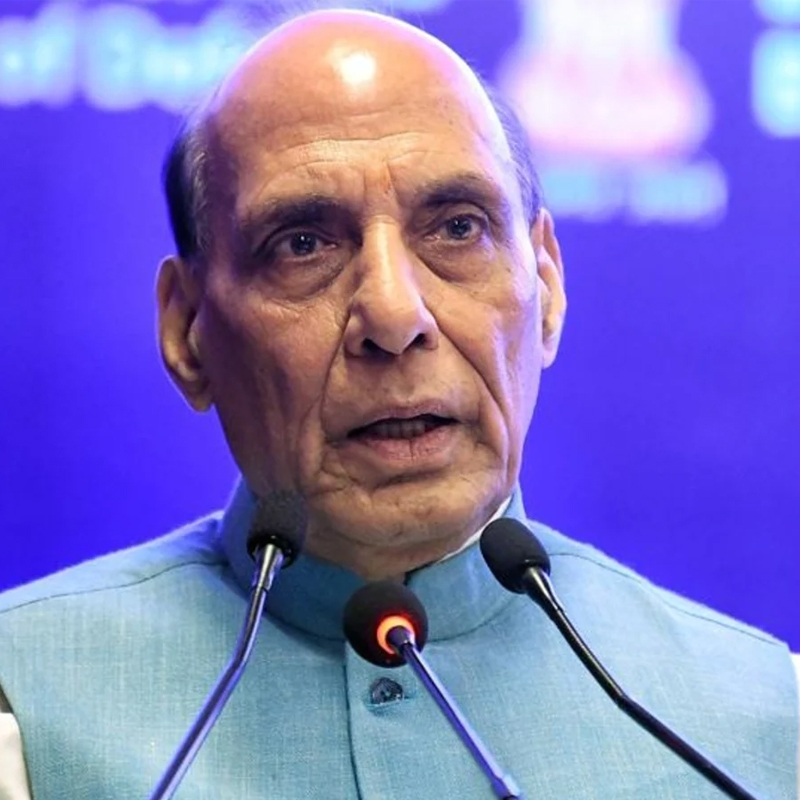
Mumbai: Times Network hosted the 9th Edition of its annual signature event, India Economic Conclave (IEC) scheduled on 1 & 2 June 2023 at Taj Palace, New Delhi. A distinguished global platform, India Economic Conclave has been instrumental in shaping a national discourse on the country’s economic growth. Driving the theme, “India: The Emerging Third Superpower”, IEC 2023 will lead critical conversations with eminent policymakers, global visionaries, and iconic leaders from India Inc on India’s growth as a leading global superpower.
Speaking at Times Network India Economic Conclave 2023, minister of Defence Rajnath Singh said, “While India is on its path to becoming the third superpower, I believe it is a resurgent superpower in the long run, destined to regain its rightful place. Throughout history, India faced challenges such as military weakness and political subjugation, which hindered its progress. To overcome these setbacks, our focus lies on strengthening the military by equipping it with advanced weaponry and ensuring a youthful force, thus enhancing our national security. Additionally, we are breaking free from the shackles of political slavery, which has eroded our economic condition, self-reliance, and cultural pride.In terms of economic progress, we have witnessed remarkable growth. Income tax and GST collections have surged to approximately 1.87 lakh crore, surpassing previous years. Our efforts towards improving the ease of doing business have attracted foreign investors, making India an appealing investment destination. Revolutionary transformations have also been made in sectors such as education, where we have prioritised holistic learning, skill development, and imparting moral values to our children. In the healthcare sector, we have successfully executed a large-scale COVID-19 vaccination drive, administering over 200 crore vaccines to our citizens. The Ayushman Bharat scheme has provided significant benefits to numerous beneficiaries. The banking sector, once burdened by non-performing assets (NPAs), has been revitalised through bank mergers and privatisation, resulting in a substantial reduction in NPAs from 9.33 per cent to 4.5 per cent in recent years.
Moreover, the government has undertaken extensive reforms, eliminating over 2,000 outdated laws, and adopting a “minimum government, maximum governance” approach. We are striving to achieve self-reliance in the defence sector, with a comprehensive plan to stop weapon imports and produce 4,666 indigenous items, including missiles, arms, and bombs. This initiative aligns with the Make in India campaign and positions us as a global leader in defence production. Our domestic defence production has already exceeded one lakh crore, and weapon exports have increased from 9,500 crore to 16,000 crore. The defence sector is also witnessing significant participation from startups, with over 100 unicorns emerging in India. Infrastructure development has been a key focus, with the construction of 37 kilometres of roads daily and a doubling of airport capacity. Our goal is to make air travel more affordable for the common man. The introduction of Vande Bharat trains has further enhanced transportation connectivity. Moreover, our railways are now integrated with seaports, and every village in the country is connected to the internet, marking a significant step towards digital transformation. Our vision extends to 2047, encompassing all sectors and aiming to create an astonishing future for India. With determination and strategic planning, we are confident in achieving our aspirations and establishing India as a global powerhouse.
It is crucial to establish realistic and attainable targets for ourselves, as the power of our dreams should not be underestimated. By the year 2047, our focus lies on enhancing domestic, economic, political, and cultural values in India. One of our core principles is to eliminate all forms of discrimination and ensure equal opportunities for all individuals, irrespective of their caste, gender, or sexual orientation. Upholding human dignity stands as our utmost priority. We are actively working towards women empowerment and creating more avenues for women to thrive. A noteworthy marker of progress and evolving mindset is the fact that 14 out of the top 25 positions are held by women. Addressing the issue of unemployment is a key area of focus for us. By improving infrastructure and striving for a better quality of life, we aim to create more opportunities for employment. Our goal is to establish an efficient market economy that provides a wide array of choices for the youth. Achieving this requires collaboration between the private and public sectors, working hand in hand. We greatly appreciate the concept of cooperative federalism, which emphasises the importance of collaboration between the central and state governments. Furthermore, we seek to inspire the youth to explore and embrace our rich cultural heritage, recognizing its significance in shaping our identity and values.
Singh expressed admiration for prime minister Narendra Modi’s leadership, commending him for bringing political stability to the country. He emphasised the significance of the five promises made by PM Modi during his address from the Red Fort, particularly the commitment to eradicate the “slave mentality” that has hindered India’s progress. Singh hailed the current phase as an “era of renaissance and the beginning of a new dawn,” emphasising India’s remarkable growth trajectory. In addition, Singh provided reasoning as to why the 21st century belongs to India. He highlighted key reforms such as the Goods and Services Tax (GST) and direct tax reforms, which have had a positive impact on India’s economy. Singh highlighted the remarkable achievement of GST collections, breaking records by reaching Rs 1.87 lakh crore in the current year. The implementation of these reforms has contributed to favourable changes in India’s economic landscape.”






