iWorld
OML Entertainment continues to expand its talent management business

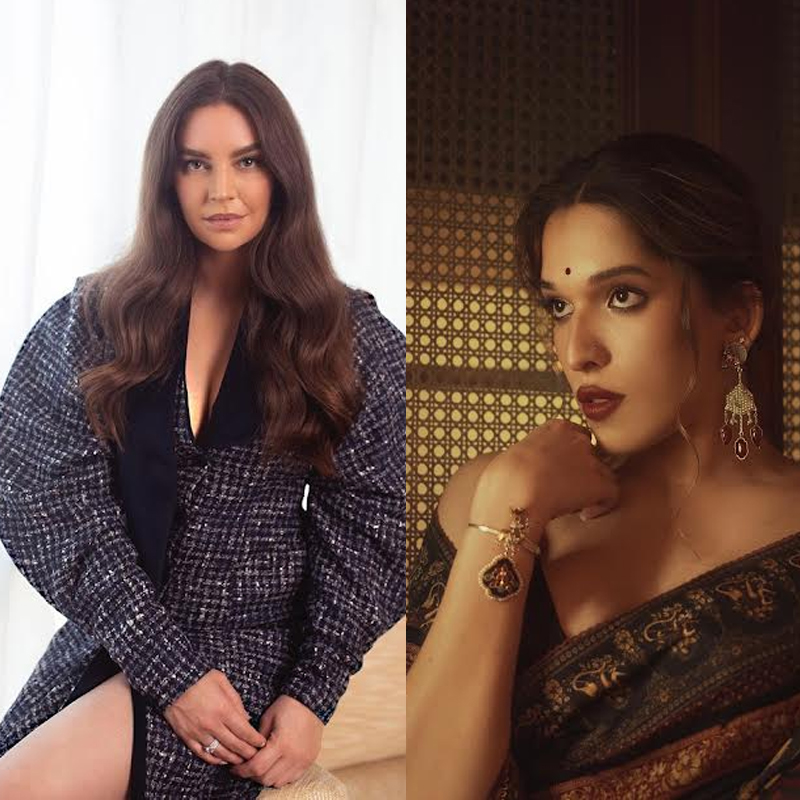
Mumbai: OML Entertainment has further expanded its talent roster by onboarding Australian chef Sarah Todd and creator Dr Trinetra Haldar Gummaraju to its massive repertoire of 91 talents, cutting across diverse genres under its talent management business.
OML has had a front-row seat in mapping evolution, challenges, and opportunities in the creator economy, having built its strengths over 20 years, starting as an artist management agency. The company will leverage this expertise and experience, to represent Sarah Todd & Trinetra, amongst others and offer its 360-degree management across a wide spectrum, including to build their content IPs, strategy for OTT, premium events, strategic brand partnerships, equity deals and much more.
OML Entertainment senior VP Rishabh Nahar mentioned, “We’ve always looked at the creator ecosystem with an artist-first approach & have been growing our roster outside of comedy as well, to 50+ artists across genres like fashion, travel & lifestyle, chefs, mentalists and writers & directors, amongst other creators. He further added, “We have been actively looking at signing talent across these genres & have always strived to impact pop culture and bridge the gap between arts and its economy, owing to Artist Management being our legacy business. Having been in the ecosystem since 21 years, we’ve been very fortunate to have a diverse roster of 90+ artists.”

Todd said, “India has always had a special place in my heart and I am thrilled to be a part of OML’s talent roster and work with them to pave new paths in India – OML’s artist-first approach will support me in making a positive impact. I am incredibly excited to take this new step with OML!”
Gummaraju added, “OML understands the direction of an artist’s growth trajectory & supports their creativity constantly to make their vision a reality. It is truly exciting to have them as a partner in my endeavours. I am looking forward to starting my journey with them as part of their talent roster and scaling greater heights in future with their support.”
Todd wears both hats – A chef from Australia and a creator. She has risen to the top of the culinary world since her first appearance in Season 6 of MasterChef Australia and further went on to become a finalist in MasterChef Australia S14: a global talent, restaurateur, entrepreneur and TV Host. In 2021, she was named in the LuxeBook Top 50 most powerful and influential women leaders in Indian Luxury. As a former high fashion model, she has also worked with some of the world’s most recognisable fashion brands, including Gucci, Hugo Boss, and Pantene. Furthermore, she has ten TV shows under her belt. She has appeared at many prestigious events as a keynote speaker, including the Hindustan Times Leadership Summit and the Economic Times Global Summit alongside India’s PM, Narendra Modi, and most recently recognised by Modi for her contribution to the food industry.
Meanwhile, Gummaraju is Karnataka’s first transgender doctor. She has been on both India’s and Asia’s Forbes 30 under 30 Lists in 2022, as well as on GQ’s 30 Most Influential Young Indians List two years in a row. As a woman of trans experience, her content often addresses misconceptions and stigma around the queer and trans communities in ways both real and comedic. Gummaraju will soon make her acting debut in the most awaited web series, Made In Heaven Season 2, along with another Amazon Prime Video’s docu-series titled Rainbow Rishtas.
Over the years, OML has metamorphosed from an artist management agency into a full-fledged media and entertainment organisation and continues to add value, and support the creators and their creativity. By diversifying its roster, the company has been keeping up with the ever-growing and dramatically evolving creator eco

iWorld
Micro-dramas rewrite India’s digital storytelling rules
New format delivers 800 hours of content and Rs 650 crore in revenue in 2025 alone.
MUMBAI: Micro-dramas just turned two-minute attention spans into a full-blown industry because when your story has to hook someone before they swipe away, every second counts like a cliffhanger.
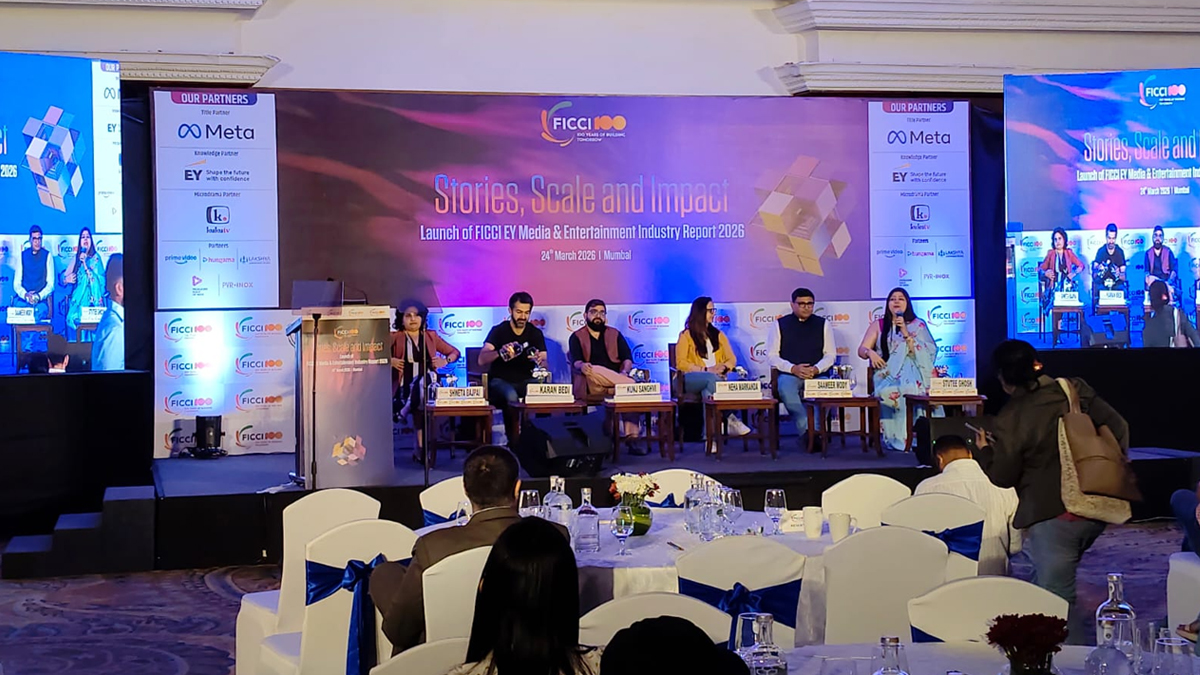
At the FICCI-EY Media & Entertainment Industry Report launch, a high-powered panel explored how micro-dramas are reshaping content creation, discovery and monetisation in India’s digital ecosystem. Moderated by film critic Stutee Ghosh, the session featured Karan Bedi (Director & Head, Amazon MX Player), Kunj Sanghvi (SVP – Content, Kuku TV), Neha Markanda (chief business officer, Sharechat and Moj), Saameer Mody (Founder & MD, Pocket Films & Pocket TV) and Shweta Bajpai (Group Director – Finserv, Media, Travel and Services, Meta India).
The discussion opened with a clear question: what exactly is a micro-drama? Kunj Sanghvi offered the most precise definition, positioning it as content that sits comfortably between long-form films and short-form Reels. “It is feature-length stories 90 to 100 minutes in total told in 45 to 50 episodes of roughly two minutes each,” he explained. The real differentiator, he added, lies in algorithmic distribution on social feeds. A strong cliffhanger at the end of each snippet creates an “uncontrollable urge” to download the app and continue, turning passive scrolling into active consumption.
Shweta Bajpai brought a platform perspective, noting that micro-drama perfectly combines three major trends that have been building for the past four to five years, short-form video, creator-led storytelling, and episodic entertainment. She pointed out that 71 per cent of consumers discovered the category only in the last six months, with a staggering 89 per cent stumbling upon it organically while browsing Reels or Facebook feeds. Once hooked, they click the call-to-action and start bingeing.
One of the most striking revelations was the solitary nature of consumption. According to Meta’s report with Ormax Media, 90 per cent of micro-drama viewing happens alone. This private, personal-screen habit gives creators room to experiment with edgier, more intimate or bold narratives that might not work in a shared family viewing environment.
The panel addressed the frequent criticism that micro-dramas are merely dopamine hits rather than proper storytelling. Saameer Mody countered that telling a compelling story in a very short time is actually harder than in long-form. “Short filmmakers have always said it’s tougher to deliver your message in limited time,” he noted, comparing it to advertising, which has told complete stories in under 30 seconds for decades. “Two minutes is luxury,” he quipped.
Neha Markanda observed that the format’s rapid acceleration has surprised even insiders. From 150 million daily views shortly after launch to 400 million today, with average time spent nearing 50 minutes per day, the growth has been “beyond phenomenal.” She estimated that 10–15 per cent of India’s internet population is already consuming micro-dramas across platforms, leaving massive headroom for expansion. EY predictions suggest the category could grow 3x in three years, but some panellists believe it could be even faster.
Kunj Sanghvi highlighted that genres in micro-dramas evolve and exhaust quickly. “Genres get exhausted really fast,” he said. “After the 50th micro-drama of the same type, the audience already knows what’s coming.” This forces constant innovation and micro-segmentation. Platforms are already serving very specific audiences, IAS aspirants, middle-aged romance seekers, or those who enjoy moral conflicts between doctors and billionaires proving the format’s ability to cater to niche emotional triggers.
Regionalisation is seen as inevitable. While Hindi currently dominates, Tamil and Telugu are growing fast, and vernacular supply is expected to catch up with demand. The cost of creation, already low, is falling further with AI tools, raising the prospect of hundreds of new titles every month in the near future.
Karan Bedi explained MX Player’s decision to keep the format entirely free, “We think there is potentially 800 million screens in India. If we’re at 10–15 per cent penetration today, we have 8x to go.” By removing the paywall, the platform aims to learn rapidly at scale and capture the massive untapped audience.
The panel agreed that micro-drama is not replacing traditional long-form storytelling but adding a new, highly addictive layer tailored to fragmented attention spans and mobile-first habits. As Shweta Bajpai put it, today’s audience is “entertainment hungry, but has less time to spare” and wants content that feels both personal and aspirational.
In a world where everyone is racing against the next swipe, micro-dramas have mastered the art of the perfect hook proving that the smallest screen can still deliver the biggest emotional punch, two minutes at a time. With India still at relatively low penetration compared to China’s 80 per cent, the format is poised for explosive growth, and the only question left is how quickly creators and platforms can keep feeding the insatiable appetite for the next cliffhanger.