Ad Campaigns
UN Women India and Unstereotype Alliance industry partners launch #YouDontSeeMe campaign

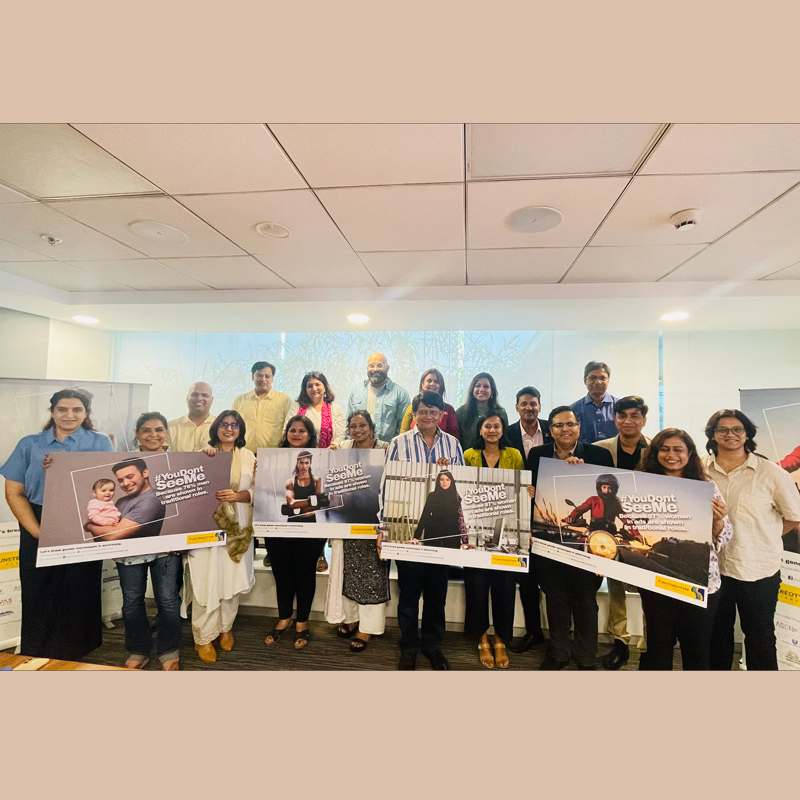
Mumbai: A new campaign by UN Women and industry partners aims to tackle the persistent problem of gender stereotypes in Indian advertising. The #YouDontSeeMe campaign was launched on 6 July in the financial hub Mumbai by the Unstereotype Alliance, a collaborative platform convened by UN Women.
“We fully recognize the power and influence of the advertising industry and the advertisers that shape the industry when it comes to stirring positive social norms change,” said UN Women India Country Representative Susan Ferguson. “UN Women is excited to partner with the Alliance to challenge and advance the ways women are represented.”
India’s advertising industry faces concerns regarding gender-stereotypical portrayals of men and women. Around 87 per cent of Indian respondents to a recent survey said that women are typically portrayed in traditional roles in their country’s media, and 86 per cent said the same of the portrayal of men.
The primary objective of #YouDontSeeMe campaign is to shed light on gender portrayals in the media while emphasising the disparity between on-screen and real-life experiences. This campaign aims to use the power of advertising to transmit gender-positive messages across print, digital and out-of-home media.
The two-month campaign will be rolled out across India, with further launches planned in New Delhi, Chennai, Bangalore, Kolkata, and Hyderabad reaching around 10 million individuals.
The #YouDontSeeMe campaign was developed by Unstereotype Alliance India Chapter members GREY Agency, with media outreach support from WPP and IPG Mediabrands India through their media agencies, GroupM and Lodestar UM. Lodestar UM, an IPG Mediabrands India network agency, is making a valuable contribution by providing media buying support and collaborating through free media partnerships for the campaign.
WPP India chief culture officer Apoorva Bapna said, “It is imperative that all stakeholders come together to create an ecosystem that promotes gender equality across the board. Unstereotype Alliance in India has made significant progress by bringing together brands, agencies, and policy makers to advance gender equality through empowering business practices and positive messaging.”
Manisha Kapoor, chief executive and secretary general of the Advertising Standards Council of India (ASCI), stated: “ASCI is a founding ally of UA’s Indian Chapter and has made significant contributions on this subject. Notable contributions include reports such as GenderNext and GenderGains, and guidelines on harmful gender stereotypes. The #YouDontSeeMe campaign is aimed to encourage progressive gender depiction and breaking free from limiting traditional roles.”
Lodestar UM chief executive Aditi Mishra said, “We are delighted to partner with the #YouDontSeeMe campaign and contribute to its mission of challenging gender stereotypes in advertising. At Lodestar UM, we believe in using the power of media to drive positive change and promote inclusivity. By leveraging our media buying expertise, we aim to create impactful campaigns that resonate with audiences and help reshape perceptions. Together with the Unstereotype Alliance, we are committed to advancing gender equality and fostering a more inclusive media landscape.”
Members of the Unstereotype Alliance in India have conducted insightful studies and market research such as GenderNext study by ASCI, Gender Equality Attitudes Study by Kantar, Gender Portrayals in Advertising report by GDI & UNICEF, which have identified existing gender stereotypes in advertising, and emphasised the need to break free from them.






