Fiction
“At Applause, we put all our energies together, and try and create good content”: Applause Entertainment’s Sameer Nair

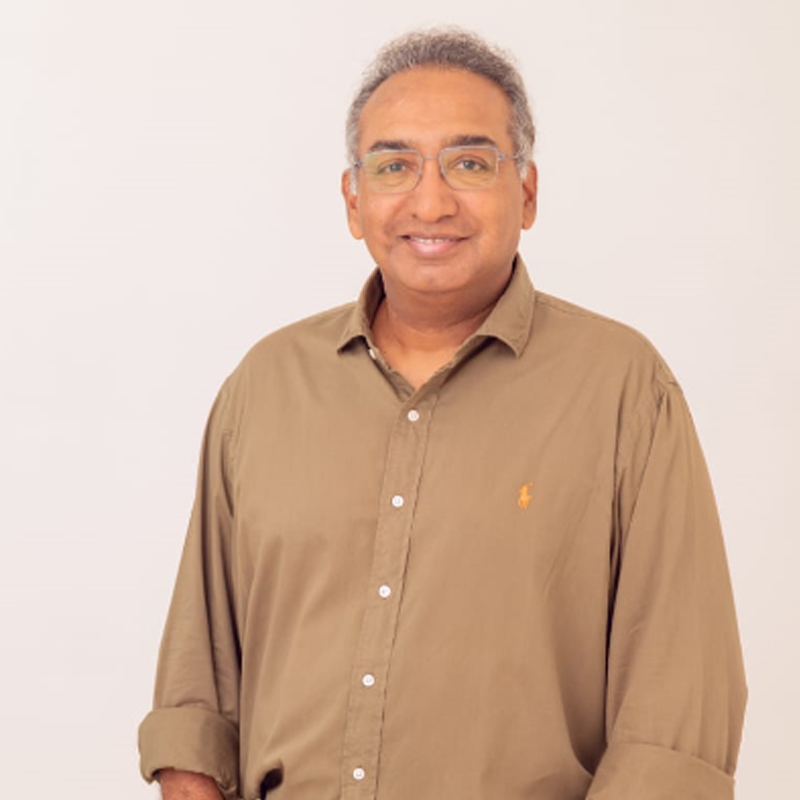
Mumbai: Applause Entertainment is a leading Content & IP Creation Studio with a focus on premium drama series, movies, documentaries and animation content. A venture of the Aditya Birla Group, led by media veteran Sameer Nair, the studio has produced and released popular series across genres and languages which includes shows like Rudra: The Edge of Darkness, Mithya, Criminal Justice, Scam 1992: The Harshad Mehta Story, Undekhi, Kafas, Bhaukaal and others that have gone on to win acclaim and applause. Applause’s feature film Zwigato, directed by Nandita Das and starring Kapil Sharma released in cinemas worldwide to tremendous critical acclaim. The first Tamil cinema ‘Por Thozhil’ struck gold at the Box Office with rave reviews from the critics and audiences alike. The Rapist, directed by Aparna Sen, recently won the prestigious Kim Jiseok Award at the Busan International Film Festival. Currently in production is also a robust slate of Theatrical and Direct-To-Streaming movies including Sharmajee Ki Beti, Jab Khuli Kitab and more. Applause has partnered with leading platforms like Netflix, Disney+Hotstar, Amazon Prime Video, Sony LIV, MX Player, ZEE5 and Voot Select for its creative output.
Sameer Nair heads Applause, he is a veteran in the media & entertainment space. The recent offering by Applause ‘Kafas’, is thought-provoking and looks at the mindset of a middle-class family. Indiantelevision.com spoke to Sameer Nair, Managing Director, Applause Entertainment on the show, and his take on how content today, on adaptations and foray into films…………
Edited excerpts
On producing a show like ‘Kafas’
We had seen the original format. It’s a show called “Dark Money’. We were quite intrigued by that and thought it was a wonderful show, a wonderful story and Idea. The show had a good resonance in India because of a similar film and entertainment industry and the rich and poor divide in that sense. What drew us to it was the fact that this is, in a sense, a social dilemma and an indecent proposal. In that sense, it’s about taking a middle-class family, or a middle-class couple and putting them in a spot, and then seeing what wins money or morality, and then the way it plays out.
That’s what drew us to it, that wonderful, dramatic story which is not your regular action crime thriller, it’s just a family drama. It has a universal setting, because everyone knows about films, and everyone knows about being middle class and then this sort of unique tale plays out and thought that was quite interesting. We said, okay, this is a great one to make. It was simple but quite hard-hitting, and then we wanted to cast it in a particular way. I think the casting, while Sahil and I discussed it a lot, I think Mukesh had an important role to play in this. So, he’s the one who suggested Sharman Joshi. He really played the role of the father, who is for the large part, in many ways, quite impotent in the face of all these things going on, till he finally takes charge, and then everyone else came together, Mona Singh, we’ve always loved, and she was cast as the wife. Now, Mona Vasu was an interesting idea, and we’re seeing her on screen after a long time. The kids were great, we worked with Mikhail before, and all the kids and the younger people were great. Vivan Bathena did a great job, for the kind of role that it was, he did a terrific job and everyone then came together really well. Mukesh himself plays the reporter, who is looking for entertainment, gossip and news.
On adaptations and making it very relevant for the Indian audience
When we do an adaptation, we do it only because we think it is adaptable. We think it is a story that must be retold to an Indian audience, in our context and milieu. Only when we believe it can work, do we do it, otherwise, we wouldn’t do it. Millions of shows get made every year all over the world. It’s not that in general, you adapt, you adapt very specific things, shows that have some universal emotion, and universal traits that we believe can be transliterated or reimagined in our context and that’s the filter.
Whenever we’ve done anything, we have done it because we believe it can be done. There are many, our ratio for what we adapt versus what we don’t would be under 10 per cent which means we look at 100 formats, and we don’t adapt more than 10, 90 are always declined for several reasons, I don’t think it’ll work for us in our context, in our life in it, but there are various little things, many times some shows while they may have very good stories are very unique and specific to those cultures and they don’t translate so well. We are always looking for things as in universal emotions that travel well.
On the reception for the show and the feedback you’ve been getting on the show
We have got very good feedback. I think Sony Liv and the team led by Danish and Aman, the marketing head had a clever campaign, they never put out any snippets or put out promos, or trailers, there was just the billboards and posters imagery everywhere with Sharman and Mona with their mouth taped up saying, we are sorry, we’ve taken the money and we can’t speak. I think that created a lot of intrigue as to what is this about. Then the show just dropped, whoever watched the show, within the first 10 -15 minutes, wanted to know where it was headed. I think that was quite a clever strategy. No promo that gave away anything and said, oh, this is the truth about the big bad world of entertainment.
It was just a human drama out there. And most people whom I have spoken to, have watched all six at one go, no one told me that I watched one, two episodes, and I’ll see the next two next weekend. I have had people who have called and said, your series is out and the next day the message was, I watched all the episodes. Because also, it’s like 30 – 32-minute episodes and just zipping through. Six of them are like a three-hour watch which is not too much.
On the Indian audience’s choice of content evolving today and accepting something like this and appreciating something like this
Well, that’s what seems to be, the overall feedback and response to the show. I think Indian audiences have been involved for a long time, we’ve been doing smart, intelligent work, whether in the cinema or on other forms of TV be it satellite or Doordarshan. I mean, it’s not to say that Indians are stupid, as it is expanding and growing, and the more content we consume, it has got better in the last three or four years with streaming and COVID and we’ve been exposed to all sorts of content. So, I think, by and large, the Indian audience has significantly evolved in its taste and appreciation of what good art and good storytelling are.
That being said, I think this as a story is an extremely universal story. Today, if you take a middle-class couple, anywhere in the world it is the same thing. Then if you take that couple and take that child who is at the centre of, a problem of this kind, and in exchange for their silence, somebody is willing to pay them 10 crores or 10 million $ I think it’s the same story. This can apply anywhere in the world. It’s the same dilemma, the same problem and emotion.
So, in that sense, I don’t think the Indian audience needs to be any smarter or more evolved or anything. Anyone watching the show can just put themselves in that place, if you’re a middle-class couple watching the show, you’re thinking if someone came to us with an offer like this, what would we do? Would you take it or would you what would you do, so it’s very universal? I think the emotion in this one is deeply universal.
On the Tamil film ‘Por Thozil’
We have done a few Tamil web series and Tamil is a wonderful language and a wonderful talent base to work with. I have lived for years in Chennai, and I always have a soft spot for Tamil. We have already made three or four very successful Tamil series on Sony Liv and are quite happy with that. This story came to us during the pandemic, I think during the first lockdown. When we heard about this, we were quite taken in by this young director and his way of storytelling and it started from there. We worked through the two years of the pandemic then got in to shoot, and then finally the film was released and it got a good response from the audiences.
On the Applause and Sony Liv partnership
Well, we continue to do what we do, which is creating content and then sharing it with our platform partners. We’ve had a good relationship with Sony, because I think when Sony was getting ready for the relaunch in 2020, at that time, they launched four shows from us, including Scam, and all of those four shows have done well, season 2 is on the anvil for all the shows. We like their style, and we like their thinking, similarly, we work very closely with Hotstar, and we’ve done a lot of work.
When we started, our first four shows went on Hotstar. So, in that sense, I think all the streamers, have got quite evolved into having pretty definitive strategies, they are all competing in a pretty vibrant market, and there’s a lot of push and pull in this thing, with the need to get subscribers, retain customers, make money, make great content, and to be profitable at the end of it. I don’t envy anyone in their position, I think everyone is working hard, trying to make it happen. And we are grateful that we can play a small part in everyone’s largest success and we like doing this.
On positioning Applause as a Hollywood studio
Well, I think conglomerate is too big a word. It has been stated ambition from the start to building Applause in the true traditional model of the US studios of the early 20s. That is, we do want to make great content, like how HBO made content, like how other majors have made it. And we do want to work in this hub and spoke model, which allows us to be the central core of creative finance, and distribution, and then work with a whole range of producers, directors, writers and talent.
We’ve been working on this. We are continuing to grow and build it. So, we at Applause have done shows in Hindi and Tamil, also one in Gujarati and Kannada, and produced a few small movies but want to do big movies. Animation with ACK and a few documentaries, we’re doing different things, but always following the same unique flywheel, which is we are the hub, we work with spokes, and we all work together, it’s a collaborative art form. We sort of put all our energies together, and we try and create some good content.
On the rise of OTT today
Well, it was always there basically, the internet has accelerated streaming. But by 2008 YouTube was there, and Facebook and the social media platforms came along at the same time. And by 2015 – 16 streaming was increasingly becoming more widespread primarily because of the smart devices and better mobile connectivity with 4G and soon 5G. it’s like all the conditions have come together to cause a perfect storm. Then the pandemic happened and it was the last straw on the camel’s back, immediately everyone adopted and first of all, they tasted it, sampled it, and then they rapidly adopted it.
I think it was something that was going to happen, the pandemic accelerated it. And now we are here in this new reality where we’ve got like, five – six billion phones out there in the world, a lot of these are all connected to 4g, 3g, 4g, and streaming technology, something that does work, and it is more superior to the old broadcast model. Broadcast was always, very linear, very time-bound, very geography bound and one way. Streaming now allows it to be nonlinear, non-geographic, non-language, and non-time time bound, streaming is everything that TV could never be. So it’s no surprise that it’s created such a revolution.