ITV News
Honda to create 3,800 jobs as India capacity nears 80 lakh units
Rs 2,420 crore expansion to boost output, exports and EV readiness by 2028

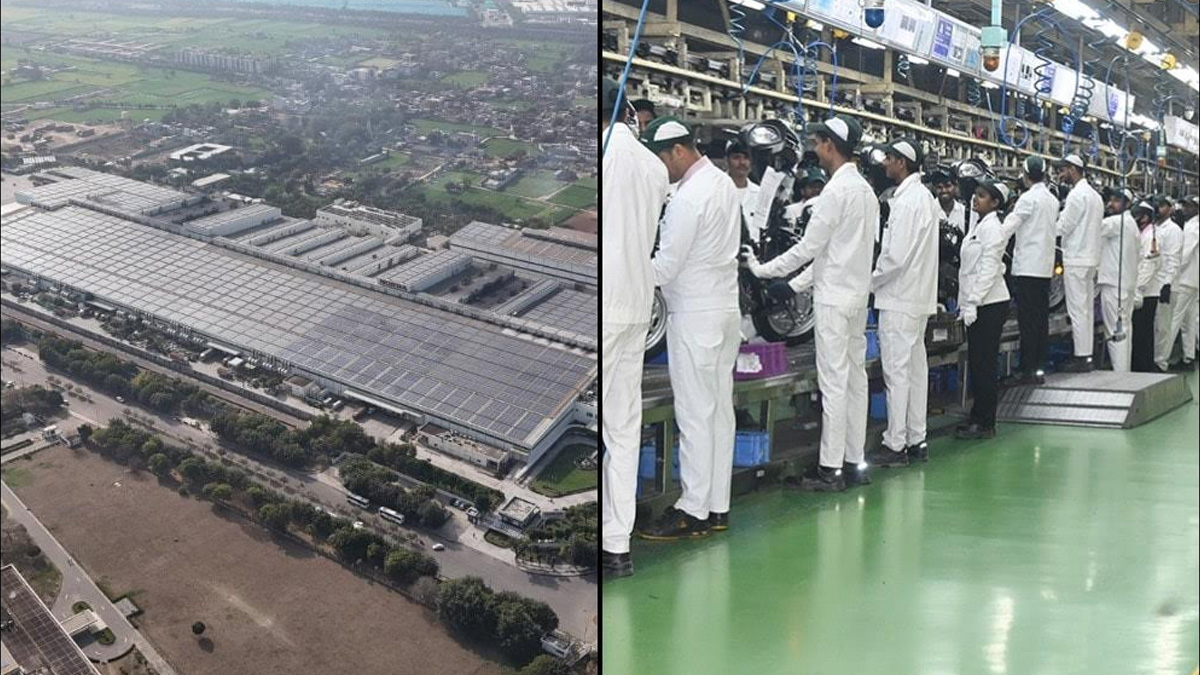
MUMBAI: Honda is putting the pedal down and India’s factories are shifting into a higher gear. Honda Motorcycle & Scooter India (HMSI) is set to create more than 3,800 jobs as it expands its manufacturing footprint, with annual production capacity expected to touch around 80 lakh units by 2028.
Speaking to PTI, HMSI President and CEO Tsutsumu Otani said India has become a critical manufacturing and export hub for Honda’s global operations, with ongoing investments aimed at meeting rising domestic demand while strengthening exports.
The company currently exports motorcycles and scooters to 65 countries, including Japan and several European markets. Export volumes have climbed steadily from 3.6 lakh units in FY24 to 5.1 lakh units in FY25, before rising further to 6.2 lakh units in FY26, underscoring India’s growing role in Honda’s international production network.
HMSI currently operates four manufacturing facilities in Manesar (Haryana), Tapukara (Rajasthan), Narasapura (Karnataka) and Vithalapur (Gujarat), with a combined installed annual production capacity of more than 60 lakh units.
To support future growth, the company recently announced a third production line at its Tapukara plant with an investment of around Rs 1,500 crore. Scheduled to commence operations in 2028, the new line will add 6.7 lakh units of annual capacity, taking the plant’s total production capability to 20.1 lakh units.
Honda had earlier unveiled plans for a fourth production line at its Vithalapur facility with an investment of Rs 920 crore. Expected to begin operations in 2027, the expansion will increase annual capacity by 6.5 lakh units, lifting the plant’s total output to 26.1 lakh units. According to Otani, the facility will become Honda’s largest motorcycle assembly plant globally.
Combined with planned capacity upgrades at its other manufacturing locations, these investments are expected to raise Honda’s annual production capacity in India to around 80 lakh units by 2028.
The Tapukara and Vithalapur projects together are projected to generate more than 3,800 employment opportunities, adding another boost to India’s manufacturing ecosystem.
On electric mobility, Otani said EVs remain central to Honda’s long-term strategy, although the company will continue pursuing a balanced portfolio spanning internal combustion engine models, electric vehicles and alternative fuel technologies.
Commenting on Delhi’s EV policy, under which only electric two-wheelers will be registered from 1 April 2028, Otani described the move as a positive step towards cleaner mobility. However, he noted that the pace of EV adoption will ultimately depend on factors such as affordability, charging infrastructure, convenience and evolving consumer preferences.
With production lines expanding, exports accelerating and electric mobility gradually gaining momentum, Honda is positioning India not just as a high-growth market, but as one of the company’s most important global manufacturing engines.






